Mastering Xin Zhongshi: The New Chinese Style Fashion Guide
The Rise of Xin Zhongshi: Redefining Asian Traditions
The global fashion landscape is undergoing a profound transformation, driven by a renewed interest in cultural heritage and sartorial storytelling. At the forefront of this movement in Asia is Xin Zhongshi, or the 'New Chinese Style.' Unlike the strict historical reenactment associated with the traditional Hanfu revival movement, Xin Zhongshi is inherently pragmatic. It deconstructs centuries-old Chinese garment architectures and seamlessly weaves them into the fabric of modern, everyday wardrobes. According to Vogue Business, this trend has transcended niche subcultures to become a dominant force in Gen Z and millennial fashion across China and the broader Asian diaspora, blending ancestral craftsmanship with contemporary streetwear aesthetics.
As reported by the South China Morning Post, platforms like Xiaohongshu and TikTok have been instrumental in propelling Xin Zhongshi into the mainstream. Young consumers are no longer reserving traditional garments for festivals or photography shoots; they are wearing them to the office, to cafes, and on international streets. This article serves as your comprehensive, actionable guide to understanding, sourcing, and styling the New Chinese Style movement.
Core Elements of New Chinese Style
To master Xin Zhongshi, one must understand the foundational elements that distinguish it from standard Western tailoring or full traditional Hanfu. The movement relies on three primary pillars: structural skirts, traditional fastenings, and heritage textiles.
The Modern Mamianqun (Horse-Face Skirt)
The Mamianqun is arguably the most recognizable garment in the Xin Zhongshi repertoire. Originating in the Ming Dynasty, this wrap-around skirt features flat, unpleated panels at the front and back, with deep, structured pleats on the sides. In its modern iteration, the Mamianqun has been adapted for daily wear through the use of lighter fabrics, machine-washable jacquards, and practical waistbands that include hidden elastic or zippers.
Actionable Sizing Advice: The drape of a Mamianqun is entirely dependent on the waist-to-hem measurement. For petite wearers (under 160cm or 5'3'), an 85cm skirt length is ideal to prevent the hem from dragging. For those between 160cm and 170cm, a 95cm length offers an elegant ankle-grazing silhouette. Wearers over 170cm should seek out 105cm to 110cm lengths to ensure the side pleats fall correctly without exposing the ankles.
Panjkou (Frog Closures) and Stand Collars
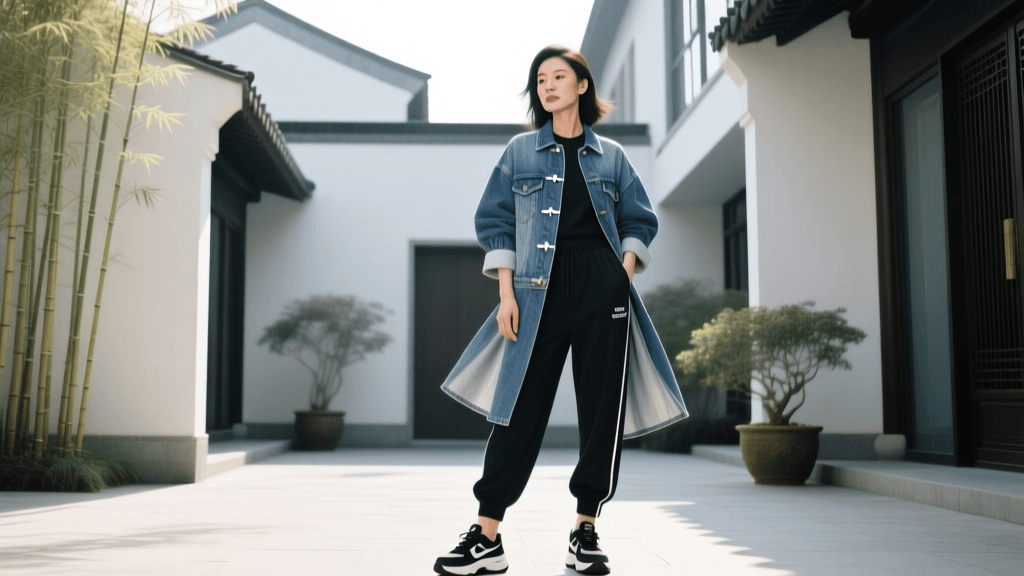
The Panjkou is a traditional knotted button crafted from fabric loops, historically used to fasten garments before the introduction of Western-style buttons. In New Chinese Style fashion, Panjkou closures are applied to unexpected modern garments: denim jackets, oversized knit cardigans, and even leather corsets. Paired with the mandarin or stand collar (reminiscent of the Qipao), these elements provide an immediate visual cue of Asian heritage without requiring the wearer to don a full historical robe.
Heritage Textiles: Xiangyunsha and Song Brocade
Fabric choice is paramount in Xin Zhongshi. Designers frequently utilize Xiangyunsha (mud silk), a luxurious, rustling silk dyed with yam juice and river mud, celebrated for its natural cooling properties and unique crackled patina. Additionally, modern Song Brocade (Songjin) is woven with metallic threads to create subtle, light-catching motifs of cranes, lotuses, or geometric lattices, elevating simple blouses into statement pieces.
Styling Matrix: Blending Heritage with Contemporary Streetwear
The golden rule of Xin Zhongshi is contrast. Pairing a highly ornate, traditional garment with utilitarian or minimalist modern pieces prevents the outfit from looking like a theatrical costume. Below is a practical styling matrix to help you build versatile, trend-forward outfits.
| Traditional Garment | Modern Pairing | Footwear & Accessories | Best Occasion | Est. Cost (USD) |
|---|---|---|---|---|
| Jacquard Mamianqun (Midi) | Oversized Black Leather Biker Jacket + Fitted Turtleneck | Chunky Platform Boots + Minimalist Silver Cuff | Evening Outings, Concerts, Street Style | $70 - $120 |
| Panjkou Knit Cardigan | High-Waisted Wide-Leg Denim Jeans + White Ribbed Tank | Retro Sneakers + Canvas Tote Bag | Casual Daywear, Campus, Cafe Hopping | $45 - $85 |
| Xiangyunsha Silk Camisole | Tailored Oversized Blazer + Cigarette Trousers | Pointed-Toe Loafers + Jade Pendant Necklace | Office Wear, Business Casual, Gallery Visits | $150 - $300 |
| Song-Inspired Stand Collar Blouse | Pleated Midi Skirt or Tailored Shorts | Mary Jane Shoes + Bamboo Handle Handbag | Brunch, Spring Festivals, Travel | $50 - $90 |
Outfit Formula Spotlight: The Urban Warrior
One of the most viral styling formulas on Douyin and TikTok pairs a dark, metallic-woven Mamianqun with a cropped, utilitarian cargo jacket. The juxtaposition of the Ming Dynasty pleats against military-grade nylon creates a striking 'cyberpunk-meets-heritage' aesthetic. To execute this, ensure the color palette remains muted—think charcoal, obsidian, and oxidized bronze—allowing the intricate weaving of the skirt to serve as the focal point.
Sourcing Guide: Where and How to Shop
Acquiring authentic Xin Zhongshi pieces requires navigating both mainstream e-commerce and niche designer platforms. While Western fast-fashion brands have begun appropriating the aesthetic, the highest quality and most culturally respectful garments are sourced directly from Asian markets.
- Taobao & Tmall: Ideal for entry-level and mid-tier pieces. Search using the keywords Xin Zhongshi (新中式), Mamianqun (马面裙), and Panjkou (盘扣). Look for shops with high 'repeat customer' rates and detailed sizing charts that account for the lack of stretch in traditional jacquard weaves.
- Xiaohongshu (Little Red Book): The premier platform for discovering independent, slow-fashion designers. Many emerging labels drop limited-edition Xiangyunsha collections here. Engaging directly with designers via direct message often allows for custom measurements, a crucial service when dealing with rigid silk fabrics.
- Concept Stores & Boutiques: For those outside of Asia, curated concept stores in cities like New York, London, and Paris are increasingly stocking New Chinese Style brands. Expect to pay a premium (often 2x to 3x the original retail price) for the curation and international shipping.
Garment Care: Preserving Delicate Heritage Fabrics
Traditional textiles require specialized care to maintain their structural integrity and visual brilliance. The China National Silk Museum emphasizes that improper washing is the leading cause of degradation in heritage-inspired textiles.
Caring for Xiangyunsha (Mud Silk)
Xiangyunsha is a living fabric that softens and develops a richer patina over time. However, it is highly sensitive to alkaline substances. Do: Hand wash gently in cold water using a pH-neutral, silk-specific detergent. Roll the garment in a clean towel to absorb excess water, and dry flat in the shade. Do Not: Never wring, twist, or expose Xiangyunsha to direct sunlight, as UV rays can cause the natural yam dyes to fade and the silk fibers to become brittle.
Maintaining Mamianqun Pleats
The sharp, knife-like pleats of a Mamianqun are achieved through high-heat pressing. To maintain them: 1. Always hang the skirt using a clip-hanger, ensuring the flat front and back panels are aligned perfectly. 2. If the pleats begin to relax, lightly mist the side panels with water, fold them back into their original creases, and press with a steam iron on a low-silk setting, using a pressing cloth to prevent shine marks on jacquard threads.
The Cultural Significance and Future of the Trend
The New Chinese Style is far more than a fleeting micro-trend; it is a profound expression of cultural confidence among younger generations. By adapting historical garments for the demands of modern life, wearers are actively participating in the preservation of intangible cultural heritage. Designers are now experimenting with sustainable production methods, utilizing organic cotton-linen blends and recycled brocades to make Xin Zhongshi more eco-conscious.
As the boundary between Eastern heritage and global streetwear continues to dissolve, Xin Zhongshi offers a masterclass in how to honor the past while dressing for the future. Whether you are draping a mud-silk skirt over combat boots or fastening a denim jacket with hand-knotted Panjkou, you are wearing a piece of living history, reimagined for the modern world.