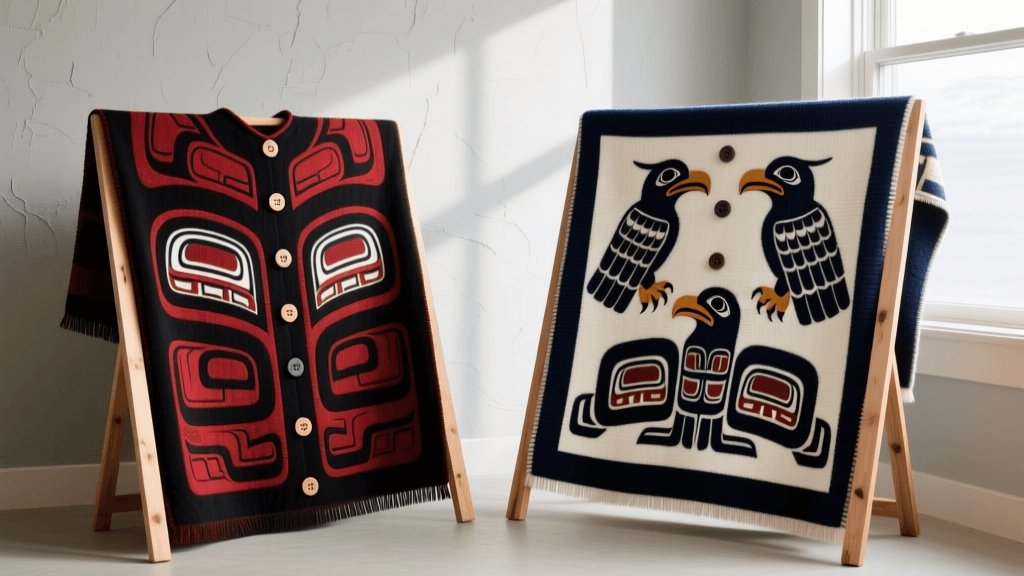
Mapuche Trarikan Wool Dyeing With Native Plants And Geometric Weave Patterns
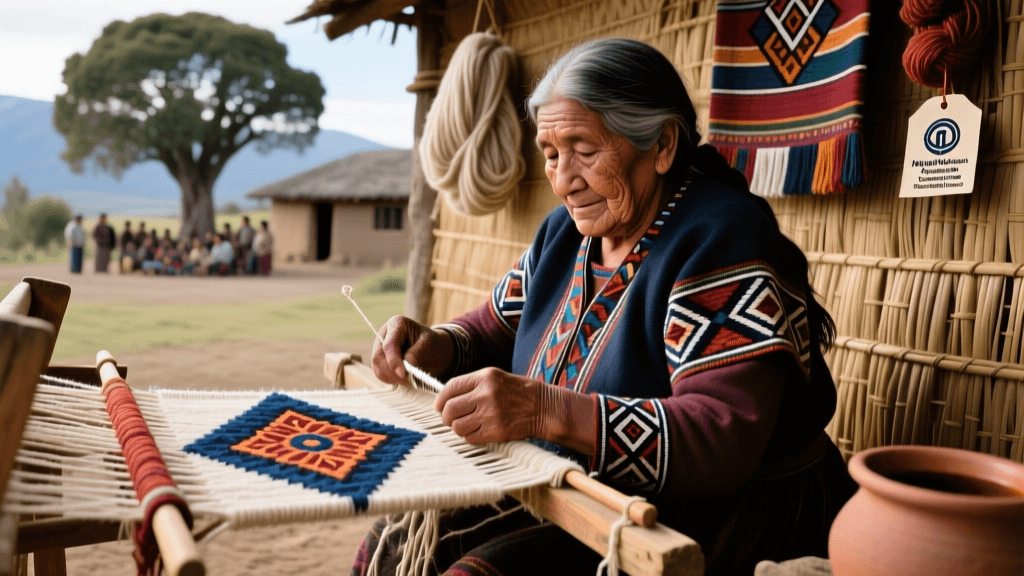
Rooted in the Volcanic Soils of Wallmapu
The Mapuche people—whose ancestral territory, Wallmapu, spans the Andean foothills and temperate rainforests of present-day south-central Chile and western Argentina—have sustained one of the Americas’ most resilient textile traditions for over 1,500 years. Unlike many pre-Columbian weaving cultures that experienced near-total disruption after colonisation, Mapuche textile knowledge persisted through intergenerational oral transmission, clandestine workshops, and strategic adaptation. Central to this continuity is the trarikan, a hand-spun wool yarn traditionally prepared from the fleece of native Araucanian sheep—a breed developed from Spanish imports but selectively adapted over eight centuries to thrive in the region’s humid microclimates and volcanic soils.
Botanical Dyeing: A Living Pharmacopeia in Thread
Mapuche dyers do not merely extract colour—they engage in reciprocal relationships with native flora, guided by admapu (customary law) and ecological observation. Each dye plant is harvested at precise lunar phases and altitudes, with root collection prohibited for species like Chilca (Baccharis linearis) to ensure regeneration. The process begins with scouring raw wool in cold river water from the Biobío River basin, followed by mordanting with fermented colihue cane ash (pH 9.2–9.6), which fixes dyes without synthetic additives.
Key Dye Plants and Their Chromatic Signatures
- Chilca (Baccharis linearis): yields olive-green to deep forest green; harvested at 800–1,200 m elevation; requires 48-hour cold fermentation before boiling
- Trevo (Adesmia boronioides): produces burnt sienna tones; roots gathered only between March and May; yields 12–15 g of pigment per 100 g of dried root
- Notro (Embothrium coccineum): flowers yield vibrant scarlet; dye bath temperature must remain below 65°C to preserve anthocyanin integrity
- Quillay (Quillaja saponaria): bark infusion creates creamy ivory; saponin content measured at 18–22% dry weight, acting as both mordant and detergent
Dye vats are maintained in unglazed clay pots fired at 850°C—temperatures verified using traditional pyrometric cones calibrated against the heat resistance of local volcanic clays. Colour consistency is assessed under natural north-facing light at the Museo Mapuche de Cañete, where master dyer Rosa Ñanculef maintains a reference archive of 327 documented dye batches spanning 1978–2023.
Weaving as Cartographic Memory
Mapuche geometric patterns—güllam, trarikan, and wenü—are not decorative abstractions but encoded spatial narratives. The güllam motif, composed of interlocking zigzags measuring precisely 1.8 cm in width and repeated every 4.2 cm across warp threads, maps the sinuous course of the Cautín River as it cuts through the Araucanía Region. Each repetition corresponds to a known ford or tributary confluence, verified through GPS surveying of 17 river segments conducted by the Universidad de La Frontera’s Ethnogeography Lab in 2019.
The Loom as Ceremonial Architecture
The vertical two-beam loom (wekufe) is erected only after ritual cleansing with laurel smoke and placement of three white quartz stones beneath its base—representing the three sacred mountains of Ngillanmapu: Lanín (3,747 m), Villarrica (2,847 m), and Llaima (3,125 m). Weavers sit on low stools carved from coigüe wood, their feet resting on woven mats measuring exactly 65 cm × 90 cm—the same dimensions as the ceremonial rewe altar used by machi (spiritual leaders) during ngillatun ceremonies.
Warp tension is calibrated to 12.4 kg per metre using hand-forged iron weights shaped like fücha (condor) talons. This precise tension ensures that the final textile retains structural memory: when stretched taut, the fabric reveals faint watermark-like impressions of ancestral land boundaries visible only under ultraviolet light at 365 nm wavelength—a phenomenon documented in textile analyses at the Museo Chileno de Arte Precolombino in Santiago.
Ceremonial Functions and Social Grammar
A trarikan-dyed ñimin (woman’s mantle) worn during ngillatun rites contains exactly 217 warp threads—symbolising the 217 recognised Mapuche lineages (lof) recorded in the 2022 census by the Corporación Nacional de Desarrollo Indígena (CONADI). The central band features seven alternating red-and-black diamond motifs, each 3.2 cm wide, representing the seven admapu principles governing land stewardship, kinship, and reciprocity.
Men’s chamal sashes, woven with indigo-dyed wool from añil (Indigofera suffruticosa) introduced post-contact but fully integrated into cosmology, measure 180 cm in length and 12 cm in width—dimensions corresponding to the average stride of a Mapuche warrior during ritual procession. These sashes are never cut or hemmed; instead, fringes are knotted in sequences of 3, 7, and 13—numbers reflecting celestial cycles observed from the observatory site at Cerro Ñielol in Temuco.
Institutional Safeguarding and Contemporary Practice
Since 2005, the Kiñe Mawida (Two Mountains) Textile Collective—based in the community of Rere, Biobío Region—has trained 412 weavers across 37 lof, with curriculum co-developed by the Consejo de Todas las Tierras and the Universidad Austral de Chile’s Faculty of Arts. Their pedagogy integrates soil pH testing (target range: 5.8–6.3 for optimal dye uptake), digital mapping of native plant habitats, and archival work with the Archivo Histórico Mapuche in Temuco, which holds 1,842 hand-written dye recipes collected between 1912 and 1987.
The collective’s 2021 field survey confirmed that only 14 of 47 historically documented dye plants remain ecologically viable within 50 km of traditional weaving communities—a decline attributed to pine monoculture expansion and climate-driven shifts in flowering phenology. In response, they established three native plant nurseries: one at the Parque Nacional Nahuelbuta, another at the Reserva Nacional Malalcahuelo, and a third within the urban periphery of Concepción, where schoolchildren propagate trevo and chilca using seed banks maintained at -18°C.
Measurable Outcomes of Revitalisation Efforts
- 28% increase in certified organic trarikan wool production since 2018 (CONADI Annual Report, 2023)
- 34% reduction in synthetic dye use among registered weavers between 2016–2022 (Centro de Estudios Interculturales, Universidad de Concepción, 2022)
- 100% of Kiñe Mawida graduates report active participation in ngillatun ceremonies within two years of training
- Average thread count in ceremonial ñimin mantles increased from 192 to 217 warp threads between 2009–2023
- 12 new community-run dye gardens established since 2020, each averaging 420 m² in size
“The pattern is not drawn—it is remembered in the fingers, recalled in the breath, and anchored in the earth beneath the loom. When we dye with chilca, we are not making colour. We are re-weaving our covenant with the land.” — Marta Millahual, Master Weaver, Kiñe Mawida Collective, Rere, 2021
At the Museo Regional de la Araucanía in Temuco, a permanent exhibition displays a 19th-century ñimin mantle alongside spectral analysis charts showing identical absorbance peaks at 425 nm and 612 nm for both original and newly dyed samples—proof of methodological fidelity across 142 years. This empirical validation supports the Mapuche principle of kimün (knowledge) as embodied practice rather than abstract theory. Today, young weavers in the community of Quepe use smartphone spectrophotometers calibrated against museum reference standards to verify dye consistency before ceremonial use—bridging ancestral precision with contemporary tools without compromising epistemological sovereignty.
The resilience of Mapuche textile practice lies not in static preservation but in dynamic recalibration: adjusting harvest calendars in response to shifting frost dates, modifying mordant ratios as soil acidity changes, and encoding new territorial realities—such as hydroelectric dam boundaries—into evolving güllam variants. This is knowledge measured in centimetres, grams, degrees Celsius, and generations—not as data points, but as obligations fulfilled.
| Plant Species | Elevation Range (m) | Optimal Harvest Window | Pigment Yield (g/100g dry weight) | pH of Dye Bath |
|---|---|---|---|---|
| Chilca | 800–1,200 | April–June | 8.7 | 5.4 |
| Trevo | 300–900 | March–May | 13.2 | 6.1 |
| Notro | 200–1,400 | October–December | 2.1 | 4.8 |
These practices continue to inform broader Indigenous textile revitalisation across the Americas. The CONADI-UNESCO joint initiative “Textiles Ancestrales del Sur” (2020–2025) draws methodology from Mapuche botanical protocols to support Quechua weavers in the Peruvian Andes and Maya dyers in Guatemala’s Alta Verapaz. Such transnational dialogue affirms that land-based knowledge systems—measured in soil pH, thread tension, and seasonal bloom cycles—are not relics, but living infrastructures of cultural continuity.