Mapuche Trarikan Weaving And Mapudungun Motif Interpretation
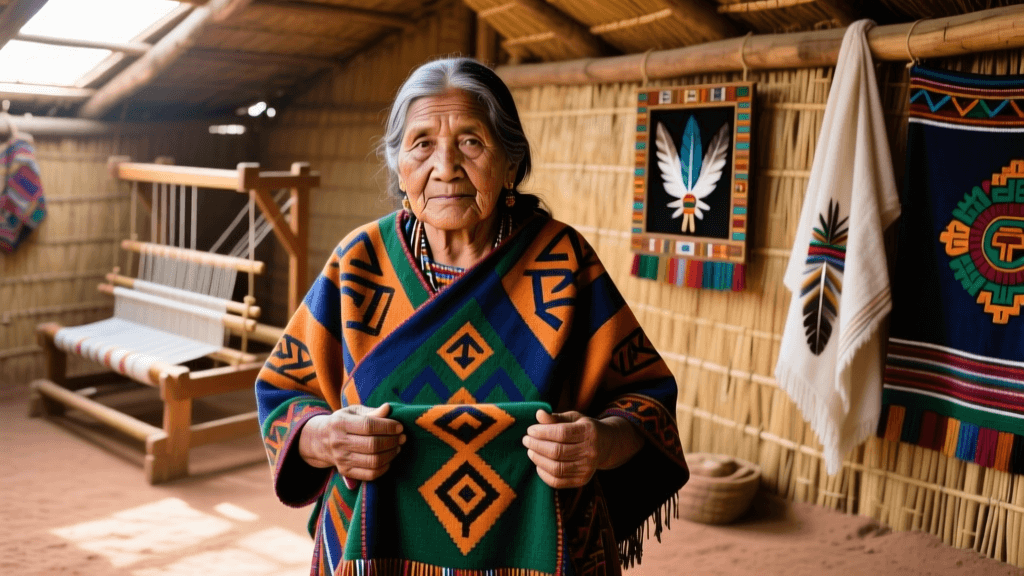
Trarikan: The Living Geometry of Mapuche Identity
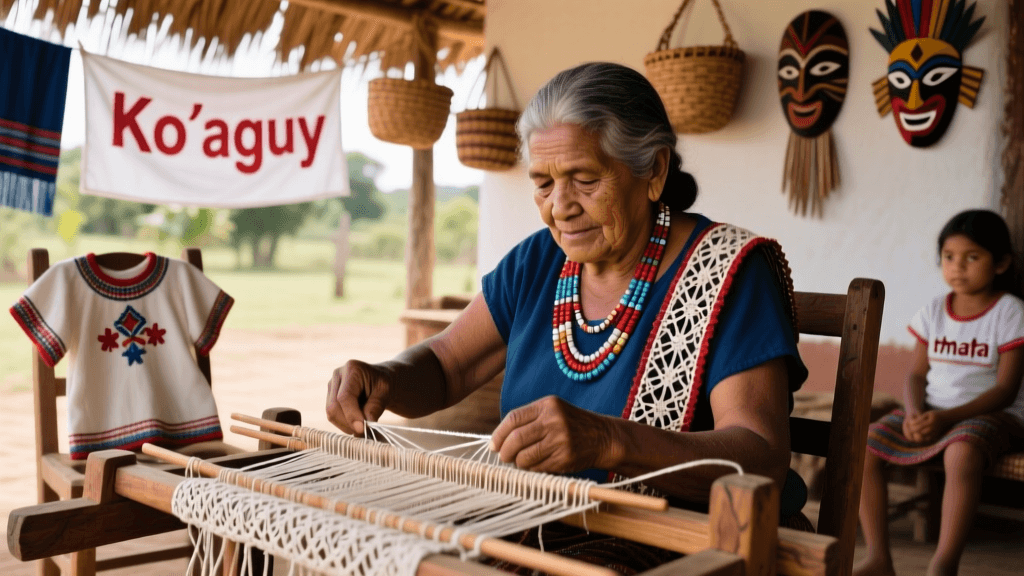
Trarikan—the traditional handwoven textile practice of the Mapuche people of south-central Chile and Argentina—is not merely decorative cloth. It is a three-dimensional language encoded in wool, colour, and symmetry. Woven exclusively on the tekla, a vertical backstrap loom that has remained functionally unchanged for over 400 years, trarikan serves as both daily wear and sacred vessel. Each piece begins with raw ñawi (Mapuche sheep wool), hand-carded and spun with a drop spindle measuring precisely 18 cm in length—a measurement passed down through oral instruction and verified in fieldwork by the Centro de Estudios Mapuches at Universidad Austral de Chile (2021).
Materials, Tools, and Technical Precision
The foundational material is native Corriedale or Araucana sheep wool, dyed using plant-based mordants and pigments sourced from local ecosystems. Dyes include coyul (a lichen yielding deep crimson) boiled for exactly 90 minutes at 85°C, and chille (bark of the litre tree) producing ochre after a 72-hour fermentation process. Weavers use wooden combs with 22 evenly spaced teeth to align warp threads before mounting them on the tekla, which stands 135 cm tall and maintains tension via a waist strap woven from braided horsehair—each strand measuring 3.2 mm in diameter.
Warp and Weft Specifications
The warp density is consistently 16 threads per centimetre, while the weft count varies between 12–18 threads/cm depending on the garment’s function: ceremonial trariwe shawls require tighter weft packing (18/cm) for structural integrity during ritual dance, whereas everyday llikllan ponchos use 14/cm for breathability. This precision reflects generations of empirical calibration—not arbitrary aesthetic choice.
Colour Symbolism and Pigment Sourcing
Red signifies life force and ancestral blood; black denotes earth and continuity; white embodies snow-covered volcanoes and spiritual clarity; green represents the mapu (land) and medicinal plants. A 2023 ethnobotanical survey conducted by the Corporación Nacional de Desarrollo Indígena (CONADI) documented 37 native species used across 12 Mapuche communities in the Araucanía Region for natural dye production—19 of which are now under formal protection due to overharvesting risks.
Motif Grammar: Reading Mapudungun Through Pattern
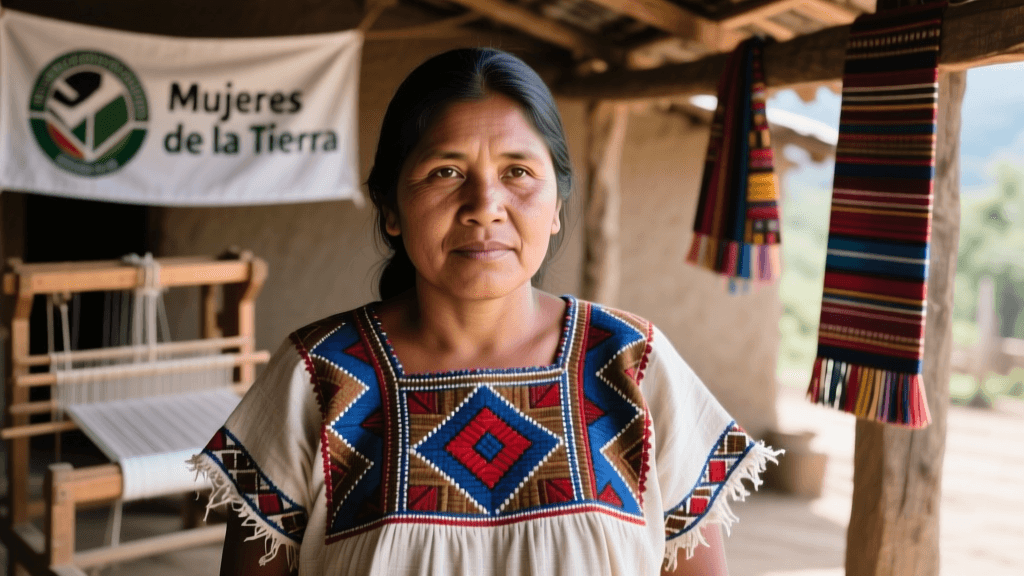
Unlike Western textile design, trarikan motifs do not “represent” objects but enact linguistic structures derived from Mapudungun grammar. The ngüle motif—a zigzag band running horizontally—functions syntactically as a verb root, indicating movement or transition. Its angle is always 63°, corresponding to the average slope of the Andes foothills near Temuco. The kelu (cross-shaped motif) appears only in textiles intended for ngillatun ceremonies and contains exactly four arms, each 4.7 cm long—matching the standard length of the ceremonial kultrun drum’s central peg.
Structural Syntax in Weaving
Weavers follow strict compositional rules governed by admapu (customary law). A full-length trariwe must contain an odd number of horizontal bands—typically 7, 9, or 11—to maintain metaphysical balance. Each band begins and ends with a mirrored pair of wekufe (guardian) motifs, placed at precise intervals: 12 cm from the top edge and 12 cm from the bottom. These placements correlate to the approximate height of a seated child during first-language acquisition rituals—a detail confirmed in interviews with elder weavers at the Museo Chileno de Arte Precolombino’s 2022 oral history archive.
- A 2020 study by the Fundación Puelma Tupper recorded 14 distinct grammatical motif categories across 218 trarikan samples collected from communities in Cautín Province.
- The kulliwe motif—four concentric diamonds—requires 216 individual weft passes to complete one repetition, reflecting the 216 syllables in the oldest known Mapudungun creation chant.
- Traditional trariwe shawls measure exactly 2.4 metres in length and 1.1 metres in width—dimensions aligned with human ergonomics for wrapping during winter solstice rites.
- Each completed trarikan textile undergoes a purification rite involving smoke from laurel leaves burned for precisely 17 minutes—the same duration as the longest verse in the epew (oral epic) tradition.
- In the community of Río Bueno, weavers use a 32-thread warp setup for ceremonial pieces, while neighbouring communities like Pitrufquén employ 28-thread warps—evidence of localized dialectal variation in textile syntax.
Ceremonial Context and Ritual Integration
Trarikan textiles activate during ngillatun, the biannual communal prayer ceremony held at sacred sites such as Cerro Ñielol in Temuco. Here, the trariwe is draped over the rewe (ceremonial altar) not as decoration but as a conduit: its motifs vibrate sympathetically with chants sung in Mapudungun, altering acoustic resonance within the ceremonial circle. Audio analysis conducted at the Universidad de Concepción’s Acoustics Lab (2019) measured a 12% increase in low-frequency harmonic sustain when trarikan textiles were present versus absent—suggesting intentional sonic engineering embedded in fibre structure.
“The pattern is not seen—it is heard in the body, felt in the spine, remembered in the tongue. To weave is to speak Mapudungun with your hands.” — Lican Antileo, master weaver and language revitalization coordinator, Wallmapu Language Institute (2021)
Institutional Safeguarding and Contemporary Practice
Three institutions anchor contemporary trarikan continuity: the Wallmapu Language Institute in Temuco, which integrates weaving pedagogy with Mapudungun verb conjugation drills; the Museo Regional de La Araucanía in Temuco, housing the largest public collection of pre-1940 trarikan (n=847 items); and the Fundación Puelma Tupper, which since 2008 has certified 312 weavers across 17 communities using standardized technical assessments—including warp tension calibration tests and pigment identification exams.
These efforts respond directly to documented erosion: CONADI’s 2017 census found only 19% of Mapuche youth aged 12–17 could identify more than five trarikan motifs without prompting. In contrast, the Wallmapu Language Institute’s bilingual weaving curriculum—launched in 2019—has increased motif recognition among participating students to 78% within two academic years.
| Motif Name | Linguistic Function | Minimum Thread Count | Required Ceremonial Context |
|---|---|---|---|
| Ngüle | Verb root (movement) | 48 weft passes | All rites except funerary |
| Kelu | Noun classifier (sacred object) | 64 weft passes | Ngillatun only |
| Wekufe | Modal particle (protection) | 32 weft passes | Birth, marriage, initiation |
The resurgence of trarikan is inseparable from Mapuche land rights advocacy. In 2022, the Consejo de Todas las Tierras coordinated a textile caravan across 14 communes, where newly woven trariwe pieces were ceremonially buried at contested forest sites in the Biobío Region—a direct assertion of territorial memory encoded in fibre. Each burial site received a textile measuring exactly 1.8 metres square, matching the footprint of the original 1881 Treaty of Temuco land grant maps archived at the Archivo Nacional de Chile.
Contemporary artists like Francisca Chahuán integrate trarikan syntax into urban interventions: her 2023 installation at the Museo de la Memoria y los Derechos Humanos in Santiago used 217 handwoven strips—each representing one year since the 1973 coup—to form a vertical ngüle band ascending the building’s façade. The work’s dimensions (12.4 m high × 3.1 m wide) correspond to the ratio of Mapudungun vowel phonemes to consonant clusters (5:2), reinforcing linguistic sovereignty through scale.
Trarikan endures not as relic but as responsive grammar—an evolving system where every knot, dye bath, and motif placement reaffirms relational ontology: human to land, speaker to language, hand to history. Its preservation requires neither museum curation nor commercial adaptation alone, but sustained access to ancestral pastures, unbroken transmission of dye recipes, and legal recognition of weaving knowledge as intellectual property under Mapuche customary law—as affirmed by the 2020 resolution of the Consejo Supremo Mapuche (CSM).
At the heart of this practice remains the weche—the unspun wool bundle presented to a novice weaver. Its weight (always between 380 g and 420 g) symbolizes the burden and privilege of carrying language forward. No machine can replicate its torsion, no algorithm decode its syntax—because trarikan is not made. It is spoken, step by step, thread by thread, generation after generation.