Hanfu on Global Runways: 2026 Mamianqun Couture Trends
The 2026 Couture Awakening: Hanfu’s Global Ascent
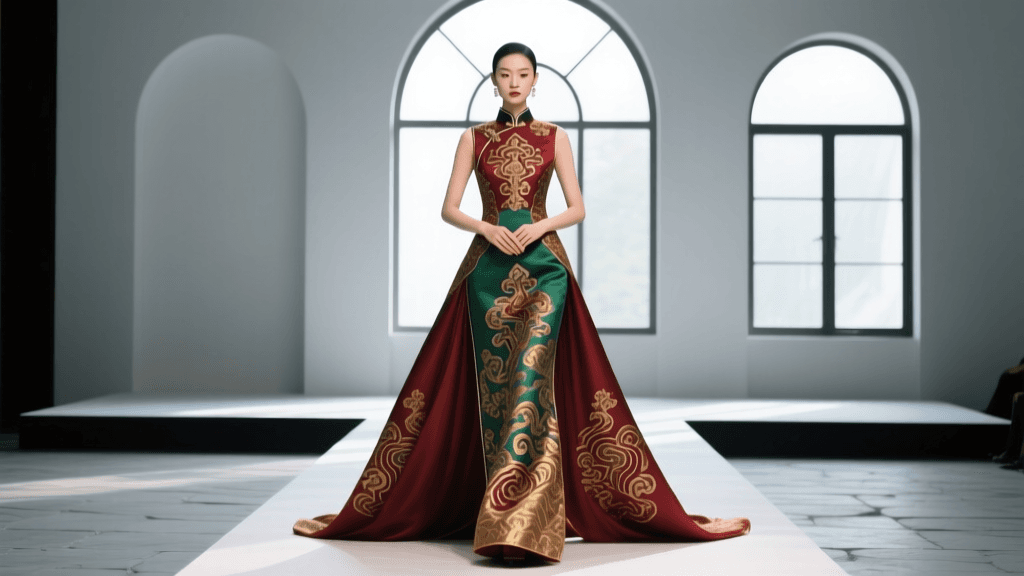
The global fashion landscape of 2026 has witnessed a profound and irreversible shift. Traditional Chinese Hanfu is no longer confined to historical reenactments, niche subcultures, or regional streetwear; it has unequivocally claimed its space on the most prestigious runways in Paris, Milan, and New York. During the Spring/Summer 2026 Haute Couture weeks, European and Asian fashion houses alike presented collections that seamlessly blended centuries-old Chinese garment engineering with avant-garde modern tailoring. At the forefront of this movement is the Mamianqun (horse-face skirt) and the intricate Song Jin (Song brocade), both of which have been reimagined for the contemporary luxury consumer. This evolution represents a critical milestone in the 'Asian Traditions' category, proving that historical Asian garments possess a dynamic, living relevance in the modern global wardrobe.
As sustainability and zero-waste pattern cutting become mandatory directives for major fashion conglomerates in 2026, the traditional Hanfu construction methods—which historically utilize flat-pattern cutting and minimal fabric waste—have become a blueprint for eco-conscious haute couture. Designers are now looking to the architectural brilliance of ancient Chinese textiles to solve modern fashion's most pressing environmental and aesthetic challenges.
The Mamianqun: From Ming Dynasty Courts to Parisian Runways
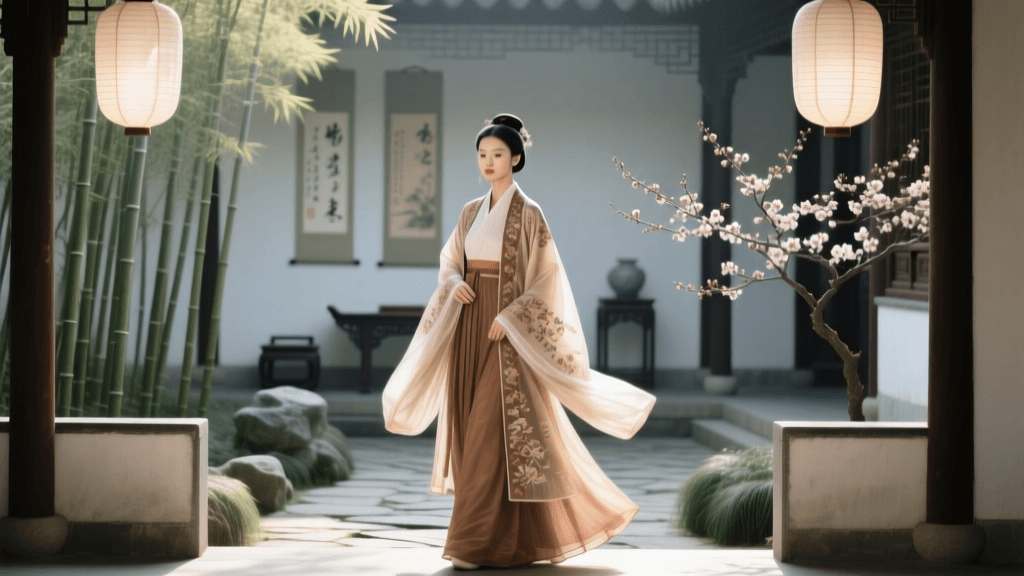
The Mamianqun, characterized by its flat front and back panels (guangmian) and intricately pleated sides (zhe), has become the undisputed centerpiece of the 2026 global runway narrative. Originally popularized during the Ming and Qing dynasties, the skirt's unique structure allows for a dramatic, sweeping silhouette that maintains modesty and ease of movement. In 2026, luxury houses have deconstructed and reconstructed the Mamianqun, utilizing innovative textiles while preserving its iconic geometry.
Structural Innovations in Pleating
Traditional Mamianqun pleating relies on precise heat-setting and hand-stitching to maintain the side folds while keeping the front panels perfectly flat. In the 2026 collections, we are seeing the integration of memory-shape polymers woven directly into organic silk blends. This allows the pleats to remain razor-sharp even in extreme humidity or during dynamic movement, a common issue with traditional pure-silk pleats. Furthermore, designers have introduced asymmetrical hemlines and modular waistbands (yaolan), transforming the historically floor-length skirt into versatile midi and maxi lengths suited for the fast-paced urban environments of London and Tokyo.
'The Mamianqun is not merely a skirt; it is an exercise in architectural tension. By adopting its flat-panel geometry, we have reduced our fabric waste by 34% in our 2026 couture atelier.' — Lead Patternmaker, Paris Haute Couture Syndicate
Song Brocade (Song Jin) and the New Luxe Minimalism
While the Mamianqun provides the structural foundation, Song Jin (Song Brocade) provides the textural soul of the 2026 Hanfu runway trend. Originating in the Song Dynasty, this weaving technique is renowned for its subtle, elegant patterns, muted color palettes, and complex jacquard structures. As documented by the Metropolitan Museum of Art's exploration of Chinese silk, the foundation of these historical textiles relies on complex drawloom techniques that produce a fabric that is both lightweight and remarkably durable.
In 2026, the weaving hubs of Suzhou have partnered with European luxury conglomerates to modernize Song Brocade for contemporary outerwear and structured bodices. By utilizing AI-assisted jacquard looms, artisans are now able to weave ultra-fine, recycled metallic threads into the silk matrix, creating a fabric that catches the light dynamically on the runway without the heavy, stiff drape of traditional brocades. This 'New Luxe Minimalism' favors tonal weaving—where the pattern is only visible when the light hits the fabric at specific angles—perfectly aligning with the 2026 consumer's desire for quiet luxury and understated elegance.
2026 Runway Adaptation Matrix: Tradition vs. Avant-Garde
To understand how traditional Hanfu elements are being translated for the international stage, it is essential to compare the historical garments with their 2026 runway counterparts. The following matrix outlines the key adaptations seen across major fashion weeks this year.
| Feature | Traditional Ming/Qing Hanfu | 2026 Global Runway Adaptation |
|---|---|---|
| Silhouette | A-line, floor-length, wide sleeves, voluminous layering | Asymmetrical hems, structured corsetry, modular and detachable sleeves |
| Textile | 100% Mulberry Silk, heavy brocade, Xiangyunsha | Bio-silk blends, smart temperature-regulating threads, recycled metallics |
| Fastenings | Fabric ties, jade toggles, knot buttons (pankou) | Magnetic hidden closures, 3D-printed resin clasps, oversized toggle hardware |
| Styling | Layered with inner garments (Zhongyi), worn with cloth boots | Worn over turtlenecks, paired with combat boots, mules, or tailored blazers |
| Color Palette | High contrast, auspicious reds, deep indigos, gold accents | Monochromatic earth tones, muted pastels, tonal jacquard weaving |
Actionable Guide: Acquiring and Styling Runway Hanfu in 2026
For the global consumer, collector, or fashion enthusiast looking to integrate these runway trends into their personal wardrobe, the market in 2026 offers unprecedented accessibility. However, navigating the intersection of traditional authenticity and modern couture requires a strategic approach.
Sourcing Authentic Couture Hanfu
The days of relying solely on overseas e-commerce platforms with unpredictable shipping times are over. In 2026, premier Hanfu brands such as Ming Huatang and Shisanyu have established permanent flagship boutiques in Paris, New York, and London. When investing in a high-end Mamianqun or Song Brocade jacket, consider the following pricing and quality tiers:
- Entry-Level Couture ($400 - $800 USD): Features machine-assisted jacquard weaving, blended silk-cupro fabrics, and standard sizing. Ideal for everyday luxury wear and office-appropriate styling.
- Artisan Bespoke ($1,200 - $3,500 USD): Hand-loomed Song Jin or Xiangyunsha (gambiered canton silk), custom-tailored pleating, and hand-knotted pankou fastenings. These pieces often come with a certificate of authenticity and a digital ledger verifying the artisan's origin.
- Runway Archival Pieces ($5,000+ USD): Limited-edition collaborations between European fashion houses and Suzhou weaving masters. These are highly collectible investment pieces that frequently appreciate in value.
Styling for the Global Metropolis
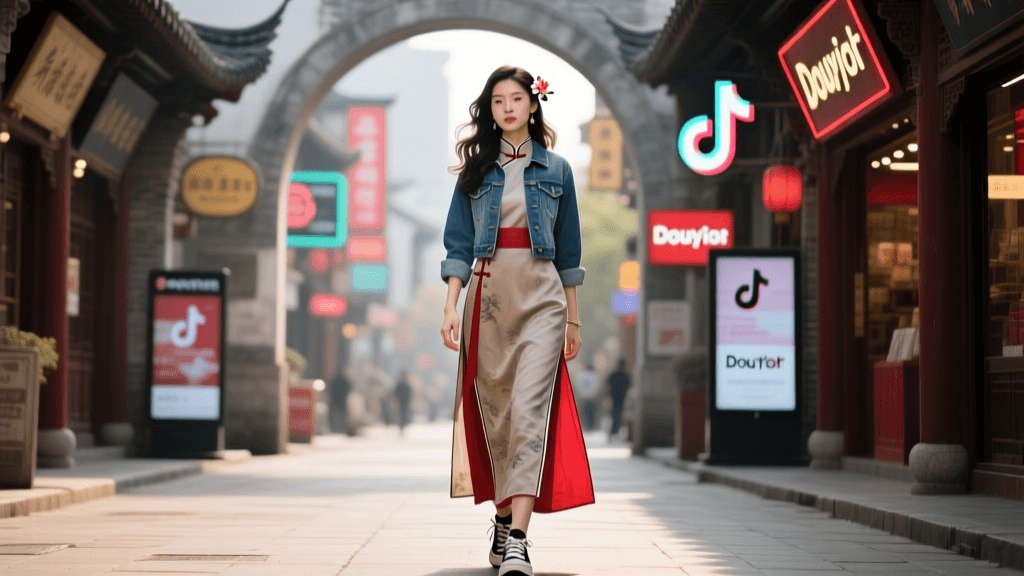
Integrating a Mamianqun into a Western or global wardrobe in 2026 is all about juxtaposition. The key to avoiding a 'costume' aesthetic is to anchor the traditional garment with hyper-modern, structured basics.
- The Corporate Edge: Pair a solid-color, midi-length Mamianqun with a sharply tailored, oversized wool blazer and a crisp cotton poplin shirt. Finish the look with pointed-toe leather mules. The flat front panel of the skirt mimics the sleek lines of a pencil skirt, while the side pleats offer dramatic movement.
- Evening Avant-Garde: Combine a metallic-threaded Song Brocade Ruqun (jacket) with high-waisted, wide-leg silk trousers. The cropped nature of the traditional jacket acts as a luxurious bolero, highlighting the waist while maintaining a fluid, elongated silhouette.
- Outerwear Integration: The Doukou (cloak) has been reimagined in 2026 as a structured, collarless trench coat. Worn over a minimalist turtleneck and leather boots, it provides a striking, architectural layer that honors traditional Hanfu outerwear while functioning perfectly in a modern winter climate.
The Future of Asian Traditions in Global Fashion
The integration of Hanfu into the 2026 global runway circuit is not a fleeting trend; it is a permanent recalibration of the fashion hierarchy. The cultural preservation and global exhibition of these garments, championed by institutions like the Victoria and Albert Museum's Chinese collections, have provided contemporary designers with unprecedented access to archival patterns and historical contexts. This academic foundation ensures that the modern adaptations we see on the runways today are rooted in deep respect and accurate historical referencing.
As we move through 2026, the dialogue between Eastern heritage and Western tailoring continues to yield some of the most breathtaking and sustainable garments in the industry. The Mamianqun and Song Brocade stand as testaments to the fact that true tradition is not static; it is a living, breathing art form that evolves, adapts, and ultimately conquers the global stage. For the modern wardrobe, embracing these Asian traditions is an investment in unparalleled craftsmanship, sustainable luxury, and a rich, cross-cultural narrative.