Mamianqun in 2026 Fashion Media: Runway to Streetwear Guide
The Mamianqun Takes Center Stage in 2026 Fashion Media
The global fashion landscape in 2026 has seen a definitive shift toward heritage garments that bridge the gap between historical reverence and contemporary utility. At the forefront of this movement is the Mamianqun (马面裙), widely known in Western fashion media as the 'horse-face skirt.' Once confined to historical dramas, museum archives, and niche Hanfu enthusiasts, the Mamianqun has been aggressively championed by global fashion editorials, luxury runways, and street-style photographers over the past twelve months. From the pages of Vogue to the digital spreads of Harper's Bazaar, the garment is no longer treated as a mere costume piece, but as a masterclass in structural tailoring and textile artistry.
Unlike the cultural appropriation debates that surrounded Western luxury houses attempting to replicate the silhouette in the early 2020s, the 2026 media narrative is defined by authentic collaboration and deep respect for the garment's origins. Top-tier fashion journalists are now focusing on the intricate jacquard weaving techniques, the mathematical precision of the pleats, and the garment's surprising versatility in modern wardrobes. For the contemporary consumer, understanding how to source, style, and care for a Mamianqun is essential for participating in this global sartorial conversation.
Deconstructing the Mamianqun: Architectural Origins and Anatomy
To truly appreciate the Mamianqun's dominance in 2026 fashion media, one must understand its structural genius. The term 'horse-face' does not refer to an animal, but rather to the mamian (horse-face) architectural feature of ancient Chinese defensive city walls. These were the flat, forward-facing bastions that protruded from the main wall, allowing defenders a wider angle of vision. The skirt mimics this architecture perfectly: it features flat, unpleated front and back panels (the 'horse-faces') flanked by deeply pleated side panels.
According to the extensive textile archives at the Victoria and Albert Museum's Asian collections, the Mamianqun reached its zenith during the Ming and Qing dynasties, celebrated for its economical use of fabric and its ability to accommodate a wide range of body types without complex darting. The overlapping waistbands and tie-fastening systems allowed the skirt to be easily adjusted, shared among family members, and repaired seamlessly.
Traditional vs. 2026 Modernized Adaptations
While the core anatomy remains untouched, 2026 ready-to-wear adaptations have introduced subtle modifications to suit the pace of modern life. Below is a comparison of historical specifications versus the contemporary iterations seen on today's runways.
| Feature | Traditional Ming/Qing Era | 2026 Modern Streetwear Adaptation |
|---|---|---|
| Waistband | White cotton/linen, wide (10-15cm) | Matching fabric, elasticated back, 5-8cm width |
| Length | Ankle-grazing (floor-length) | Midi (calf-length) to Maxi, with adjustable hooks |
| Fabric | Heavy silk brocade, damask, zhuanghua | Lightweight jacquard, matte crepe, vegan leather |
| Fastening | Fabric ties and traditional knot buttons | Hidden side zippers, snap hooks, D-rings |
| Pleat Setting | Hand-pressed, required frequent re-pressing | Heat-set synthetic blends or permanent resin pressing |
How Global Media is Styling the Horse-Face Skirt in 2026
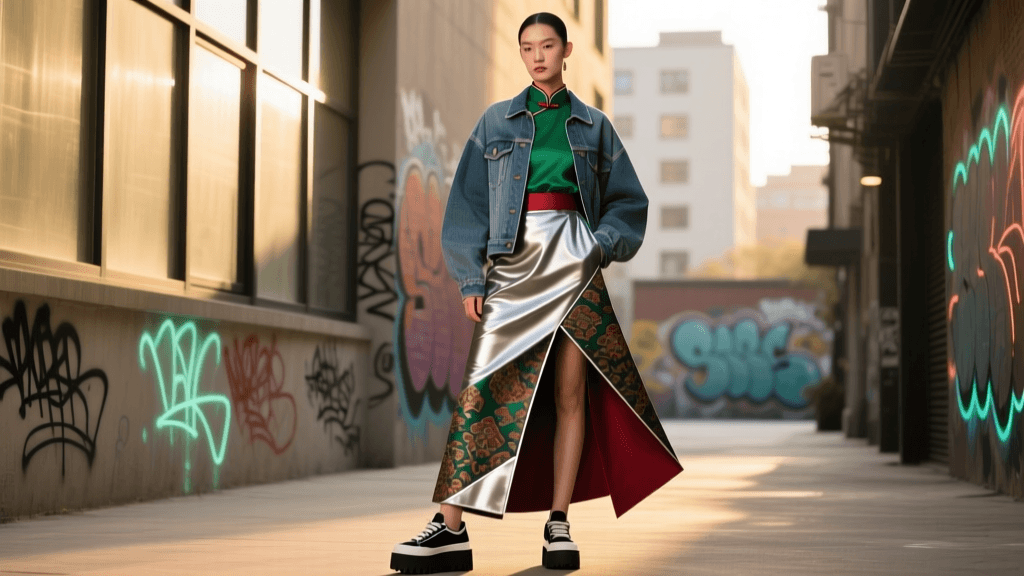
Fashion editors in 2026 have moved past pairing the Mamianqun exclusively with traditional Hanfu tops (like the ao or shan). Instead, the prevailing editorial trend is 'Heritage Clash'—juxtaposing the ornate, historical skirt with hyper-modern, minimalist, or utilitarian garments. The Metropolitan Museum of Art's Asian Art department has frequently highlighted how historical textiles inform modern design, and 2026 stylists are taking this academic approach directly to the streets.
- The Cyberpunk Aesthetic: High-gloss, dark-toned Mamianqun skirts paired with tactical harnesses, oversized cargo jackets, and chunky platform boots. This look has dominated street-style photography in Tokyo and Shanghai.
- The Corporate Fusion: Midi-length skirts in subdued, monochromatic jacquard (such as navy-on-navy or charcoal-on-black) worn with sharply tailored, oversized blazers and crisp poplin shirts.
- The Avant-Garde Minimalist: Floor-length, unembellished crepe Mamianqun skirts paired with tight, asymmetrical knitwear and sculptural leather accessories, letting the architectural pleats do all the talking.
Actionable Styling Guide: Bringing Editorial Looks to Your Wardrobe
Translating high-fashion editorial concepts into daily wear requires an understanding of proportion, fabric weight, and color theory. Here are three actionable ways to style the Mamianqun in 2026, complete with measurements and cost estimates.
1. The Structured Office (Midi-Length)
For a professional environment, opt for a midi-length Mamianqun (hitting exactly mid-calf, roughly 75-80cm from the waist). Choose a matte crepe or a micro-jacquard with a subtle geometric or floral motif. The lack of high-shine silk prevents the garment from looking like evening wear. Pair it with a structured, single-breasted wool blazer that hits just above the skirt's waistband to maintain a clean silhouette. Tuck in a lightweight silk camisole. Expect to invest between $120 and $250 for a high-quality, office-appropriate piece from contemporary heritage brands.
2. The Weekend Tech-Wear (Maxi-Length)
For weekend events or streetwear photography, a maxi-length skirt (95-105cm) in a durable, water-resistant nylon blend or vegan leather is ideal. The 2026 trend heavily favors utilitarian hardware, so look for skirts that have replaced traditional ties with heavy-duty metal D-rings and snap buckles. Pair this with a cropped, water-resistant windbreaker and thick-soled combat boots. The heavy drape of the maxi-length pleats creates a striking, kinetic effect when walking. Pricing for tech-wear adaptations typically ranges from $180 to $350.
3. Elevated Evening Gala (Floor-Length)
For formal events, embrace the traditional opulence but modernize the top half. A floor-length silk brocade Mamianqun featuring classic motifs like the shuijiangya (water and mountain hem) is a showstopper. Instead of a traditional top, pair it with a backless, tailored tuxedo vest or a sleek, high-neck sleeveless bodysuit in a color pulled directly from the skirt's secondary thread. This tone-on-tone styling technique is a favorite among 2026 red-carpet stylists. Artisanal silk brocade pieces are an investment, generally starting at $400 and reaching upwards of $1,200 for hand-woven textiles.
The Semiotics of Motifs: Choosing Your Pattern
Global fashion media in 2026 places a heavy emphasis on the meaning behind the motifs woven into the jacquard. Understanding these symbols allows you to choose a garment that aligns with your personal narrative or the occasion.
- Peonies and Lotuses: Representing wealth, honor, and purity. These are highly versatile and appropriate for weddings, galas, and celebratory events.
- Crane and Pine Motifs: Symbolizing longevity and resilience. Often seen in subdued, earthy tones, these are excellent for professional or academic settings.
- Cloud and Dragon Patterns: Historically reserved for royalty, modern interpretations use these for bold, avant-garde streetwear. In 2026, designers are abstracting these motifs into geometric, almost pixelated weaves for a futuristic edge.
Sourcing Authentic and Modernized Mamianqun in 2026
As demand has skyrocketed, the market has been flooded with low-quality imitations that lack the structural integrity of a true Mamianqun. When sourcing your garment, pay close attention to the pleat setting. A genuine, high-quality Mamianqun will have heat-set pleats that remain razor-sharp even after movement. The flat panels (the 'horse-faces') should be perfectly aligned when the skirt is wrapped; if the front and back panels do not overlap symmetrically, the pattern cutting is flawed.
Furthermore, examine the waistband. Traditional skirts use a separate, sturdy cotton waistband to bear the weight of the heavy silk. Modern 2026 adaptations should at least feature a reinforced, interfaced waistband with a hidden elastic panel at the back for comfort. Avoid skirts where the waistband is made of the same flimsy material as the pleats, as this will cause the skirt to sag and ruin the architectural drape.
Care and Maintenance: Preserving the Pleats
The most common complaint among newcomers to the Mamianqun is the fear of ruining the pleats during washing. To maintain your garment in pristine condition throughout 2026 and beyond, follow these strict care protocols:
- Washing: Never machine wash a jacquard or silk Mamianqun. Hand wash in cold water using a pH-neutral silk detergent, or opt for professional dry cleaning. For synthetic blends, a gentle machine wash in a mesh laundry bag is acceptable, but air drying is mandatory.
- Drying: Never wring the skirt. Roll it in a clean, dry towel to absorb excess moisture, then hang it on a clip hanger in a shaded, well-ventilated area. The weight of the wet fabric will naturally help pull the pleats straight.
- Ironing: If the pleats lose their sharpness, lay the skirt flat on an ironing board. Align the pleats carefully and secure them with sewing pins or binder clips at the hem. Use a steam iron on a low setting, always placing a cotton pressing cloth between the iron and the fabric to prevent scorching the jacquard threads.
Conclusion
The Mamianqun's ascent in 2026 global fashion media is not a fleeting trend; it is a permanent integration of Asian sartorial heritage into the global wardrobe. By understanding the architectural brilliance of the 'horse-face' panels, respecting the semiotics of its woven motifs, and mastering the art of modern styling, you can seamlessly incorporate this masterpiece into your daily rotation. Whether you are navigating the corporate world in a midi-length crepe skirt or attending an avant-garde gala in a sweeping silk brocade, the Mamianqun offers a profound connection to history, reimagined for the future of fashion.