Baltic Amber & Silver: Lithuanian Folk Dress Jewelry 2026
The Heart of the Tautinis Kostiumas: Amber and Silver
When exploring the rich, intricate tapestry of European folk dress, few regional traditions command as much reverence and visual splendor as the Lithuanian tautinis kostiumas (national costume). While the hand-woven linen shirts, woolen skirts, and vibrant galionai (woven sashes) often capture the eye first, it is the traditional jewelry and accessories that truly anchor the ensemble in history. In 2026, the revival of traditional Baltic attire has reached new heights, driven by a renewed cultural pride and a global appreciation for sustainable, heritage-based craftsmanship. At the core of this revival are two foundational materials: Baltic amber (gintaras) and intricately worked silver.
Unlike the heavy gold ornamentation found in some Southern European traditions or the bead-heavy accessories of Slavic folk dress, Lithuanian folk jewelry is defined by its organic connection to the natural landscape. The Baltic Sea has gifted the region with millions of years of fossilized tree resin, while local silversmiths have spent centuries perfecting techniques that mirror the region's flora and fauna. This comprehensive guide explores the historical significance, modern 2026 market dynamics, and authentication methods for Lithuanian folk dress jewelry and headwear.
Baltic Amber (Gintaras): The Tears of the Sea
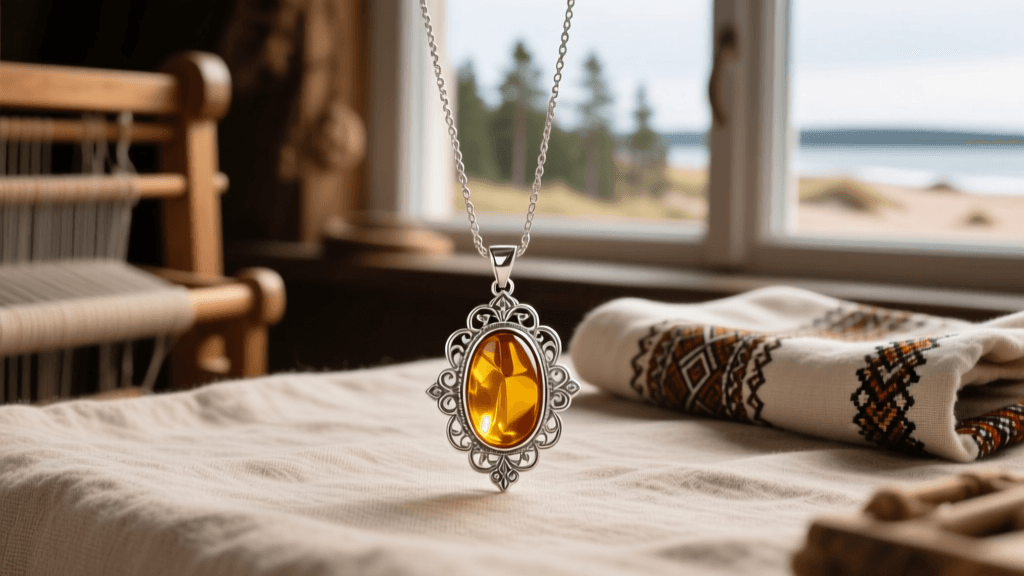
Baltic amber, scientifically known as succinite, is not merely a gemstone in Lithuanian culture; it is a sacred artifact of the land. Formed over 44 million years ago from the resin of ancient Eocene pine forests, amber has been traded along the famous 'Amber Road' since antiquity. In the context of the tautinis kostiumas, amber was traditionally reserved for a woman's most important life events, particularly her wedding day.
Historically, a Lithuanian bride would wear heavy, multi-strand amber necklaces known as karoliai. These were not just decorative; they were believed to possess protective, healing, and purifying properties. The warm, electrostatic nature of amber was thought to ward off evil spirits and ensure fertility. According to the Lithuanian National Museum, the size, clarity, and color of the amber beads directly correlated with the family's social standing and the dowry's value. Dark, opaque 'cognac' amber was highly prized, though the rare 'white' or 'bone' amber was considered the most sacred.
In 2026, the sourcing of Baltic amber has become heavily regulated to protect the fragile coastal ecosystems of the Curonian Spit and the Sambian Peninsula. Modern artisans creating authentic folk dress accessories now rely on ethically gathered sea-washed amber or strictly licensed mining operations, ensuring that the 'Lithuanian Gold' remains a sustainable cornerstone of national heritage.
Silver Accessories: Crowns, Chains, and Clasps
While amber provided the color and spiritual weight, silver provided the structural elegance of Lithuanian folk accessories. Silver was the metal of choice for the rural populace, as gold was historically restricted by sumptuary laws and sheer cost. The silversmiths of Vilnius and Kaunas developed distinct regional styles that are still meticulously replicated by master jewelers today.
One of the most striking silver accessories in the Lithuanian folk wardrobe is the segtukas (brooch or clasp). Used to fasten the heavy linen collars of the marškiniai (shirt) or to secure the woven sashes, these silver clasps were often shaped like stylized suns, stars, or tulips. The tulip motif, representing spring and rebirth, is particularly ubiquitous in the Dzūkija and Suvalkija regions.
Another vital component is the silver chain or necklace, often worn layered with amber. In the Aukštaitija region, women wore elaborate silver neck-rings and chains featuring dangling coin replicas or small silver bells. The gentle chiming of the silver bells was traditionally believed to mimic the sound of flowing water, further connecting the wearer to the natural world.
Traditional Headwear: The Silver Kalpokas and Amber Pins
Headwear in European folk dress is a primary indicator of a woman's marital status, and Lithuania is no exception. Unmarried women and brides traditionally wore elaborate crowns or wreaths. The most prestigious of these was the kalpokas, a tall, intricate crown made of silver threads, metallic ribbons, and occasionally accented with small amber beads or silver flowers.
Upon marriage, a woman's hair was covered with a nuometas (linen wimple) or a bonnet, but the transition ceremony often involved the symbolic removal of the silver crown and the gifting of amber-headed pins to secure the new headwear. In 2026, contemporary folk ensembles and dance troupes frequently commission bespoke kalpokas replicas, utilizing modern 3D-modeling alongside traditional silver-casting techniques to achieve historical accuracy without the prohibitive weight of solid antique silver.
2026 Buyer’s Guide: Authenticating Genuine Succinite
As the global demand for heritage fashion and organic gemstones has surged in 2026, the market has unfortunately seen an influx of counterfeit amber. Copal (immature tree resin), dyed plastics, and glass are frequently passed off as genuine Baltic succinite. For collectors and folk dress enthusiasts, knowing how to authenticate amber is essential. The Gemological Institute of America (GIA) outlines several definitive properties of true amber that buyers should utilize.
| Test Method | Genuine Baltic Amber Reaction | Copal / Plastic / Glass Reaction |
|---|---|---|
| Saltwater Float Test | Floats in a saturated saltwater solution (1 part salt to 4 parts water). | Glass and most plastics sink. Copal may float but fails other tests. |
| UV Light Test | Exhibits a distinct pale blue, green, or milky white fluorescence under UV. | Plastics show no fluorescence or a dull, artificial glow. Copal glows weakly. |
| Hot Needle Test | Emits a pleasant, distinct pine/forest scent when touched with a hot needle. | Plastics smell like burnt chemicals. Copal smells sweet but melts instantly. |
| Acetone Rub | Surface remains completely unaffected and does not become tacky. | Copal and some plastics become sticky or dissolve slightly upon contact. |
Note: Destructive tests like the hot needle should only be performed on inconspicuous areas or loose beads, as they will leave a permanent mark on the jewelry.
2026 Pricing and Sourcing Authentic Lithuanian Jewelry
Sourcing authentic folk jewelry requires navigating both antique markets and modern artisan guilds. According to Lithuania Travel, the highest quality amber and traditional silverwork can be found through certified guild members in Vilnius, Kaunas, and the coastal town of Palanga. The Palanga Amber Museum and its surrounding artisan shops remain the gold standard for verified succinite.
Below is a general pricing guide for authentic Lithuanian folk dress accessories in the 2026 market. Prices reflect the increased cost of raw silver and the premium placed on ethically sourced, sea-washed amber.
| Item Description | Material & Origin | Estimated 2026 Price Range (EUR) |
|---|---|---|
| Traditional Multi-Strand Karoliai (Necklace) | Authentic Cognac Baltic Amber, unpolished | €450 - €1,200 |
| Silver Segtukas (Tulip Motif Brooch) | Sterling Silver (925), hand-cast by guild artisan | €85 - €250 |
| Antique Silver Galionai Sash Clasp | 19th-Century Coin Silver, verified antique | €300 - €800 |
| Modern Replica Kalpokas (Bridal Crown) | Silver-plated brass, metallic threads, amber accents | €600 - €1,500 |
| White/Bone Amber Prayer Beads | Rare opaque Baltic Amber, hand-turned | €800 - €2,500+ |
Preserving Your Heritage Pieces
Owning traditional Lithuanian jewelry is an exercise in cultural preservation. Both amber and antique silver require specific care to maintain their historical integrity and physical beauty. Amber is relatively soft, ranking only 2 to 2.5 on the Mohs hardness scale. It scratches easily and can be damaged by harsh chemicals, perfumes, and prolonged exposure to direct sunlight, which can cause the resin to oxidize, craze, and turn brittle over time.
To care for your amber karoliai, always store them separately from harder gemstones and metals in a soft linen pouch—fittingly, the same material used in the folk costumes they accompany. Clean amber only with a damp, soft cloth and mild soap if absolutely necessary, avoiding ultrasonic cleaners entirely. For silver segtukas and chains, regular polishing with a non-abrasive silver cloth will prevent heavy tarnishing. If your silver features oxidized detailing meant to highlight the floral motifs, avoid dipping the pieces in chemical silver baths, as this will strip the intentional patina that gives the folk jewelry its depth and character.
Conclusion: Wearing History in the Modern Era
The accessories of the Lithuanian tautinis kostiumas are far more than mere decoration; they are a wearable archive of Baltic history, geology, and artistry. As we move through 2026, the commitment to authentic materials and traditional craftsmanship ensures that the legacy of Baltic amber and silver remains vibrant. Whether you are assembling a historically accurate folk ensemble, participating in the Dainų šventė (Song and Dance Festival), or simply honoring your heritage through a single, authentic amber brooch, these pieces serve as a timeless bridge between the ancient forests of the Eocene and the living culture of modern Europe.