Top Hanfu Styles for Qigong and Meditation in 2026
The Intersection of Hanfu and Mindful Movement in 2026
As the global wellness landscape continues to evolve in 2026, practitioners of traditional Chinese arts are increasingly seeking authenticity in every aspect of their routines. This includes the garments they wear. Hanfu, the traditional clothing of the Han Chinese, has transcended its role as ceremonial or streetwear fashion to become a functional, deeply intentional component of holistic wellness. For those engaged in Qigong, Tai Chi, and seated meditation, the physical properties of clothing directly impact the flow of Qi (vital energy) and the depth of physical relaxation.
According to the National Qigong Association, the practice relies on the seamless integration of posture, breathing, and focused intention. When clothing restricts the diaphragm, binds the joints, or traps excess body heat, the mind-body connection is fractured. In 2026, the most dedicated practitioners are turning to specific historical Hanfu silhouettes—crafted from sustainable, natural fibers—to facilitate unobstructed movement and thermal regulation during their daily wellness rituals.
The Philosophy of Qi and Sartorial Flow
Traditional Chinese Medicine (TCM) posits that Qi flows through a network of meridians situated just beneath the skin and deep within the joints. Tight modern activewear, while excellent for high-impact cardio, can compress these meridians during the slow, deliberate, and expansive movements of Qigong forms like Ba Duan Jin (Eight Brocades). Hanfu is inherently designed around the concept of song (relaxation or looseness). The structural geometry of traditional Chinese tailoring avoids darts, tight armholes, and restrictive waistbands, relying instead on flat cutting and gravity to drape the fabric over the body.
The World Health Organization recognizes traditional practices like Qigong as vital components of holistic well-being, emphasizing the importance of environment and lifestyle harmony. Wearing garments that align with these ancient principles grounds the practitioner, creating a psychological trigger that signals the nervous system to transition from sympathetic (fight-or-flight) dominance to parasympathetic (rest-and-digest) tranquility.
Top Hanfu Silhouettes for Unrestricted Movement
Not all Hanfu styles are suited for physical cultivation. Heavily layered court garments or stiff, embroidered jackets are best reserved for festivals. For meditation and Qigong, practitioners in 2026 favor minimalist, historically accurate silhouettes that prioritize biomechanical freedom.
The Daopao (Taoist Robe)
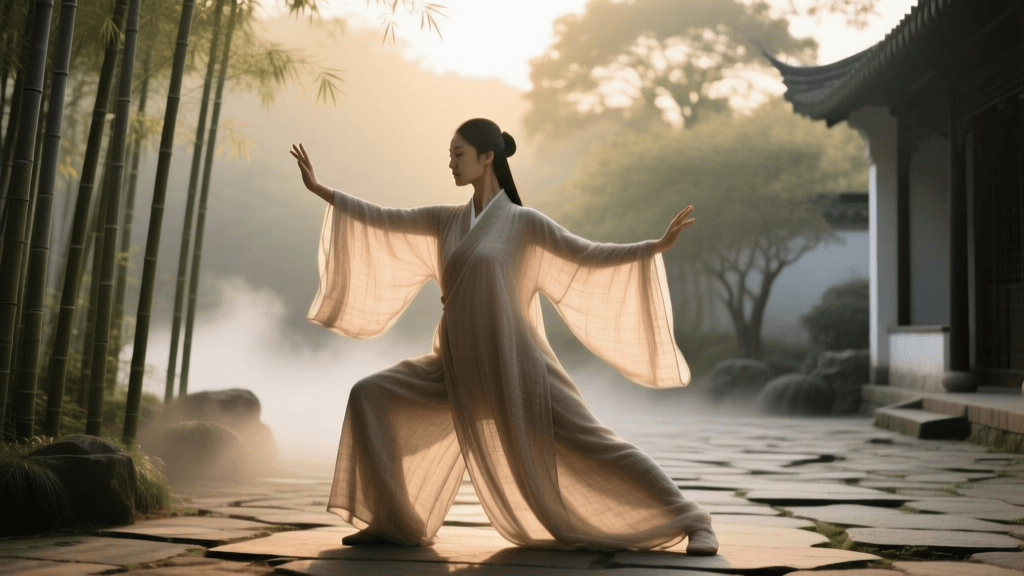
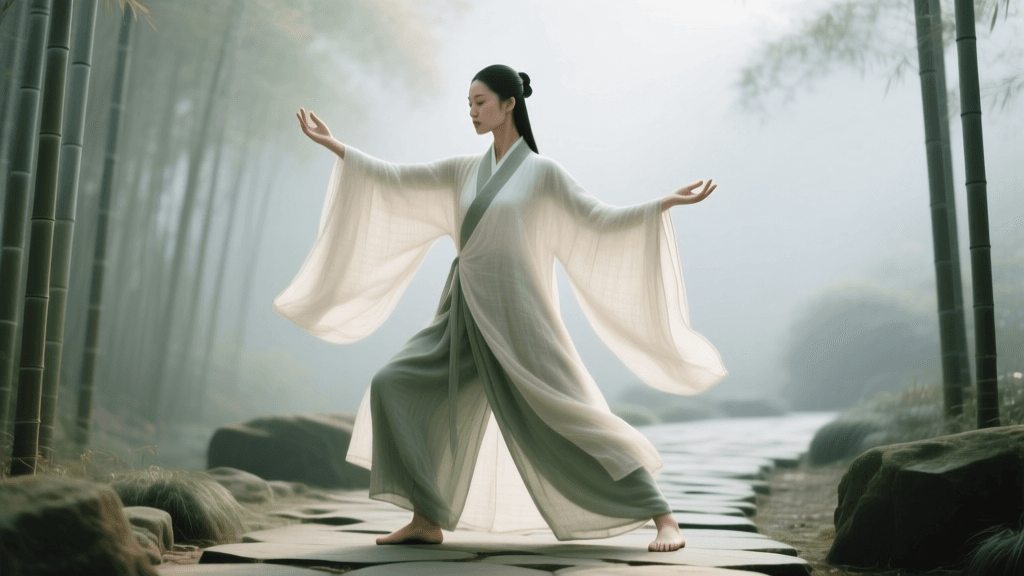
The Daopao is a cross-collared, wide-sleeved robe that has been worn by Taoist scholars and martial artists for centuries. Its defining feature for wellness practitioners is the presence of deep side slits and a loose, flowing bodice. During Qigong arm circles and overhead reaches, the wide sleeves allow for complete shoulder articulation without the fabric pulling at the underarm. The cross-collar (jiaoling youren) secures softly at the waist with internal ties, avoiding the abdominal compression caused by modern elastic waistbands or belts, thereby allowing for deep, diaphragmatic breathing.
Songku (Wide-Leg Trousers)
Originating from the Song Dynasty, Songku are wide-leg trousers that offer exceptional mobility. Unlike modern pants that restrict the hips and knees, Songku feature a generous cut through the thigh and a gusseted crotch. This makes them the ultimate garment for deep stances such as Ma Bu (Horse Stance) or Pu Bu (Crouch Stance). In 2026, modern adaptations of the Songku often include a soft, tie-closure waistband made from unbleached cotton or linen, ensuring that seated meditation postures like the lotus or half-lotus position remain completely unimpeded.
Banbi (Half-Sleeve Vest) for Layering
For cooler morning practices, the Banbi serves as an excellent layering piece. This half-sleeved vest worn over a base tunic provides core warmth without restricting the elbows or wrists. Keeping the core warm is essential in TCM to protect the internal organs from 'wind-cold' pathogens, while leaving the forearms exposed allows for precise hand and wrist movements in forms like Yi Jin Jing (Muscle/Tendon Change Classic).
2026 Fabric Guide: Natural Fibers for Meditation
The material of your Hanfu is just as critical as the cut. Synthetic blends trap sweat and generate static electricity, which can disrupt the subtle sensory awareness required in meditation. In 2026, the market has seen a massive resurgence in heritage textiles, with eco-friendly dyeing methods and organic farming taking center stage. As detailed by the Metropolitan Museum of Art, the historical production of Chinese silk and hemp was deeply intertwined with philosophical concepts of harmony and nature, a principle that modern wellness enthusiasts are eagerly reclaiming.
| Fabric Type | Breathability | Drape & Weight | Best Use Case | 2026 Avg. Cost (USD) |
|---|---|---|---|---|
| Raw Hemp (Dama) | Exceptional | Structured, medium-heavy | Outdoor Qigong, grounding practices | $85 - $140 |
| Washed Linen | High | Fluid, lightweight | Summer meditation, hot yoga hybrids | $70 - $120 |
| Mulberry Silk (Crepe) | Moderate | Ultra-fluid, featherlight | Indoor seated meditation, luxury retreats | $150 - $250 |
| Bamboo-Cotton Blend | High | Soft, stretchy, medium | Base layers, daily dynamic Tai Chi | $45 - $80 |
| Xiangyunsha (Mud Silk) | Moderate | Crisp, cooling, durable | Humid climates, premium outdoor practice | $200 - $350 |
Why Raw Hemp and Linen Dominate 2026 Wellness Trends
Raw hemp and washed linen possess natural antibacterial properties and a micro-porous structure that wicks moisture away from the skin while allowing ambient air to circulate. Hemp, in particular, has a slightly textured feel that provides gentle sensory feedback against the skin, helping practitioners maintain physical awareness (proprioception) during standing meditation (Zhan Zhuang). Furthermore, the 2026 push for regenerative agriculture has made organically grown, naturally dyed hemp Hanfu more accessible and affordable than ever before.
Structuring Your Morning Qigong Wardrobe
Dressing for a morning Qigong routine requires an understanding of the body's changing thermal output. A typical 45-minute session begins with slow, internal warm-ups and progresses to expansive, heat-generating movements, before concluding with cooling, static meditation.
- The Base Layer: Start with a lightweight, unbleached bamboo-cotton Zhongyi (inner garment). This sits close to the skin, absorbing the initial light perspiration without clinging.
- The Outer Shell: Don a linen or hemp Daopao. The wide sleeves will act as bellows during arm movements, circulating air around the torso and regulating your core temperature.
- Footwear: Ditch the thick-soled running shoes. Traditional Buxie (cloth shoes) with thin, flexible cotton soles allow the toes to grip the ground, enhancing balance and stimulating the Yongquan (Kidney 1) acupressure point on the sole of the foot.
Caring for Naturally Dyed Wellness Garments
A significant trend in 2026 is the use of botanical dyes—such as indigo, madder root, and gardenia—in Hanfu production. These dyes are not only eco-friendly but are also believed in TCM to possess subtle energetic properties. Indigo, for instance, is historically associated with cooling and calming energies, making it an ideal choice for garments worn during evening meditation or stress-relief Qigong.
To preserve the integrity of these natural dyes and the structural fibers of your Hanfu, avoid harsh chemical detergents and high-heat machine drying. Hand wash your linen and hemp garments in cool water using a pH-neutral, plant-based soap. Air dry them in the shade; direct sunlight can rapidly fade botanical dyes and degrade natural fibers over time. The natural wrinkles of linen and hemp are considered part of the garment's organic aesthetic, eliminating the need for ironing and aligning with the mindful, low-stress philosophy of your wellness practice.
Conclusion: Embodying Tradition in Modern Practice
The integration of Hanfu into Qigong and meditation is not merely an aesthetic choice; it is a profound return to the holistic roots of Chinese wellness culture. By selecting garments that respect the body's biomechanics, utilize breathable natural fibers, and honor traditional tailoring methods, practitioners in 2026 are finding deeper focus, greater physical comfort, and a more authentic connection to their ancestral practices. Whether you are flowing through the Eight Brocades at dawn or sitting in silent meditation at dusk, the right Hanfu acts as a second skin—one that breathes, moves, and cultivates Qi alongside you.