Mormon Temple Garments 2026: History, Styles & Sizing Guide
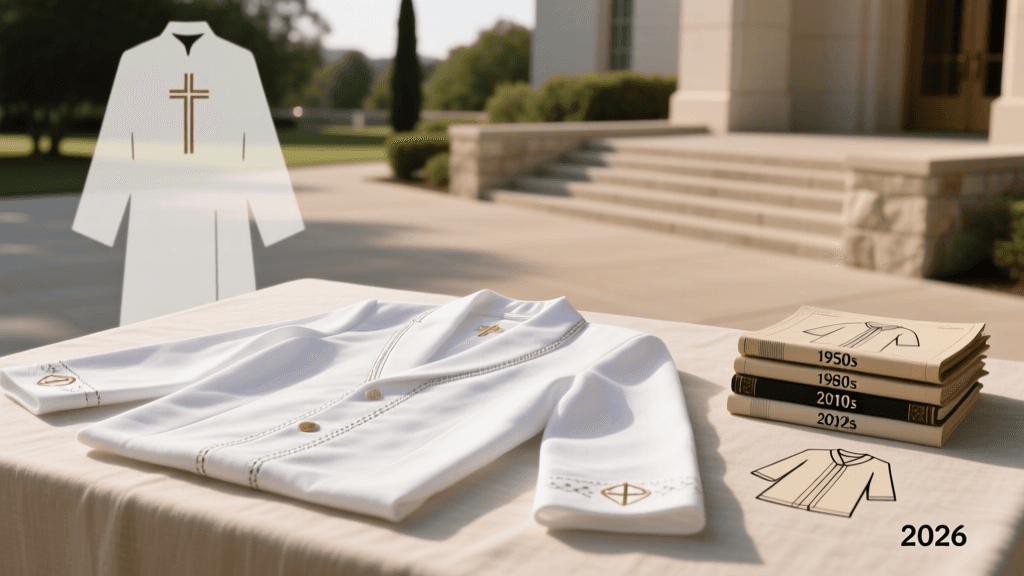
Introduction to LDS Temple Garments
For members of The Church of Jesus Christ of Latter-day Saints, temple garments represent a deeply sacred and personal form of religious dress. Often referred to simply as 'garments' or 'Mormon underwear' by the general public, these specialized undergarments are worn by adult members who have participated in the temple endowment ordinance. Unlike mainstream fashion or secular traditional clothing, temple garments are not intended for public display; rather, they are worn beneath everyday clothing as a constant, private reminder of the covenants made with God. As we move through 2026, the design, manufacturing, and distribution of these garments have evolved significantly to meet the needs of a global, diverse, and climate-conscious membership, while strictly maintaining the theological symbols and reverence required by Church leadership.
The Theological Significance and Meaning
To understand the evolution of the temple garment, one must first understand its spiritual purpose. According to the Gospel Topics Essay on Temple Garments, the garment serves as a tangible reminder of the covenants made in the temple. It is viewed by faithful members as a source of spiritual protection and a shield against temptation. The garments feature specific woven or embroidered marks—the square, the compass, the navel mark, and the knee mark—each carrying profound symbolic meaning related to morality, divine direction, and spiritual sustenance. Because of this sacred nature, the Church periodically updates the physical construction of the garment to improve comfort and practicality, but the sacred marks and the fundamental coverage requirements remain strictly unchanged.
Historical Evolution: From the 1840s to 2026
The origins of the temple garment trace back to 1842 in Nauvoo, Illinois, when the Prophet Joseph Smith introduced the endowment ordinance. The earliest garments were essentially one-piece union suits, crafted from unbleached cotton or linen, featuring long sleeves and legs that extended to the wrists and ankles. These early iterations were entirely handmade, often by the wearer or their spouse, and were designed to provide full-body coverage in accordance with the modesty standards of the 19th century.
As the 20th century progressed, the Church leadership authorized practical modifications to accommodate changing societal norms and the demands of modern labor. In 1923, under the direction of Church President Heber J. Grant, the two-piece garment was introduced, separating the top and bottom for greater convenience. Throughout the 1930s and 1940s, sleeves were shortened to the elbow and legs to the knee. By the late 20th century, the introduction of synthetic blends allowed for greater durability and elasticity. Today, in 2026, the historical trajectory of the garment has culminated in a highly sophisticated textile engineering process managed by Beehive Clothing, the Church's dedicated manufacturing entity, which now prioritizes sustainable fabrics, inclusive sizing, and global climate adaptability.
2026 Garment Styles, Fabrics, and Innovations
The 2026 catalog of temple garments reflects a remarkable intersection of sacred tradition and modern textile science. Recognizing that members live in diverse climates—from the sweltering humidity of Southeast Asia to the freezing winters of Northern Europe—Church Distribution Services now offers a highly specialized range of fabrics. Recent innovations include advanced moisture-wicking modacrylic blends and sustainably sourced bamboo viscose, which offer natural antibacterial properties and superior temperature regulation.
| Style Category | Primary Fabric | Best Use Case | Key Features for 2026 |
|---|---|---|---|
| Classic Cotton | 100% Combed Cotton | Everyday wear, sensitive skin | Highly breathable, traditional fit, hypoallergenic |
| Stretch Blend | Cotton/Spandex Mix | Active lifestyles, athletics | Form-fitting, high mobility, reinforced seams |
| Performance Mesh | Modacrylic/Nylon | Hot climates, heavy labor | Advanced moisture-wicking, rapid-dry cooling tech |
| Eco-Viscose | Sustainable Bamboo | Eco-conscious, warm weather | Naturally antibacterial, ultra-soft drape, biodegradable |
| Winter Thermal | Cotton/Polyester Fleece | Cold climates, outdoor work | Heat-retaining micro-fleece lining, wind-resistant |
Furthermore, the 2026 lineup includes specialized maternity garments, adaptive garments for members with physical disabilities or mobility issues, and youth-specific designs that prioritize modesty and comfort during athletic activities. This commitment to inclusivity ensures that every endowed member can honor their covenants without physical discomfort or barrier.
Comprehensive Sizing and Fit Guide
Proper fit is essential for both the comfort and the reverent wearing of temple garments. In 2026, the Church rolled out an updated, globally inclusive sizing matrix that moves beyond standard Western sizing charts. Members can now utilize the Church's digital measuring tool via the official app, which uses augmented reality to suggest the most accurate size based on precise body measurements.
When measuring for the garment top, members must measure the chest at its fullest point and the waist at the natural narrowest point. For the bottoms, the hip measurement at the widest point and the inseam from the crotch to the desired leg length (typically mid-thigh or knee, depending on the selected style) are required. The 2026 sizing chart includes extended ranges for plus sizes, ensuring that the sacred marks remain correctly aligned on the body regardless of the wearer's body type. It is highly recommended that members order a single set of a new fabric or style to test the fit before purchasing in bulk, as the stretch and drape of the new bamboo and modacrylic blends fit differently than traditional 100% cotton.
Purchasing and Distribution in 2026
Unlike mainstream apparel, temple garments cannot be purchased at standard retail stores or third-party e-commerce platforms. They are exclusively distributed through Church Distribution Services. Members can purchase garments online through the official Church store, at physical Distribution Centers located near temples worldwide, or through localized catalog ordering in regions where physical stores are not accessible.
To purchase the marked temple garments, a member must possess a current, valid temple recommend, which is verified digitally at the point of sale or online checkout. This strict protocol ensures that the sacred symbols are only distributed to those who have made the requisite covenants. In 2026, the Church has also streamlined its global shipping logistics, reducing the carbon footprint of international distribution by manufacturing garments in regional hubs across South America, Europe, and Asia, rather than shipping exclusively from Utah.
Care, Maintenance, and Respectful Disposal
Maintaining the garments requires standard laundry care, but with specific considerations for longevity and reverence. The 2026 performance fabrics, particularly the bamboo viscose and modacrylic blends, require cold water washing and mild, non-chlorine detergents to preserve the integrity of the fibers and the sacred marks. Bleach and high-heat tumble drying are strongly discouraged, as they can degrade the elastic components and cause the woven marks to distort or fade prematurely.
When a garment becomes worn, torn, or unusable, it must be disposed of in a respectful manner. The official Church guidelines dictate that the sacred marks must be carefully cut out and destroyed—typically by burning or shredding—so that they cannot be recognized or treated with disrespect. Once the marks are removed, the remaining fabric can be discarded in the regular trash or repurposed as household cleaning rags. This practice underscores the belief that while the fabric itself is ordinary, the symbols it bears are holy.
Conclusion
The Mormon temple garment is a profound intersection of American religious history, indigenous-inspired temple symbolism, and modern textile innovation. From the humble, hand-stitched union suits of 1840s Nauvoo to the sustainable, climate-adaptive garments of 2026, the evolution of this sacred clothing reflects a faith that honors its deep historical roots while pragmatically embracing the future. For the millions of Latter-day Saints worldwide, the garment remains a quiet, constant companion—a wearable sanctuary that bridges the gap between ancient covenants and the demands of modern life.