2026 LDS Garment Guide: Modern Styles, Fabrics & Fit Updates

Introduction to Modern Sacred Clothing
For members of The Church of Jesus Christ of Latter-day Saints, the temple garment is a deeply sacred item of clothing. Worn day and night by endowed members, it serves as a personal, private reminder of the covenants made in the temple. Over the decades, the designs, materials, and manufacturing processes of these garments have evolved significantly to accommodate modern lifestyles, diverse climates, and varying physical needs. As we navigate 2026, the Church’s distribution system offers an unprecedented variety of styles and fabrics, ensuring that members can honor their covenants while maintaining comfort and practicality in their daily lives.
This comprehensive guide explores the current landscape of LDS temple garments in 2026, detailing the latest fabric innovations, style variations for men and women, recent sizing updates, and essential care guidelines. Whether you are preparing to purchase your first set of garments or looking to update your wardrobe with the newest moisture-wicking options, this guide provides the actionable insights you need.
The Significance and Historical Context
Historically, temple garments were quite different from the modern iterations available today. Early garments were one-piece, full-length suits made from heavy cotton or wool, reflecting the modesty standards and textile limitations of the 19th and early 20th centuries. Over time, as global lifestyles became more active and climates varied, the Church authorized significant design modifications. The transition to two-piece garments in the mid-20th century marked a major shift toward practicality.
Today, the focus is on providing sacred clothing that integrates seamlessly into a modern wardrobe. The 2026 catalog reflects a deep understanding of global membership, offering specialized options for athletes, expectant mothers, individuals in tropical climates, and those with sensory sensitivities. According to the General Handbook: Serving in The Church of Jesus Christ of Latter-day Saints, members are encouraged to wear the garment as a shield and a protection, and the modern design updates ensure that this protection is accessible and comfortable for everyone.
2026 Fabric Innovations: Balancing Reverence and Comfort
The most significant advancements in recent years have been in textile engineering. The Church’s manufacturing partners have developed specialized blends that prioritize breathability, durability, and skin health. In 2026, members can choose from several distinct fabric categories when ordering from Church Distribution Services.
100% Cotton and Cotton Blends
Traditional 100% cotton remains a staple for members with sensitive skin or those who prefer natural fibers. However, the 2026 cotton weaves are lighter and more refined than previous decades. For those seeking a balance of natural feel and modern stretch, cotton-spandex blends offer enhanced mobility without sacrificing the soft, breathable qualities of pure cotton.
Modal and Micro-Modal
Modal, a semi-synthetic fabric made from beech tree pulp, has become incredibly popular for everyday wear. It is exceptionally soft, resists shrinking, and drapes beautifully. The micro-modal options available in 2026 are feather-light, making them ideal for wearing under professional attire, formal wear, or lighter summer clothing where bulkiness is a concern.
Performance Mesh and Moisture-Wicking Synthetics
For members living in humid, tropical climates or those with highly active lifestyles, performance mesh is a game-changer. The 2026 athletic line features advanced moisture-wicking microfibers that pull sweat away from the body, drying rapidly. These garments often include antimicrobial treatments to prevent odor buildup, making them perfect for long days at the gym, outdoor labor, or tropical missions.
Thermal and Cold-Weather Options
While less common globally, thermal options are available for members in colder regions. These feature a brushed interior that traps body heat while maintaining a relatively low profile under winter clothing.
Comprehensive Style Guide for Women
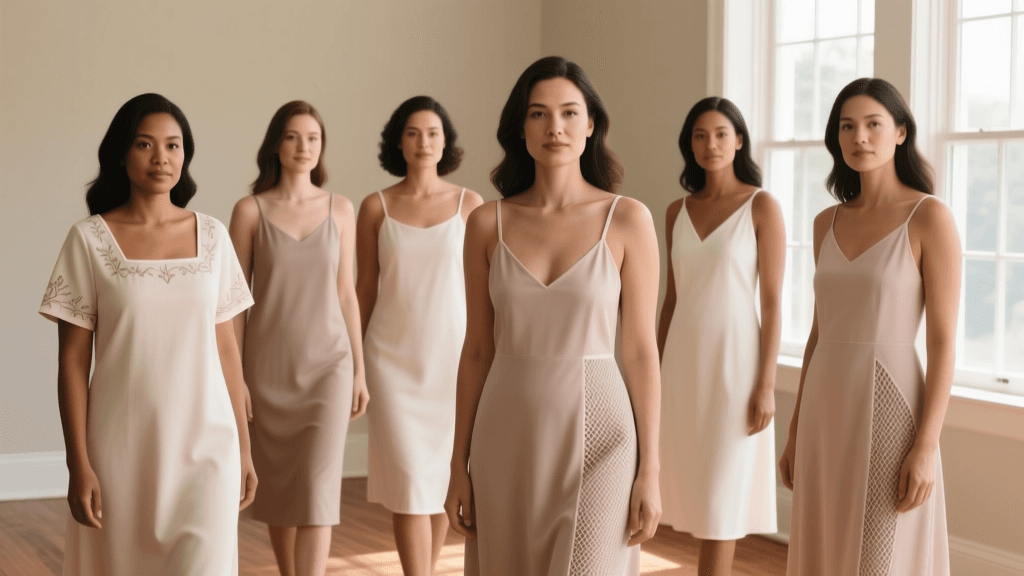
The women’s garment catalog in 2026 is remarkably diverse, designed to accommodate a wide array of modern necklines and sleeve lengths while maintaining the sacred markings and required coverage.
- Crew Neck: The traditional, higher neckline. Ideal for wearing under opaque, high-necked shirts or winter sweaters.
- Scoop Neck: A wider, lower curve that remains hidden under most standard t-shirts and casual blouses.
- V-Neck: Designed specifically for v-neck tops and dresses, offering deeper front coverage without exposing the garment.
- Carmen Neckline: A wider, off-the-shoulder style designed for boat-neck or wide-neck tops, ensuring the garment remains hidden even with fashionable, open-shoulder apparel.
- Cap Sleeve & Short Sleeve: Cap sleeves provide minimal coverage for the shoulder, ideal for wearing under sleeveless or wide-armhole tops. Short sleeves offer more traditional coverage and are preferred by many for modesty and fabric longevity.
- Athletic Tank: A sleeveless option with wider shoulder straps, specifically designed for women participating in sports, weightlifting, or running.
- Maternity Styles: Featuring empire waists, stretch panels, and extra room in the midsection, these garments grow with the wearer during pregnancy and postpartum recovery.
Comprehensive Style Guide for Men
Men’s styles are generally more standardized but have seen crucial updates in cut and athletic functionality.
- Crew Neck & V-Neck: The standard options for everyday wear, accommodating both casual t-shirts and button-down dress shirts.
- Short Sleeve: The standard everyday garment, providing full shoulder coverage.
- Athletic Sleeveless: Designed with deep armholes and wider shoulder straps, allowing for a full range of motion during basketball, swimming, or weightlifting without the fabric binding at the armpit.
Fabric and Style Comparison Chart
To help you decide which combination of fabric and style best suits your lifestyle, refer to the comparison table below:
| Fabric Type | Best Use Case | Breathability | Durability & Care |
|---|---|---|---|
| 100% Cotton | Everyday wear, sensitive skin, sleeping | High | Moderate; may shrink if washed in hot water |
| Cotton/Spandex Blend | Active days, form-fitting clothing | Medium-High | High; retains shape well over time |
| Modal / Micro-Modal | Professional wear, formal events, summer | Very High | High; resists pilling and shrinking |
| Performance Mesh | Gym, outdoor labor, tropical climates | Maximum | Very High; quick-drying and odor-resistant |
2026 Sizing and Inclusivity Updates
One of the most welcomed updates in the 2026 distribution catalog is the continued expansion of size inclusivity. Recognizing the diverse body types of its global membership, the Church now offers an extensive range of sizes. Women’s tops and bottoms are available in standard, petite, and tall cuts, alongside extended plus sizes that go up to 5X. Men’s options similarly include tall and extended sizes, ensuring that the garments fit properly without riding up or causing discomfort.
Furthermore, the bottoms (which are sold separately from the tops) feature varied inseam lengths. Members can choose from brief, bikini, boy-short, and longer boxer-brief styles, allowing for customization based on personal comfort, thigh chafing prevention, and the type of outerwear being worn.
Purchasing, Care, and Respectful Disposal
Purchasing temple garments requires an active temple recommend. Members can order directly through the Church’s online distribution portal or visit a local distribution center located near most temples. The online store allows users to filter by fabric, style, and size, making it easy to build a customized wardrobe.
Proper Care Instructions
To maximize the lifespan of your garments and preserve the sacred markings, proper laundering is essential. In 2026, manufacturers recommend washing garments in cold or warm water with like colors. Avoid using chlorine bleach, as it degrades the elastic fibers and can damage the markings. Tumble drying on low heat is preferred; high heat will break down spandex and modal fibers, leading to premature wear and shrinking.
Respectful Disposal
When garments become worn, torn, or no longer usable, they must be disposed of respectfully. The General Handbook provides clear instructions: members should carefully cut out the sacred markings and destroy them (typically by cutting them into small pieces or burning them). The remaining fabric can then be disposed of in the regular trash or repurposed as cleaning rags. It is never appropriate to donate worn garments to thrift stores or charity organizations.
Conclusion
The 2026 lineup of LDS temple garments represents a thoughtful intersection of faith, modern textile science, and practical design. By offering an expansive array of breathable fabrics, specialized athletic and maternity cuts, and inclusive sizing, the Church ensures that every endowed member can wear their sacred clothing with comfort and confidence. Understanding the nuances of these materials and styles allows you to make informed purchasing decisions, ensuring that your garments serve as a comfortable, enduring reminder of your most sacred covenants in every aspect of your modern life.