Japanese Traditional Fashion Schools & Apprenticeships 2026
The Renaissance of Japanese Traditional Garment Education in 2026
The landscape of Japanese traditional fashion education has undergone a significant transformation by 2026. With the Japanese government's intensified push to preserve intangible cultural heritage, institutions and master artisans are actively recruiting a new generation of domestic and international students. The creation of traditional garments—ranging from the intricate silk weaving of Nishijin-ori obi to the meticulous hand-painting of Kyo Yuzen kimono—requires a profound understanding of both historical techniques and modern sustainability practices. For aspiring textile artists and fashion historians, navigating the dual pathways of formal institutional education and the ancient deshi (apprenticeship) system is the first step toward mastering these revered crafts.
In 2026, the integration of technology with heritage crafts has become a focal point. While the physical act of weaving on a traditional batta loom or dyeing with natural Tokushima indigo remains entirely manual, schools now utilize digital archiving and AI-assisted pattern analysis to help students decode centuries-old textile structures. This hybrid approach ensures that the soul of the garment is preserved while making the learning curve more accessible to global applicants.
Premier Institutions for Traditional Textile Arts
Bunka Fashion College: Bridging Heritage and Modernity
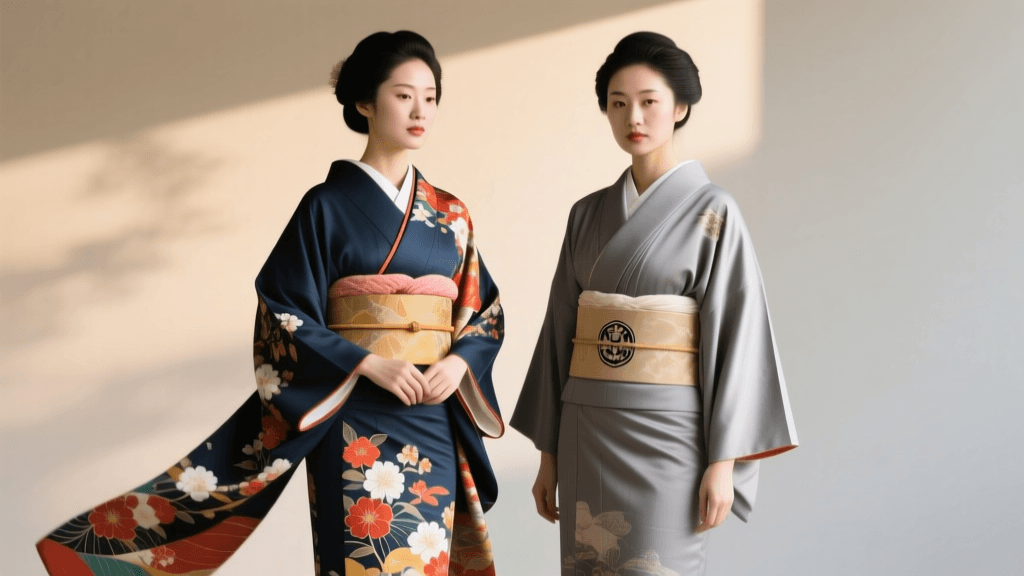
Located in the heart of Tokyo, Bunka Fashion College remains one of the most prestigious fashion institutions in Asia. While globally renowned for its avant-garde contemporary design programs, Bunka's Traditional Arts and Textile Department has seen a massive surge in enrollment for its 2026 academic year. The curriculum focuses heavily on the structural engineering of the kimono, the physics of silk drape, and the chemistry of natural dyes. Students in this track spend their first year mastering the flat-pattern cutting unique to Japanese garments, where a single bolt of fabric (tanmono) is utilized with zero waste. By their second year, students collaborate with master dyers to produce a full furisode (long-sleeved kimono) collection, blending traditional motifs with contemporary color theory.
Kyoto University of the Arts: The Epicenter of Craft
For those seeking an environment steeped in centuries of artisanal history, the Kyoto University of the Arts offers unparalleled access to the city's living workshops. Their specialized Craft Arts course allows students to major specifically in Textile Design, with sub-specializations in Nishijin weaving, Yuzen dyeing, and Kanoko shibori (tie-dyeing). The 2026 syllabus places a strong emphasis on sustainable material sourcing, requiring students to cultivate their own safflower (benibana) and indigo plants in the university's rural satellite campuses. The faculty comprises active Living National Treasures and certified master craftsmen who provide direct, critical feedback on student loom setups and dye vat fermentation.
Kanazawa College of Art: Mastering Kaga Yuzen
While Kyoto is famous for its stylized and graphic Kyo Yuzen, the city of Kanazawa is the undisputed capital of Kaga Yuzen, a dyeing technique characterized by its hyper-realistic, nature-inspired motifs and the signature soto-bokashi (outside shading) gradient. Kanazawa College of Art offers a highly intimate, studio-based education where students learn the five signature colors of Kaga Yuzen: indigo, crimson, ochre, grass green, and ancient purple. The 2026 intake is particularly notable for its new module on metallic leaf application (haku), leveraging Kanazawa's status as the producer of 99% of Japan's gold leaf.
The Modern Deshi (Apprenticeship) System
Unlike Western fashion internships, which are often short-term and corporate, the Japanese deshi system in 2026 remains deeply rooted in hierarchical, long-term mentorship. For those who bypass formal university education to learn directly from a master, the Nishijin Textile Center in Kyoto acts as a vital liaison, matching dedicated applicants with aging master weavers who need successors.
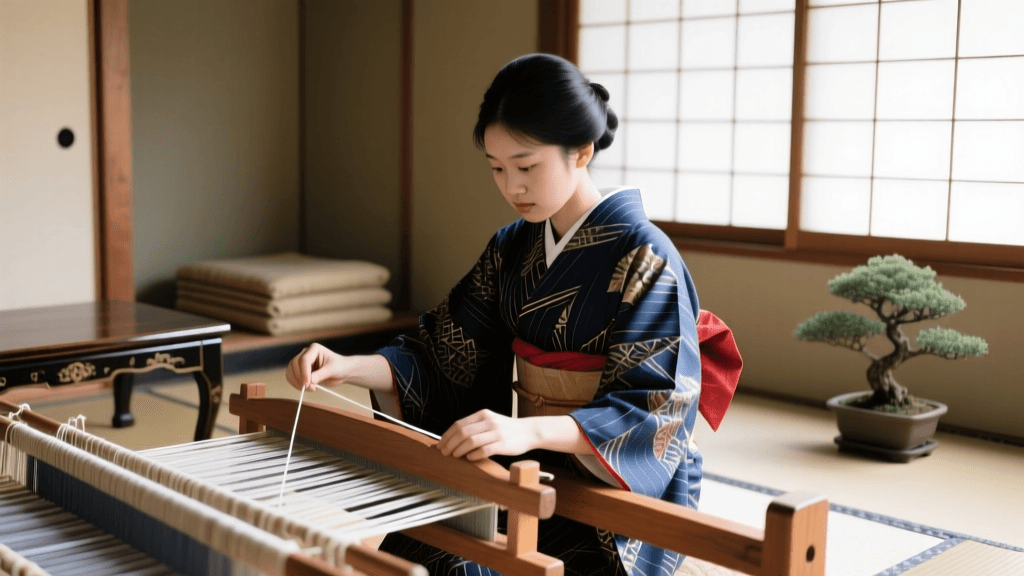
Life as a deshi in a Nishijin weaving household is rigorous. An apprentice's day typically begins at 5:30 AM with the preparation of the silk threads, including the meticulous winding of the hiboko spools and the calculation of warp tension using a traditional soroban (abacus). The master weaver does not simply teach technique; they impart the philosophy of the craft, including the auditory rhythm of the loom and the tactile sensitivity required to handle humidity-sensitive silk. Apprenticeships generally last a minimum of three to five years. During the first two years, an apprentice may not be allowed to operate the main Jacquard loom, focusing instead on thread preparation, loom maintenance, and studio cleaning. This period of minarai (learning by watching) builds the patience and respect necessary to handle materials that can cost thousands of dollars per bolt.
2026 Comparison Chart: Formal Schooling vs. Traditional Apprenticeship
| Feature | Fashion/Craft School (e.g., Bunka, Kyoto Arts) | Master Deshi Apprenticeship (e.g., Nishijin) |
|---|---|---|
| Duration | 2 to 4 Years (Degree/Diploma) | 3 to 7 Years (Until Master Certification) |
| Primary Focus | Design theory, broad textile skills, portfolio building | Hyper-specialized mastery of one specific technique |
| 2026 Avg. Cost | ¥1,200,000 - ¥1,600,000 per year (Tuition) | Free (Often includes a small monthly living stipend) |
| Language Requirement | JLPT N2 (Some English tracks available) | JLPT N1 + Kyoto/Kansai dialect comprehension |
| Visa Pathway | Student Visa (Ryugaku) | Designated Activities or Instructor Visa |
| Career Outcome | Independent designer, brand consultant, educator | Studio successor, certified traditional artisan |
Financial Realities and Visa Requirements in 2026
Pursuing traditional garment education in Japan requires careful financial planning. For international students enrolling in formal institutions like Bunka Fashion College or Kyoto University of the Arts, annual tuition for the 2026 academic year averages around ¥1,350,000 (approximately $8,900 USD). Additionally, students must budget for specialized tools; a professional-grade set of Yuzen dyeing brushes and a custom silk stretching frame (yuzen-bari) can cost upwards of ¥150,000. Living expenses in Kyoto or Tokyo typically range from ¥90,000 to ¥130,000 per month, depending on proximity to the campus and the use of shared housing.
Visa regulations have been updated in 2026 to better support the preservation of traditional crafts. International students entering formal schools will apply for the standard Student Visa. However, those accepted into a recognized deshi apprenticeship under a certified Living National Treasure or a registered Nishijin cooperative can now apply for the 'Designated Activities (Traditional Craft Succession)' visa. This specialized visa, introduced to combat the severe shortage of young artisans, allows apprentices to stay in Japan for up to five years, provided they pass annual practical evaluations by the Ministry of Economy, Trade and Industry (METI).
Actionable Steps to Apply for 2026 Intakes
Securing a spot in these highly competitive programs requires more than just a passion for Japanese fashion. Follow these strategic steps to prepare your application:
- Achieve JLPT N2 or Higher: While some universities offer foundational Japanese courses, the technical vocabulary required for textile arts (such as hataori for weaving or itate-nori for resist paste) demands advanced language proficiency. Aim for JLPT N2 minimum, with N1 required for direct apprenticeships.
- Develop a Tactile Portfolio: Admissions committees in 2026 are less interested in digital fashion renderings and more focused on your understanding of materials. Include physical swatches, hand-stitching samples, and natural dyeing experiments in your portfolio. Document your process of sourcing and manipulating raw fibers.
- Attend the Kyoto Traditional Arts Exhibition: Held annually in the spring, this event is the premier networking opportunity. Use it to meet master artisans, observe their techniques, and inquire directly about deshi openings. Many apprenticeships are secured through face-to-face introductions rather than online applications.
- Prepare for the Practical Exam: Schools like Kyoto University of the Arts require a practical exam where applicants must demonstrate basic hand-sewing skills, such as executing a perfect chikara-nui (reinforcement stitch) or threading a traditional needle within a strict time limit.
Conclusion
The pursuit of Japanese traditional fashion education in 2026 is a commitment to cultural preservation and material mastery. Whether you choose the structured, design-forward environment of a Tokyo fashion college or the grueling, deeply spiritual path of a Kyoto weaving apprenticeship, you are participating in a vital lineage. By understanding the requirements, costs, and profound dedication required, you can successfully navigate your journey into the intricate world of Asian traditional garments.