Guide To Japanese Kimono Apprenticeships & Schools 2026
The Renaissance of Wafuku Education in 2026
As the global fashion industry pivots toward sustainability, slow fashion, and heritage preservation, traditional Japanese garments—collectively known as wafuku—are experiencing a profound renaissance. In 2026, the intersection of ancient textile techniques and modern pedagogical frameworks has created unprecedented opportunities for aspiring artisans. Whether you are drawn to the meticulous geometry of kimono tailoring (shitate) or the rhythmic clatter of the Nishijin Jacquard loom, Japan offers highly structured educational pathways. This guide explores the premier institutions and apprenticeship models shaping the next generation of Japanese fashion custodians in 2026.
Bunka Fashion College: Bridging Heritage and Haute Couture
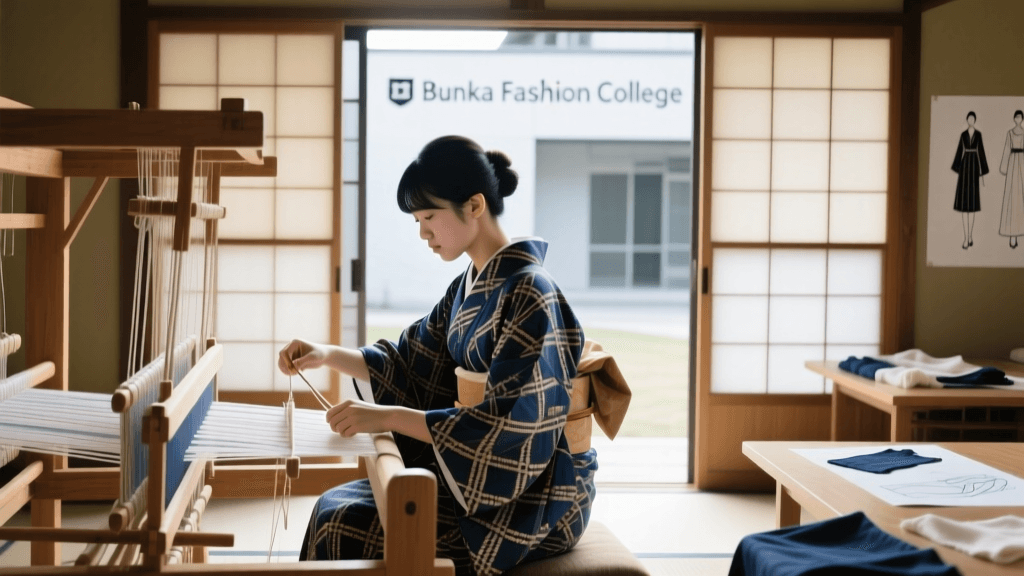
Located in the heart of Tokyo, Bunka Fashion College remains the undisputed epicenter of Japanese fashion education. While globally renowned for producing avant-garde designers like Yohji Yamamoto and Kenzo Takada, Bunka’s traditional garment departments are equally prestigious. In the 2026 academic year, the college offers a specialized Advanced Diploma in Traditional Japanese Garment Making, focusing on the intricate art of shitate (kimono tailoring) and yuzen (resist dyeing).
Curriculum and 2026 Innovations
The 2026 curriculum at Bunka has been updated to integrate sustainable practices with heritage techniques. Students now learn to source organic silk from revitalized sericulture farms in Gunma Prefecture, combining this with 3D body-scanning technology to adapt traditional tanmono (bolt) measurements for modern, diverse body types without compromising the zero-waste philosophy inherent in kimono construction. Tuition for the two-year advanced traditional track is approximately 1,250,000 JPY per year, with dedicated scholarships available for international students demonstrating a commitment to textile preservation.
The Kyoto Nishijin Weaving Apprenticeship: Mastering the Loom
For those seeking immersion over classroom instruction, the traditional apprenticeship model in Kyoto’s Nishijin district offers a direct line to the shokunin (master artisan) spirit. Nishijin-ori is a premium, multi-layered brocade weaving technique historically reserved for the imperial court and elite samurai families. Today, mastering this craft requires entering a formal deshi (apprentice) relationship with a master weaver.
The Reality of the Dashi System in 2026
Unlike formal schooling, an apprenticeship in Nishijin is an all-encompassing lifestyle. According to data from the Kyoto Traditional Industries Center, a standard Nishijin weaving apprenticeship lasts between three to five years. Apprentices begin by sweeping the studio, preparing the silk threads (ito-kuri), and observing the master. Only in the third year are they typically allowed to operate the complex Jacquard looms. In 2026, the Japanese government has introduced the 'Heritage Artisan Stipend,' providing eligible apprentices with a monthly living allowance of 180,000 JPY to offset the historically low initial wages of the trade, ensuring that financial barriers do not prevent dedicated youth from preserving Japan's traditional crafts.
Kitsuke and Shitate: The Dual Pillars of Kimono Arts
When approaching Japanese fashion education, it is vital to distinguish between the creation of the garment and the art of wearing it. Both are highly respected disciplines with distinct educational ecosystems.
Wafuku Shitate (Tailoring)
Tailoring schools focus on the architectural construction of the kimono. Students must master the use of the hera (bamboo spatula) for creasing silk, the kote (traditional iron), and the specific running stitches that allow a kimono to be entirely disassembled, washed, and re-sewn. The mathematics of the tanmono bolt—typically 36 centimeters wide and 12 meters long—dictates every cut, ensuring absolutely no fabric is wasted.
Kimono Kitsuke (Dressing)
Kitsuke is the art of dressing in a kimono, a discipline requiring immense physical dexterity and an understanding of seasonal aesthetics. Schools like the Sodo Kimono Academy offer tiered certification programs. Achieving a master instructor license (shihan) in 2026 requires passing rigorous practical exams that test the candidate's ability to dress a client in a formal furisode or uchikake (wedding robe) within strict time limits, while perfectly balancing the obi (sash) and coordinating seasonal motifs.
2026 Comparison Chart: Formal Schooling vs. Traditional Apprenticeship
Choosing the right educational path depends on your career goals, language proficiency, and desired lifestyle. Below is a comparative overview of the primary avenues for studying traditional Japanese fashion in 2026.
| Program Type | Location | Duration | 2026 Est. Cost / Stipend | Best For |
|---|---|---|---|---|
| Bunka Fashion College (Advanced Diploma) | Tokyo | 2 Years | ~1,250,000 JPY/year (Tuition) | Designers wanting to fuse wafuku with modern global fashion. |
| Nishijin-ori Apprenticeship (Deshi) | Kyoto | 3 to 5 Years | 180,000 JPY/month (Gov. Stipend) | Dedicated weavers seeking mastery of heritage brocade techniques. |
| Kitsuke Certification Schools | Nationwide | 6 Months to 2 Years | 300,000 - 800,000 JPY (Total) | Stylists, costumers, and cultural ambassadors focusing on presentation. |
| Yuzen Dyeing Studio Apprenticeship | Kanazawa / Kyoto | 2 to 4 Years | Variable (Often unpaid initially) | Painters and colorists specializing in resist-dye surface design. |
Actionable Roadmap for International Applicants in 2026
For international students and aspiring artisans, navigating the Japanese educational and immigration systems requires meticulous preparation. Here is a step-by-step guide to securing your place in a 2026 cohort.
Step 1: Achieve JLPT N2 Proficiency
While some Tokyo-based fashion schools offer English support, traditional apprenticeships in Kyoto or Kanazawa are conducted entirely in Japanese, often utilizing specialized regional dialects and archaic craft terminology. Passing the Japanese-Language Proficiency Test (JLPT) at the N2 level is the absolute minimum requirement for a traditional studio master to accept you as a deshi.
Step 2: Secure the Correct Visa Category
In 2026, Japan offers specific visa pathways for cultural preservation. Students enrolling in Bunka or recognized kitsuke academies will apply for a standard 'Student Visa.' However, those entering a recognized traditional craft apprenticeship under the Ministry of Economy, Trade and Industry (METI) guidelines may qualify for the 'Designated Activities (Traditional Craft Artisan)' visa, a special category expanded in recent years to combat the aging artisan demographic.
Step 3: Prepare a Tactile Portfolio
Unlike Western fashion portfolios that prioritize digital rendering and conceptual sketches, Japanese craft masters demand a tactile portfolio. Include physical samples of your stitching, evidence of your patience (such as intricate origami, wood carving, or hand-embroidery), and a handwritten letter in Japanese detailing your philosophical commitment to the concept of monozukuri (the art of making things).
'The loom does not forgive impatience. To weave Nishijin is to weave your own spirit into the silk. We do not just teach the hands; we must first discipline the mind.' — Master Weaver Hiroshi Yamada, Nishijin District, Kyoto.
Conclusion: Preserving the Thread of History
The landscape of Japanese fashion education in 2026 is a testament to the resilience of cultural heritage. By opening their doors to global talent and integrating modern sustainability with ancient methodologies, institutions like Bunka Fashion College and the master studios of Kyoto are ensuring that the kimono remains a living, breathing art form. Whether you choose the structured halls of a Tokyo academy or the quiet, disciplined floor of a Kyoto weaving studio, embarking on this educational journey is a profound commitment to preserving the sartorial soul of Japan for generations to come.