Kyoto Artisan Workshops: Nishijin Weaving & Yuzen Dyeing Guide
The Heart of Kimono Craftsmanship: Kyoto's Artisan Districts
Kyoto is universally recognized as the cultural epicenter of Japan, but for textile enthusiasts and kimono collectors, it holds an even more specific title: the undisputed capital of traditional garment craftsmanship. The creation of a single, high-quality kimono is rarely the work of one individual. Instead, it is a symphony of specialized artisans, each mastering a distinct discipline passed down through generations. Among the most revered of these disciplines are Nishijin-ori (Nishijin brocade weaving) and Kyo-Yuzen (Kyoto resist-dyeing). Understanding these crafts is essential for anyone looking to appreciate, collect, or wear authentic Japanese traditional garments.
For travelers and textile scholars, visiting Kyoto’s artisan workshops offers a rare glimpse into the painstaking processes that transform raw silk threads and plain white fabric into wearable masterpieces. This guide provides an in-depth look at Nishijin weaving and Kyo-Yuzen dyeing, complete with practical advice on workshop visits, costs, and how to identify authentic pieces.
Nishijin-Ori: The Art of Japanese Brocade Weaving
Nishijin-ori is a premium textile weaving technique that originated in the Nishijin district of Kyoto. The name 'Nishijin' translates to 'western position,' a reference to the area where the western army camped during the devastating Onin War (1467–1477). After the war, weavers returned to this district and revitalized the silk industry, eventually creating the luxurious brocades that would clothe the imperial court and the samurai elite.
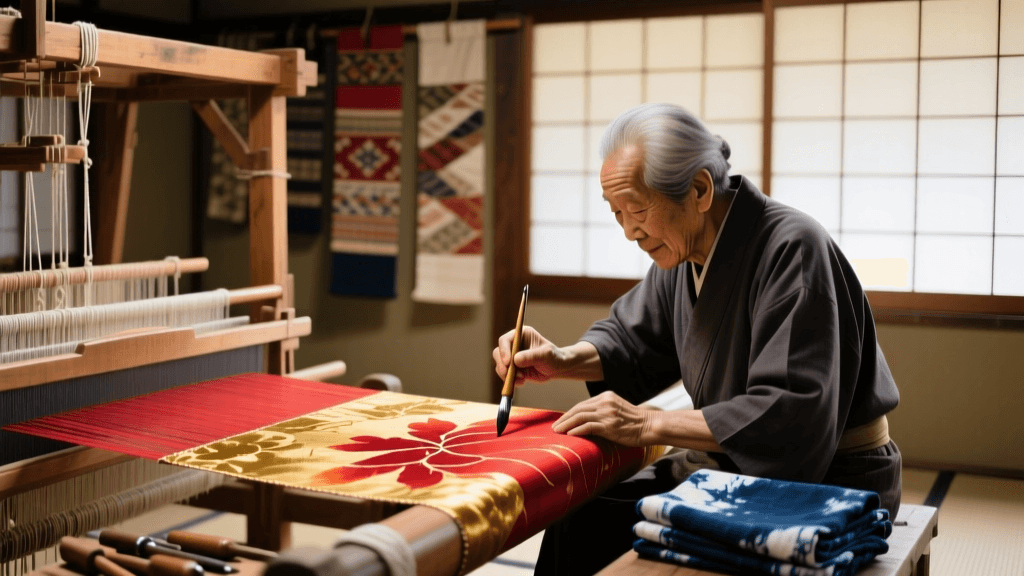
The hallmark of Nishijin-ori is its use of pre-dyed threads to create intricate, multi-colored patterns woven directly into the fabric, rather than printed or dyed onto the surface. Artisans use a combination of traditional hand-looms and modern Jacquard looms. The Jacquard loom, introduced to Japan from France in the late 19th century, revolutionized Nishijin weaving by allowing for highly complex patterns using punch cards. Today, a single, high-end Nishijin obi (kimono sash) can require over 5,000 punch cards and take an artisan several months to weave.
Visiting the Nishijin Textile Center
For those wanting to observe this craft firsthand, the Nishijin Textile Center is an essential stop. It operates as both a museum and an active exhibition space for local weaving guilds.
- Location: Horikawa-dori, Kamigyo Ward, Kyoto.
- Admission: Free for the main exhibitions and daily kimono fashion shows.
- Workshop Costs: Hand-weaving experiences (such as making a small coaster or table mat) typically cost between 1,500 JPY and 2,500 JPY per person.
- Timing: Allocate at least 2 hours. The kimono shows run hourly, but the weaving demonstrations on the ground floor are continuous.
Kyo-Yuzen: Masterful Resist-Dyeing Techniques
While Nishijin-ori focuses on weaving patterns into the fabric, Kyo-Yuzen focuses on painting them onto the surface. Developed in the late 17th century by Miyazaki Yuzensai, a fan painter, this technique allowed for the creation of pictorial, highly detailed designs that were previously impossible with traditional tie-dyeing or embroidery.
The Kyo-Yuzen process is incredibly labor-intensive, often involving up to 20 distinct steps and multiple specialized artisans. The most critical step is the application of itome-nori, a fine, thread-like line of rice-paste resist. The artisan uses a specialized metal-tipped cone to outline the design on the white silk. Once the resist dries, dyes are brushed inside the outlines. The rice paste prevents the colors from bleeding into one another, resulting in the crisp, vibrant lines characteristic of Yuzen kimono. Finally, the fabric is steamed to set the dyes and washed in cold water to remove the resist paste.
Experiencing a Kyo-Yuzen Workshop
Tourists and enthusiasts can participate in simplified Yuzen dyeing workshops at historic studios like Marumasu-Nishimuraya, located near the Nijo Castle. These workshops allow participants to dye small items using pre-applied resist lines.
- Items Available: Silk handkerchiefs, fans, and furoshiki (wrapping cloths).
- Cost: Ranges from 2,500 JPY for a basic cotton handkerchief to 6,500 JPY for a premium silk scarf.
- Duration: 60 to 90 minutes, plus drying time.
- Booking: Reservations must be made at least one week in advance, especially during the spring and autumn tourist peaks.
Comparison Chart: Nishijin Weaving vs. Kyo-Yuzen Dyeing
Understanding the differences between these two foundational crafts is crucial for collectors and those commissioning custom garments.
| Feature | Nishijin-Ori (Weaving) | Kyo-Yuzen (Dyeing) |
|---|---|---|
| Primary Technique | Interlacing pre-dyed warp and weft threads | Applying dye to woven fabric using rice-paste resist |
| Visual Characteristic | Textured, reversible patterns, metallic threads | Smooth, pictorial, highly detailed painted motifs |
| Primary Garment Use | Obi (sashes), formal outer layers, ties | Kimoto bodies, juban (undergarments), haori jackets |
| Production Time | 3 to 6 months for a single high-end obi | 1 to 3 months for a fully hand-painted kimono |
| Cost Range (Authentic) | 200,000 JPY to 2,000,000+ JPY (Obi) | 300,000 JPY to 1,500,000+ JPY (Kimono) |
| Care & Maintenance | Spot clean only; highly susceptible to moisture | Requires professional dry cleaning (shimi-nuki) |
How to Identify and Purchase Authentic Artisan Kimono
The market is flooded with mass-produced, synthetic garments that mimic traditional styles. For those seeking authentic, artisan-crafted textiles, it is vital to know what to look for. The Japanese government, through the Ministry of Economy, Trade and Industry (METI), designates specific crafts as 'Traditional Craft Products.'
When purchasing from a reputable Kyoto dealer or directly from an artisan guild, look for the Dento Kogei-hin mark. According to the Association for the Promotion of Traditional Craft Industries, this seal guarantees that the item was made using traditional materials, traditional techniques, and was handcrafted by skilled artisans in the designated region. A genuine hand-woven Nishijin obi will feature this gold foil seal on its packaging or accompanying certificate of authenticity.
Actionable Tips for Collectors and Enthusiasts
- Verify the Silk: Authentic Nishijin and Yuzen pieces are almost exclusively woven or painted on high-grade silk (such as tango chirimen crepe). Rub the fabric gently; real silk produces a distinct 'crunching' sound known as scroop.
- Inspect the Reverse Side: For Nishijin-ori, the pattern should be visible (though often in inverted colors) on the reverse side of the obi. If the back is a solid, blank color with loose, floating threads, it is likely a machine-embroidered imitation.
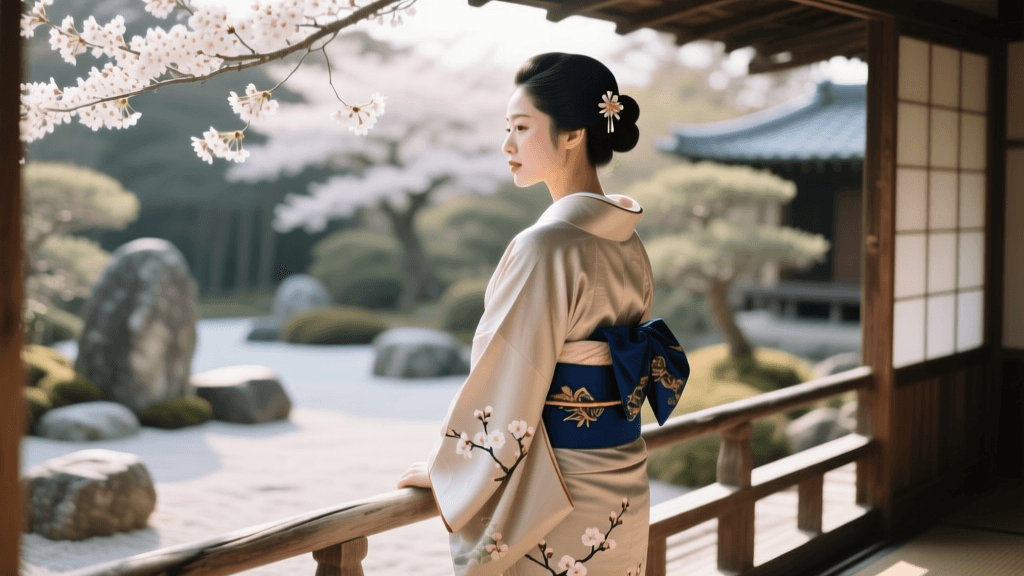
- Understand Seasonality: Artisan workshops adhere strictly to seasonal motifs. A Yuzen kimono featuring cherry blossoms (sakura) should only be worn in late March to early April. Wearing it in autumn is considered a major sartorial faux pas in traditional etiquette.
- Budget for Accessories: When commissioning a custom kimono, remember that the base fabric is only the beginning. You must also budget for the obi, obijime (cord), obidome (clasp), and zori (sandals), which can easily double the total cost.
Workshop Etiquette and Practicalities
Visiting an active artisan studio in Kyoto is a privilege, as many of these workshops are small, family-run operations that are not accustomed to heavy foot traffic. If you are granted access to a private weaving studio or a Yuzen dyeing atelier, strict etiquette applies.
Always ask for permission before taking photographs. The punch card designs for Jacquard looms and the sketchbooks used by Yuzen painters are considered highly guarded intellectual property. Flash photography is strictly prohibited, as it can startle artisans working with sharp tools or delicate dyes, and prolonged exposure to intense light can damage unfixed natural dyes.
Furthermore, be mindful of the environment. Yuzen dyeing requires precise temperature and humidity control to ensure the rice paste dries at the correct rate. Do not open windows or doors without asking, and avoid wearing strong perfumes or scented lotions, which can linger in the studio and affect the delicate scent of the tatami mats and silk.
'The beauty of a kimono is not just in its final appearance, but in the invisible hours of labor, the precise tension of the warp threads, and the steady hand that guides the resist paste. To wear one is to wear the history of Kyoto itself.' — Master Artisan of the Nishijin Guild.
Preserving the Future of Japanese Textile Arts
The traditional garment industry in Japan faces significant challenges, primarily an aging artisan population and a declining domestic demand for everyday kimono wear. However, the rise of international interest and specialized tourism has provided a crucial lifeline. By participating in workshops, purchasing authenticated pieces, and educating others on the distinction between mass-produced synthetics and genuine Dento Kogei-hin crafts, enthusiasts play a direct role in sustaining these centuries-old traditions.
Whether you are marveling at the rhythmic clatter of a Nishijin loom or carefully applying dye within a delicate rice-paste outline, engaging with Kyoto's artisan workshops transforms the way you view Japanese fashion. It elevates the kimono from a mere garment to a profound testament to human artistry and cultural endurance.
For further reading on traditional Japanese shopping districts and craft preservation, resources like Japan Guide's overview of Kyoto traditional crafts offer excellent logistical planning tools for your next textile-focused journey.