Peking Opera and Kunqu Hanfu Costumes: 2026 Stage Guide
The Theatrical Metamorphosis of Hanfu
When exploring the rich tapestry of Asian traditions, the evolution of everyday historical Hanfu into the spectacular stage costumes—known as Xifu—of Peking Opera and Kunqu represents one of the most fascinating intersections of fashion and performance art. While modern Hanfu enthusiasts in 2026 often focus on historical accuracy for streetwear and photography, traditional Chinese opera relies on an exaggerated, highly codified sartorial language. This language is deeply rooted in the Ming Dynasty aesthetics of Hanfu, yet it has been amplified for the stage to convey character, status, and emotion to audiences sitting far from the stage.
According to the UNESCO Intangible Cultural Heritage registry, Kunqu Opera is one of the oldest and most refined forms of Chinese opera, and its costuming reflects a subtle, scholarly elegance. In contrast, Peking Opera, which crystallized later, demands high-contrast visual storytelling. As noted in Britannica's comprehensive guide on Peking Opera, the costumes are not merely decorative; they are essential narrative devices that instantly communicate a character's moral alignment, social rank, and martial prowess to the audience.
Kunqu Opera: The Elegance of Water Sleeves and Scholar Robes
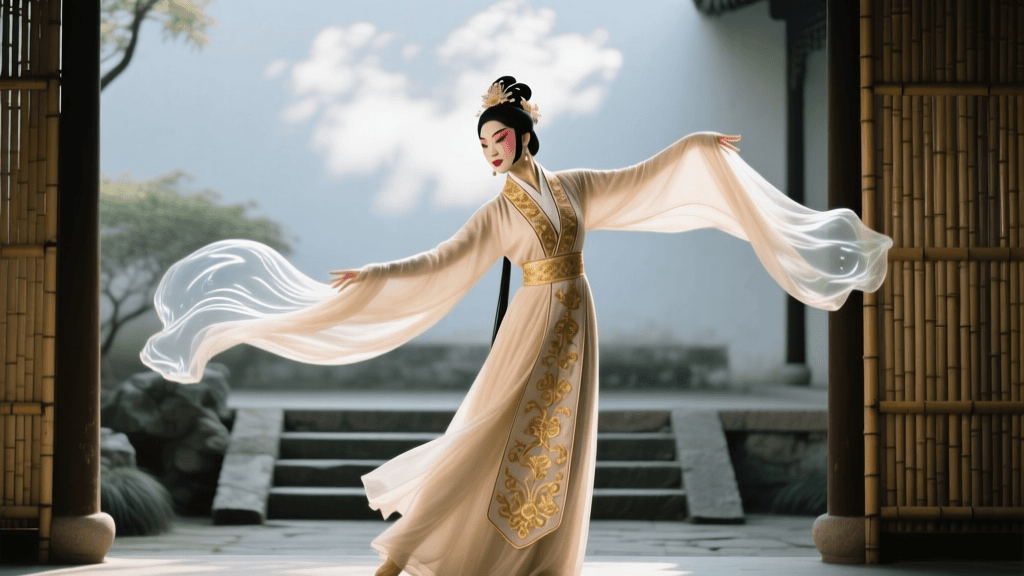
Kunqu costuming is characterized by its understated grace, heavily drawing from the literati culture of the Ming and early Qing dynasties. The most iconic element of Kunqu dress is the Shuixiu, or 'water sleeves.' These are long, flowing extensions of white silk attached to the cuffs of the primary garment. In 2026, professional Kunqu performers typically utilize water sleeves measuring between 60 and 90 centimeters in length. The manipulation of these sleeves—flicking, trembling, and shielding the face—acts as an extension of the actor's emotional state, replacing the need for elaborate facial expressions or excessive dialogue.
The Zhezi, the Pei, and the Scholar's Crown
The foundational garments for Kunqu scholars and noblewomen are the Zhezi (an informal, cross-collared robe) and the Pei (a formal, center-buttoned cape or robe). Unlike the rigid structures of court dress, these garments are cut loosely to allow for the fluid, dance-like movements required by Kunqu choreography. They are often paired with the Guanmao, a traditional scholar's cap featuring long, fluttering wings that accentuate the actor's head movements. In 2026, high-end bespoke tailors in Suzhou are reviving traditional Gu embroidery techniques to adorn these robes with subtle, tone-on-tone botanical motifs, such as orchids, bamboo, and plum blossoms, which signify the moral integrity of the scholar-official class.
Peking Opera: Grandeur in Python Robes and Armor
If Kunqu is a whispered poem, Peking Opera is a booming symphony. The costumes, or Xingtou, are designed to be visible from the back rows of grand, multi-tiered theaters. The silhouette is heavily padded and broadened, creating a larger-than-life presence that historical Hanfu never possessed.
The Mang (Python Robe) and Platform Boots
The Mang is the ultimate symbol of imperial and high official authority on the Peking Opera stage. While it borrows its name and basic round-collar structure from historical Ming Dynasty court robes, the theatrical Mang is far more extravagant. It features water sleeves, heavily embroidered python motifs (clawed dragons with four toes, as five-toed dragons were strictly reserved for the actual Emperor), and a stiff jade belt. To further elevate the actor's stature and alter the drape of the robe's skirt, performers wear Houdi, thick-soled platform boots that can add up to 15 centimeters to their height. In 2026, the creation of a single, master-crafted Mang robe using genuine metallic gold and silver threads can take a team of Suzhou embroiderers over six months to complete.
The Kao (Armor) and Color Symbolism
For martial roles, the Kao is a spectacular suit of armor consisting of a breastplate, shoulder guards, and four triangular flags attached to the back, which represent an army commander's troops. The color of the Kao, and indeed all Peking Opera garments, follows a strict chromatic code that remains rigidly enforced in 2026 productions:
- Yellow: Reserved exclusively for the Emperor and the highest royalty.
- Red: Denotes loyalty, bravery, and uprightness (e.g., the legendary general Guan Yu).
- Black: Represents integrity, fierceness, and impartiality (e.g., the judge Bao Zheng).
- White: Often signifies treachery, cunning, and suspicion (e.g., the warlord Cao Cao).
- Blue/Green: Typically worn by outlaws, bandits, or supernatural beings.
2026 Market Guide: Sourcing Theatrical Hanfu and Xifu
For theater companies, serious cosplayers, and cultural preservationists looking to acquire authentic Peking Opera and Kunqu garments in 2026, the market has bifurcated into mass-produced performance wear and bespoke masterworks. Below is a breakdown of current pricing and lead times for custom-commissioned pieces from established ateliers in Beijing and Suzhou.
| Garment Type | Opera Style | 2026 Custom Cost (USD) | Tailoring Lead Time |
|---|---|---|---|
| Mang (Python Robe) | Peking Opera | $1,200 - $3,500 | 8 - 12 Weeks |
| Zhezi with Shuixiu | Kunqu | $450 - $900 | 4 - 6 Weeks |
| Kao (Full Armor) | Peking Opera | $1,800 - $4,000 | 10 - 14 Weeks |
| Pei (Scholar Cape) | Kunqu | $600 - $1,100 | 5 - 8 Weeks |
When sourcing these items, it is critical to distinguish between 'photography grade' Hanfu, which prioritizes historical drape and lightweight fabrics, and 'stage grade' Xifu, which requires reinforced seams to withstand the rigorous physical demands of martial arts, acrobatics, and rapid costume changes.
2026 Innovations in Theatrical Textiles
A major trend in 2026 is the integration of advanced textile engineering into traditional costume making. Touring opera troupes face the logistical nightmare of transporting heavy, delicate silk garments across varying global climates. To combat this, leading costume houses in Beijing have begun utilizing high-tenacity synthetic-silk blends for the inner linings and structural bases of the Kao and Mang robes. These modern fabrics reduce the overall weight of the garment by up to 30% and offer superior moisture-wicking properties, all while the exterior remains completely covered in traditional hand-embroidered silk and metallic threads. This ensures the visual authenticity of the Hanfu-derived silhouette while vastly improving performer endurance during grueling three-hour epics.
Maintenance and Preservation of Stage Silks
Owning a piece of theatrical history requires meticulous care. The heavy embroidery and metallic threads used in Peking Opera garments are highly susceptible to tarnishing and snagging.
- Storage: Never fold a Mang robe or Kao armor. Folding will permanently crease the embroidery and snap the metallic threads. Always use wide, padded wooden hangers.
- Environment: Store garments in breathable, unbleached cotton garment bags. Avoid plastic covers, which trap humidity and accelerate the oxidation of silver and gold threads.
- Cleaning: Stage garments should never be machine washed or aggressively dry-cleaned. Spot cleaning with specialized silk detergents is recommended for minor stage makeup smudges. For deep cleaning, consult a conservator who specializes in theatrical textiles.
Whether you are a scholar researching the Ming Dynasty roots of Asian dress, or a performer preparing for the 2026 international opera festival circuit, understanding the profound distinction between historical Hanfu and theatrical Xifu is essential. These garments are not merely clothes; they are the living, breathing armor of China's greatest cultural myths.