Authentic Hanfu & Kunqu Shui Xiu Stage Costumes 2026
The Intersection of Hanfu and Theatrical Grandeur in 2026
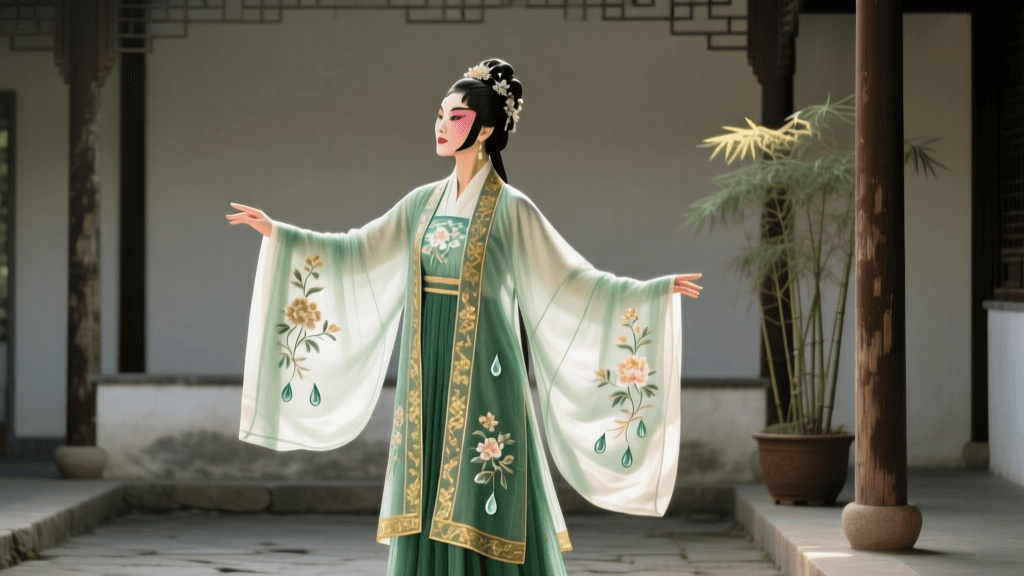
The renaissance of traditional Chinese performing arts in 2026 has brought unprecedented global attention to the sartorial elegance of Peking Opera (Jingju) and Kunqu. While the modern Hanfu movement primarily focuses on historical accuracy and everyday wearability, stage costumes—known as Xing Tou or Xifu—operate in a highly stylized realm of theatrical grandeur. Today, performers and costume designers are increasingly blending authentic historical Hanfu silhouettes, such as the Ming-dynasty Mamianqun (horse-face skirt) and Daoshen (robe), with the exaggerated proportions and vibrant aesthetics required for the stage. This comprehensive guide explores how to source, tailor, and maintain these exquisite garments, with a special focus on the iconic Shui Xiu (water sleeves) that define Kunqu movement.
Understanding the Distinction: Historical Hanfu vs. Stage Xing Tou
Before investing in performance wear, it is crucial to understand the functional differences between historical Hanfu and stage costumes. According to Britannica's comprehensive guide to Peking Opera, traditional stage costumes are not strict historical replicas; rather, they are codified theatrical uniforms designed to convey a character's age, gender, social status, and personality from the back row of a grand theater. However, the 2026 trend in 'Neo-Traditional' theater has seen directors demanding more historically grounded base layers. For instance, modern Kunqu productions now frequently utilize authentic Ruqun (blouse and skirt) structures beneath stylized outer robes, allowing for more fluid, historically accurate movement while maintaining the visual impact required under modern LED stage lighting.
Mastering the Shui Xiu (Water Sleeves)
The soul of Kunqu expression lies in the Shui Xiu, or water sleeves. These elongated cuffs are extensions of the inner garment's sleeves, typically crafted from stark white silk, and are used to amplify the actor's emotional state through flicks, trembles, and sweeping arcs. In 2026, selecting the right fabric for water sleeves is a precise science, balancing weight, drape, and 'flick response' (the speed at which the fabric snaps back into a straight line).
2026 Fabric Comparison Chart for Shui Xiu
| Material | Weight (Momme) | Flick Response | Durability | 2026 Avg. Cost (Per Pair) |
|---|---|---|---|---|
| 100% Silk Crepe (Traditional) | 16-19mm | Excellent, fluid snap | Moderate (requires careful washing) | $120 - $180 USD |
| Heavy Silk Chiffon | 12-14mm | Good, softer drape | Low (snags easily on props) | $90 - $130 USD |
| Matte Theatrical Polyester | N/A (Synthetic) | Fast, rigid snap | High (machine washable) | $45 - $70 USD |
| Silk-Cotton Blend (Innovative 2026) | 18mm equivalent | Very Good, weighted | High | $150 - $210 USD |
For professional Kunqu performers, 100% silk crepe remains the gold standard due to its acoustic properties—the subtle 'snap' of real silk enhances the auditory experience of the performance. For rigorous daily rehearsal or outdoor festival performances, the newly developed 2026 silk-cotton blends offer a compromise, providing the visual sheen of silk with the structural resilience of cotton.
Sourcing and Bespoke Tailoring for Theatrical Movement
Sourcing authentic stage Hanfu and Peking Opera garments requires navigating specialized theatrical tailors. In 2026, Suzhou remains the undisputed capital for Kunqu embroidery and silk weaving, while Beijing's Liulichang district houses the master tailors for Peking Opera armor (Kao) and official robes (Mang).
Actionable Tailoring Measurements
When ordering a bespoke stage robe, standard clothing measurements are insufficient. Theatrical garments require specific allowances for padding, armor, and dynamic movement. Provide your tailor with the following precise metrics:
- Chest Allowance: Add 15-20 cm to your natural chest measurement to accommodate the thick cotton padding (Chuan) worn beneath the outer robe to create a heroic, broad-shouldered silhouette.
- Sleeve Length (Base): Measure from the C7 vertebra (base of the neck) over the shoulder to the wrist bone. Stage sleeves must cover the hands completely when the arms are resting at the sides.
- Shui Xiu Extension: Standard water sleeves extend 45 cm to 60 cm (18 to 24 inches) beyond the wrist bone. For specialized 'long sleeve' Kunqu roles, extensions can reach up to 90 cm.
- Hem Clearance: The front hem of a Mamianqun or stage skirt must sit exactly 3 cm above the floor when wearing standard 5 cm thick theatrical boots (Xuezi), preventing tripping during rapid footwork (Yuanba).
Cost Estimates for 2026 Bespoke Garments
Budgeting for high-end stage wear has shifted due to the rising cost of raw silk and master-level embroidery labor. As of 2026, expect to pay between $1,800 and $3,500 USD for a fully embroidered, bespoke Mang (python robe) featuring authentic Suzhou gold-thread couching. Simpler scholar robes (Xuezi) with subtle floral motifs range from $400 to $850 USD. Always request a 3D digital embroidery proof from your tailor before production begins to ensure the motif aligns with your character's specific role type (Hangdang).
Maintenance, Cleaning, and Preservation
The longevity of a stage costume depends entirely on post-performance care. Theatrical garments are subjected to heavy perspiration, stage makeup, and intense physical stress. Improper storage can ruin thousands of dollars of embroidery in a matter of weeks.
Washing and Spot Cleaning Protocols
Never machine wash authentic silk stage wear or water sleeves. For water sleeves, hand-wash in cold water (maximum 30°C) using a pH-neutral silk detergent. Gently agitate for no more than three minutes, then rinse in cold water with a splash of white vinegar to restore the silk's natural luster. Do not wring the fabric; instead, roll the sleeves in a clean, dry microfiber towel to press out excess moisture, then lay them flat on a mesh drying rack away from direct sunlight.
For heavily embroidered outer robes, avoid washing entirely. Use a specialized theatrical dry-cleaning service that understands the structural integrity of gold-thread couching. Spot clean the inner collars and cuffs with a mild enzymatic cleaner to remove makeup and sweat oils.
Proper Storage Techniques
'The way you store a water sleeve dictates its performance the next day. A creased sleeve is a dead sleeve; it will not catch the air or convey the sorrow of the character.' — Master Chen, Kunqu Movement Director, 2026.
To prevent permanent creasing in water sleeves, never fold them. Instead, roll them loosely around acid-free tissue paper or a 3-inch diameter PVC tube wrapped in unbleached muslin. Store heavy Mang robes on wide, padded wooden hangers to support the weight of the embroidery. Never use wire hangers, as they will distort the shoulder seams and cause the heavy silk to tear over time. Keep all garments in breathable cotton garment bags in a climate-controlled environment, maintaining a relative humidity of 45-55% to prevent the silk from becoming brittle or developing mildew.
Cultural Preservation and the Global Stage
The meticulous creation and maintenance of these garments are not merely about theatrical aesthetics; they are vital acts of cultural preservation. As recognized by the UNESCO Intangible Cultural Heritage listing for Kunqu Opera, the art form is a masterwork of oral and intangible heritage, where the costume is inextricably linked to the performance itself. The embroidery patterns, the specific cut of the sleeves, and the colors of the Hanfu-inspired base layers all carry centuries of semiotic meaning.
In 2026, international theater companies and university performing arts programs are increasingly investing in authentic, bespoke Chinese stage wear rather than relying on mass-produced, synthetic approximations. This global demand is providing a crucial economic lifeline to the aging master embroiderers in Suzhou and Hangzhou, ensuring that the ancient techniques of silk weaving and gold-thread work are passed down to a new generation of artisans.
Conclusion
Navigating the world of Hanfu and traditional performing arts costumes in 2026 requires a deep respect for both historical accuracy and theatrical functionality. Whether you are sourcing the perfect silk crepe for your Kunqu water sleeves, measuring for a bespoke Peking Opera armor set, or carefully rolling your garments for preservation, the details matter immensely. By investing in high-quality materials, working with master tailors, and adhering to strict maintenance protocols, performers can ensure their costumes not only look spectacular under the stage lights but also carry the profound cultural weight of Asian theatrical traditions into the future.