Kunqu Opera Hanfu 2026: The Authentic Stage Revival
The Visual Renaissance of Traditional Chinese Theater
The landscape of traditional Chinese performing arts is undergoing a profound visual transformation in 2026. For decades, global and domestic audiences have associated Chinese opera with highly stylized theatrical costumes known as Xifu. These garments, while visually stunning, are largely an amalgamation of Ming and Qing dynasty aesthetics, heavily exaggerated for the stage with features like elongated water sleeves, rigid padding, and elaborate phoenix crowns. However, a powerful movement within the traditional performing arts community is currently reshaping the visual narrative of the stage, prioritizing historical authenticity over theatrical exaggeration.
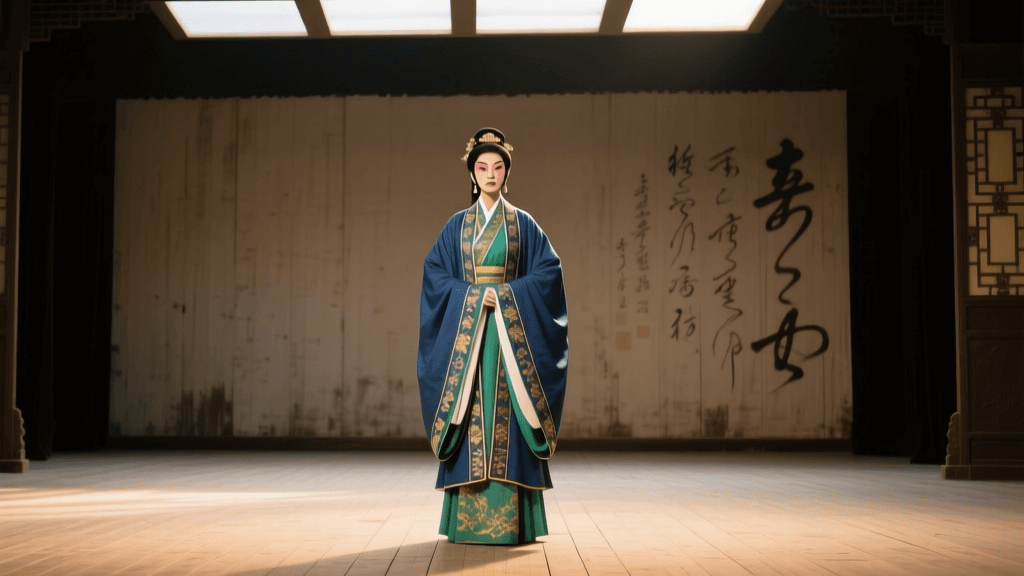
Kunqu, widely regarded as the mother of all Chinese operas and recognized by UNESCO as a Masterpiece of the Oral and Intangible Heritage of Humanity, is at the forefront of this revival. Because Kunqu originated and flourished during the Ming Dynasty, modern directors and historical consultants in 2026 are stripping away the later Qing-era theatricality. They are presenting classical plays using meticulously researched, authentic Ming-era Hanfu. This shift is not merely a cosmetic change; it represents a deeper cultural reclamation of historical accuracy in Asian traditions, bridging the gap between museum textiles and living performance art.
The 2026 Shift: From Theatrical Xifu to Authentic Hanfu
To understand the magnitude of this 2026 revival, one must distinguish between Xifu (theatrical costume) and Hanfu (historical Han Chinese clothing). Traditional Peking Opera relies heavily on Xifu, which utilizes a codified system of colors and patterns to denote character archetypes, regardless of historical era. A general from the Han Dynasty and a scholar from the Song Dynasty might wear structurally identical Xifu robes, differing only in embroidery and facial makeup.
In contrast, the 2026 Kunqu revival demands historical specificity. Troupes in Suzhou, Shanghai, and Hangzhou are now commissioning garments that strictly adhere to the silhouettes, weaving techniques, and tailoring methods of the Ming Dynasty. According to historical textile analyses documented by institutions like the Metropolitan Museum of Art, Ming dynasty clothing is characterized by its voluminous, flowing lines, cross-collar right lapels (Jiaoling Youren), and intricate woven gold patterns. By adopting these authentic silhouettes, modern Kunqu performances offer audiences a visually immersive time capsule, grounding the ethereal poetry of the arias in tangible historical reality.
Key Hanfu Garments in Modern Kunqu Productions
The transition to authentic Hanfu has required a complete overhaul of the stage wardrobe. Several key garments have become the cornerstone of the 2026 Kunqu aesthetic:
The Mamianqun (Horse-Face Skirt)
For female lead roles (Dan), the Mamianqun has replaced the heavily pleated, stiffened theatrical skirts of the past. The authentic Ming Mamianqun features two flat, overlapping front and back panels flanked by deeply pleated sides. In 2026, stage versions are woven with Zhuanghua (妆花) brocade techniques, utilizing real gold and silver threads that catch the stage lighting dynamically. The flat panels allow for the display of intricate woven motifs, such as dragons, phoenixes, or seasonal flowers, which historically denoted the wearer's rank and the specific scene's mood.
The Daopao and Zhiduo (Scholar's Robes)
Male lead roles (Sheng), particularly scholars and officials, are now costumed in authentic Daopao or Zhiduo robes. Unlike the theatrical Xifu, which often features stiffened shoulders and exaggerated waistbands, the authentic Daopao drapes naturally from the shoulders. It features side slits with hidden inner flaps (Anbai) that maintain modesty while allowing for the sweeping, graceful movements required in Kunqu choreography. The cross-collar is cut precisely to sit flat against the neck, a hallmark of proper Hanfu tailoring that had been lost in decades of theatrical costuming.
The Yunjian (Cloud Shoulder) and Pifeng (Cape)
Outerwear has also seen a return to historical forms. The Yunjian, a highly decorative, multi-tiered collar piece resembling clouds, is now crafted with authentic seed-pearl and coral beading rather than cheap plastic stage props. The Pifeng, a long, open-front cape, is used to denote maturity or high status, crafted from lightweight silk gauze (Luo) that billows authentically as the actor moves across the stage.
Sourcing and Commissioning Stage-Ready Hanfu in 2026
The demand for stage-ready, historically accurate Hanfu has spawned a specialized cottage industry in the Jiangnan region. Troupes no longer rely on generic theatrical warehouses; instead, they partner with master weavers and Hanfu restoration studios. Below is a comparison of the traditional theatrical approach versus the 2026 authentic stage Hanfu approach.
| Feature | Traditional Theatrical Xifu | 2026 Authentic Stage Hanfu |
|---|---|---|
| Sleeve Style | Shuixiu (Water Sleeves) - extra long white silk extensions | Wide Ming sleeves (Pipa or straight) with historical cuff embroidery |
| Skirt Structure | Stiffened, heavily gathered waist, uniform pleats | Mamianqun - flat overlapping panels, side-pleated, heavy brocade |
| Collar Tailoring | Often padded, high-collared, or stylized for quick changes | Jiaoling Youren (cross-collar), tailored to sit flat on the collarbone |
| Material Weight | Lightweight synthetic blends for acrobatic durability | Heavy silk brocades, Zhangzhou velvet, and authentic gauze weaves |
| Estimated Cost (2026) | 800 - 1,500 RMB per full set | 4,500 - 12,000 RMB per full set (depending on gold thread work) |
Fabric, Natural Dyeing, and Stage Lighting Adaptations
One of the most significant challenges in bringing authentic Hanfu to the stage is managing color under modern LED theatrical lighting. Historical garments were dyed using natural plant and mineral dyes, which can appear muddy or washed out under harsh stage spotlights. In 2026, textile chemists and traditional dyers have collaborated to create 'stage-enhanced natural dyes.' These dyes use traditional base materials but incorporate natural mordants that amplify the color vibrancy under theatrical gels.
- Indigo (Lan): Used for scholar robes, fermented indigo is now paired with iron mordants to achieve a deep, resonant navy that reads as black under warm stage lights without losing its blue undertones.
- Madder Root (Qiancao): Utilized for female lead garments, madder provides a rich, earthy crimson. By adjusting the water temperature during the dyeing process, artisans can achieve a vibrant scarlet that rivals synthetic dyes but retains the organic depth of traditional Hanfu.
- Pagoda Tree Buds (Huaihua): Used to achieve the brilliant imperial yellows and soft chartreuses, these buds are harvested in late summer and boiled to extract a colorfast pigment that glows brilliantly under cool white LED stage lights.
Furthermore, the integration of Song Brocade (Songjin) and Yun Brocade (Yunjin) has been adapted for stage durability. While museum-grade brocades are fragile, 2026 stage replicas use reinforced silk warp threads, allowing actors to kneel, roll, and perform rigorous choreography without damaging the priceless textile structures.
Choreography: Adapting Movement to Historical Silhouettes
The shift from Xifu to Hanfu has necessitated a complete reimagining of Kunqu choreography. Traditional Peking Opera and older Kunqu styles rely heavily on 'Shuixiu' (water sleeve) techniques, where actors flick, toss, and ripple extra-long white silk extensions to convey emotion. Because authentic Ming Hanfu sleeves are wide but lack these exaggerated extensions, choreographers in 2026 have had to invent new movement vocabularies.
Drawing inspiration from historical court dances and Dunhuang mural frescoes, modern movement directors are focusing on the manipulation of the garment's natural drape. Actors are trained to use the heavy, pleated sides of the Mamianqun to create sweeping, lotus-like shapes during turns. The wide cuffs of the Daopao are manipulated through precise wrist rotations and shoulder isolations, creating a fluid, wave-like effect that mimics the flow of water without the need for artificial silk extensions. As noted by cultural historians at Britannica, this return to the physical realities of historical dress has actually brought a more grounded, human emotionality back to the highly stylized world of Kunqu.
'When an actor wears a true Ming Mamianqun, the weight of the silk and the structure of the pleats dictate how they walk, how they sit, and how they breathe. The garment teaches the actor the posture of the ancients. We are no longer just playing characters; we are inhabiting history.' - Lead Costume Director, Shanghai Kunqu Revival Project, 2026.
Conclusion
The 2026 integration of authentic Hanfu into Kunqu and traditional performing arts is a watershed moment for Asian cultural preservation. It proves that historical accuracy and theatrical brilliance are not mutually exclusive. By investing in traditional weaving techniques, natural dyeing methods, and historically informed choreography, modern troupes are ensuring that the legacy of the Ming Dynasty is not just remembered in textbooks, but felt in the sweeping elegance of the living stage. As this movement continues to grow, audiences worldwide are being treated to a profoundly authentic visual and auditory experience that honors the true roots of Chinese theatrical tradition.