Kunqu Opera Hanfu Costumes: 2026 Stage & Styling Guide
The Intersection of Ming Dynasty Hanfu and Traditional Opera
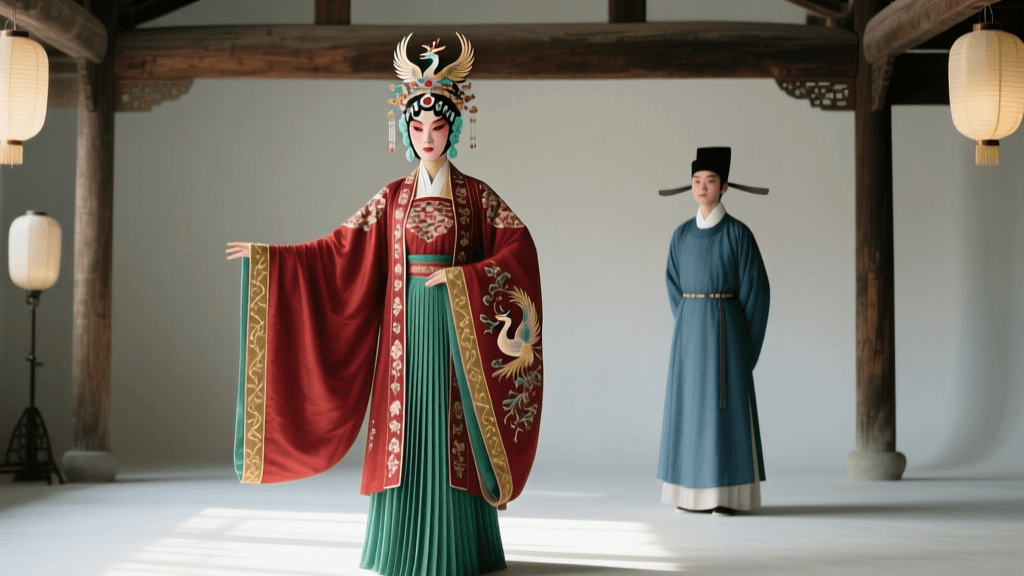
The global revival of traditional Chinese clothing has reached a fascinating new peak in 2026, with enthusiasts and performers alike drawing deep inspiration from the theatrical world. When we discuss Hanfu in the context of Peking Opera (Jingju) and Kunqu, we are navigating a complex intersection of historical accuracy and theatrical exaggeration. Kunqu, often referred to as the mother of Chinese operas, relies heavily on the elegant, refined aesthetics of the Ming Dynasty. Conversely, Peking Opera utilizes a more eclectic, stylized wardrobe known as Xifu (stage costumes), which blends Ming and Qing dynasty elements with fantastical, larger-than-life embellishments designed to read clearly from the back of a grand theater.
For modern Hanfu practitioners, understanding the distinction between authentic historical garments and theatrical Xifu is crucial. While everyday Hanfu prioritizes historical silhouettes, drape, and period-accurate tailoring, stage costumes prioritize movement, character archetypes, and visual impact under bright lighting. In 2026, a new trend dubbed "Opera-Core" has emerged, where Hanfu wearers thoughtfully integrate theatrical elements—like detachable water sleeves and elaborate cloud shoulders—into their modern wardrobes without compromising historical integrity.
Historical Hanfu vs. Theatrical Xifu: Understanding the Divide
To properly style or perform in these garments, one must first recognize the fundamental differences between historical Ming Hanfu and traditional opera costumes. According to UNESCO's Intangible Cultural Heritage archives on Kun Qu Opera, the art form is celebrated for its graceful movements and poetic elegance, which are directly reflected in the flowing, dignified robes worn by its performers. However, these stage robes are not exact replicas of historical daily wear.
Historical Hanfu was designed for the realities of daily life, court ceremonies, and scholarly pursuits. Theatrical Xifu, on the other hand, is engineered for the stage. Sleeves are elongated, collars are stiffened, and colors are hyper-saturated to convey a character's moral alignment and social status instantly. Below is a comprehensive comparison to help you distinguish between the two when sourcing garments in 2026.
| Feature | Authentic Ming Hanfu (Historical) | Kunqu / Peking Opera Xifu (Theatrical) |
|---|---|---|
| Sleeves | Standard wide (Pipa or straight) or narrow for labor | Exaggerated length with attached white silk Water Sleeves (Shuixiu) |
| Collars | Round, stand (Liling), or cross collars; soft tailoring | Highly stylized, stiffened, often with faux-layering and heavy trim |
| Fabrics | Silk, linen, cotton, ramie; breathable and drape-heavy | Heavy brocades, stiff satins, synthetic stage blends for structure |
| Embroidery | Subtle, rank-specific, auspicious motifs, tone-on-tone | Bold, high-contrast, character-archetype specific (e.g., dragons for generals) |
| Skirts | Mamianqun with flat pleats, natural waist drape | Stiffened pleats, often shorter to allow for acrobatic legwork |
2026 Trends: The "Opera-Core" Hanfu Movement
In 2026, the Hanfu community has embraced a sophisticated approach to theatrical styling. Rather than wearing full, heavy stage costumes for casual outings, enthusiasts are extracting specific, manageable elements from Kunqu and Peking Opera wardrobes and pairing them with historically accurate base layers. This creates a striking, avant-garde look that honors traditional performing arts while remaining functional for modern photoshoots, cultural festivals, and stage performances.
Integrating Water Sleeves (Shuixiu) into Modern Hanfu
The Shuixiu, or water sleeve, is the most iconic element of Chinese opera. In 2026, specialized Hanfu ateliers are producing "hybrid" tops—specifically the Ming Dynasty Ao (jacket)—that feature hidden buttons or discreet hooks at the wrist. This allows performers and photographers to attach authentic silk water sleeves for a performance or shoot, and then detach them for everyday wear. When sourcing these, look for sleeves made from 100% mulberry silk chiffon or lightweight habotai, measuring exactly 60 to 80 centimeters in extension length to ensure the proper fluid dynamics when tossing the sleeve.
The Resurgence of the Yunjian (Cloud Shoulder)
The Yunjian, a highly decorative, cape-like collar, was historically worn by Han women during the Ming and Qing dynasties for formal occasions, but it was heavily exaggerated in opera to denote noblewomen or goddesses. The 2026 market offers stunning, hand-beaded Yunjian pieces inspired directly by Kunqu stage royalty. Pairing a historically accurate, minimalist Ming cross-collar shirt with an opulent, opera-style Yunjian and a woven Mamianqun is currently the premier styling choice for formal cultural galas and traditional dance performances.
Sourcing and Commissioning Theatrical Garments in 2026
If you are a performer, theater director, or serious collector looking to acquire authentic Kunqu or Peking Opera-inspired garments, the 2026 market requires careful navigation. Mass-produced "costume" shops often use cheap polyester and inaccurate cuts that restrict movement. For genuine quality, you must commission from specialized ateliers, primarily located in Suzhou and Hangzhou, which have seen a massive surge in international orders this year.
What to Expect: Pricing and Lead Times
- Practice Garments: Made from high-grade cotton or Tencel blends, unembroidered but cut with proper stage proportions. Expect to pay between $120 and $250 USD, with a 3-week lead time.
- Semi-Custom Performance Robes: Featuring machine embroidery on heavy satin or brocade, tailored to your specific measurements. Prices range from $450 to $900 USD, requiring 6 to 8 weeks for production.
- Master-Crafted Stage Xifu: Fully hand-embroidered using traditional Suzhou silk thread techniques, real gold couching, and custom-dyed silks. These are investment pieces for professional troupes, costing anywhere from $2,500 to over $8,000 USD, with lead times stretching from 12 to 16 weeks.
Essential Measurements for Stage Costumes
Unlike everyday Hanfu, which relies on standard sizing, stage costumes require precise measurements to accommodate choreography. When ordering from an atelier in 2026, ensure you provide the following:
- Total Wingspan: Measured from wrist to wrist with arms fully extended. This dictates the drape of the water sleeves.
- Shoulder to Floor (with shoes):strong> Crucial for ensuring the hem of the robe clears the ground during kicks and sweeps.
- Torso Circumference: Measured over the thickest part of the chest and back, as stage performers often wear padded undergarments to create a heroic, broad-shouldered silhouette.
Movement and Etiquette: Wearing the Garment on Stage
Wearing a Kunqu or Peking Opera costume is not merely about putting on clothes; it is about adopting a physical discipline. As noted by UNESCO's documentation on Peking Opera, the costume is an extension of the actor's body, used to amplify emotion and narrative. In 2026, many Hanfu societies offer specialized workshops on "Opera Movement for Hanfu Wearers," teaching the foundational gestures required to manage these voluminous garments.
The most critical skill is the manipulation of the water sleeves. Techniques such as Touxiu (tossing the sleeve outward to show anger or resolve) and Fuxiu (brushing the sleeve inward to show shyness or contemplation) require months of wrist conditioning. Furthermore, the "Orchid Finger" (Lanhuazhi) hand gesture is mandatory when holding the edges of the robe or manipulating the sleeves, ensuring the hands remain elegant and stylized rather than flat and modern. When wearing a stiffened stage collar, performers must learn to turn their entire upper body rather than just their neck, maintaining the regal, unbroken line of the costume.
Caring for Heavy Brocades and Stage Silks
Theatrical garments, particularly those featuring heavy metallic embroidery and stiffened brocades, require meticulous care to maintain their structural integrity. Unlike soft, everyday Hanfu silks that can be gently hand-washed, stage Xifu should almost never be submerged in water. The metallic threads used in 2026's high-end replicas are prone to tarnishing, and the stiffening agents in the collars will dissolve.
After every performance or photoshoot, the garment must be aired out in a cool, dry room away from direct sunlight to prevent sweat from degrading the inner linings. Use a soft, natural-bristle brush to gently sweep dust from the embroidered motifs. For deep cleaning, always consult a dry cleaner who specializes in theatrical wardrobes or historical textiles. When storing, never fold the garments along the embroidery lines, as this will snap the metallic threads over time. Instead, roll the robes around acid-free tissue paper and store them in breathable cotton garment bags.
Conclusion
The relationship between historical Hanfu and the theatrical costumes of Kunqu and Peking Opera is a dialogue between reality and fantasy, history and art. As we move through 2026, the appreciation for these garments has evolved beyond mere cosplay or historical reenactment. Today's enthusiasts and performers recognize the profound craftsmanship, symbolic language, and physical discipline required to wear and honor these textiles. By understanding the distinctions between Ming daily wear and stage Xifu, and by sourcing from dedicated artisans, you can participate in a living tradition that continues to captivate audiences worldwide. For those looking to deepen their understanding of the archetypes and color symbolism inherent in these costumes, Encyclopedia Britannica's comprehensive guide to Peking Opera remains an invaluable resource for decoding the visual language of the stage.