Vintage Silk Kimono & Hanbok Preservation: 2026 Smart Storage Guide
The Evolution of Asian Silk Garment Preservation in 2026
Asian traditional garments, particularly vintage silk kimonos, heavily embroidered uchikake (wedding overcoats), and intricate silk hanboks, represent centuries of cultural heritage and masterful craftsmanship. As we navigate the climate realities of 2026, preserving these delicate textiles has become more complex than ever. Extreme weather fluctuations, shifting humidity baselines, and increased urban pollution pose severe threats to natural protein fibers like silk, hemp, and ramie. Historically, collectors and museums relied on passive storage methods. Today, the intersection of traditional Japanese and Korean storage wisdom with 2026 smart-home technology and eco-friendly restoration science offers a robust framework for garment care. This guide explores how to protect, clean, and restore your Asian textile investments using the latest museum-grade methodologies available this year.
Upgrading the Kiribako: Integrating Smart Hygrometers
The traditional Japanese kiribako (paulownia wood box) and the Korean bandaji (half-door chest) have been the gold standard for storing ceremonial garments for centuries. Paulownia wood is naturally fire-resistant, insect-repellent, and possesses a unique cellular structure that allows it to "breathe," buffering minor humidity changes. However, the erratic climate swings of 2026 mean passive buffering is no longer sufficient to prevent kabi (mold) or fiber desiccation, especially in regions experiencing prolonged monsoon seasons or severe winter dry spells.
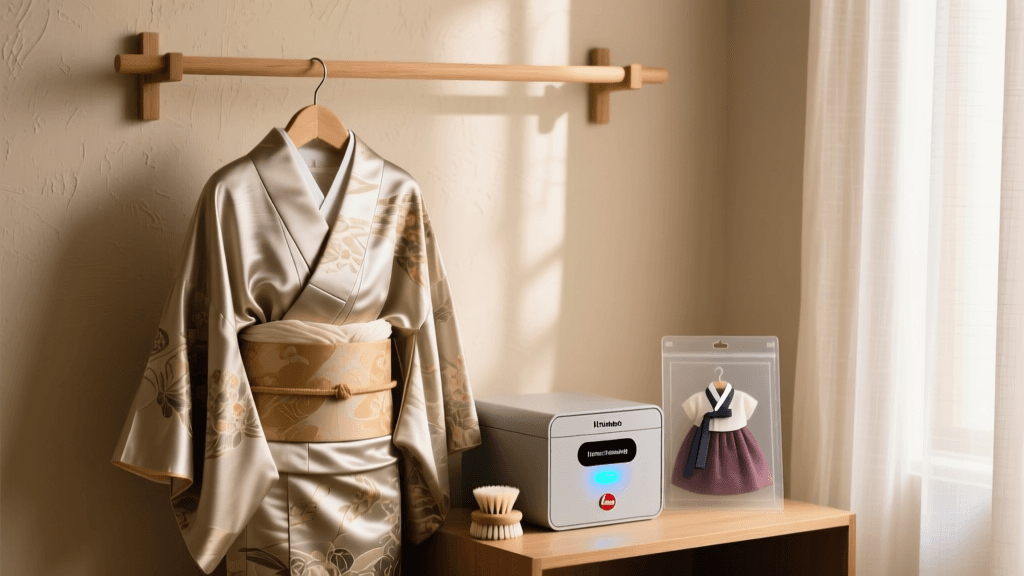
To modernize the kiribako, conservators are now integrating low-profile, Bluetooth-enabled smart hygrometers directly into the storage chests. Devices like the SensorPush HT.w and the SwitchBot Indoor/Outdoor Thermo-Hygrometer Hub are currently the top choices for textile archivists. These sensors are small enough to tuck into the corner of a silk-lined drawer without touching the garments, providing real-time relative humidity (RH) and temperature data directly to your smartphone. If the microclimate inside your tansu chest drifts outside the safe zone, the system triggers an automated alert, allowing you to intervene before irreversible damage occurs.
Optimal Climate Parameters for Silk and Ramie
- Relative Humidity (RH): Maintain a strict range between 45% and 55%. Levels above 60% invite mold spores and metallic thread tarnishing, while levels below 40% cause silk fibroin to become brittle and shatter.
- Temperature: Keep the storage environment stable at 65°F to 68°F (18°C to 20°C). Avoid placing tansu chests against exterior walls, in attics, or near HVAC vents where thermal shock can occur.
- Light Exposure: Zero UV exposure. Ensure smart sensors with light-detection capabilities alert you if a storage closet door has been left ajar, exposing dyes to fading.
Eco-Friendly Cleaning: Moving Beyond Perc for Silk Brocades
When vintage kimonos and hanboks require deep cleaning, the historical reliance on perchloroethylene (PERC) is now entirely obsolete in 2026. PERC is a harsh solvent that strips the natural sericin from silk, degrades delicate shibori dyes, and dissolves the animal-based glues used in traditional gold leaf (kinpaku) application. Furthermore, modern environmental regulations have heavily restricted its use due to toxicity concerns.
Modern preservation relies on Professional Wet Cleaning (PWC) and Liquid Silicone (GreenEarth Cleaning). PWC utilizes computer-controlled tension, specialized biodegradable surfactants, and precise water temperatures to clean water-soluble stains without agitating the delicate weave. For garments with heavy metallic embroidery or structural vulnerabilities, liquid silicone provides a gentle, non-toxic solvent alternative that cleans without swelling the silk fibers. According to the Metropolitan Museum of Art's conservation department, minimizing chemical stress on historical textiles is paramount to ensuring their survival for future generations. Always seek out a certified heritage textile cleaner who explicitly advertises PWC or silicone-based solvent technologies.
Comparison Chart: Traditional vs. 2026 Smart Preservation
| Preservation Aspect | Traditional Method (Pre-2020) | 2026 Smart Preservation Method |
|---|---|---|
| Humidity Monitoring | Analog dial hygrometers; visual inspection for mold. | Bluetooth smart sensors (e.g., SwitchBot) with push notifications. |
| Moth Prevention | Naphthalene or camphor balls (leaves toxic residue and odor). | Pheromone traps and cedarwood blocks; airtight archival sealing. |
| Deep Cleaning | PERC dry cleaning (damages sericin and metallic threads). | Professional Wet Cleaning (PWC) and liquid silicone solvents. |
| Storage Wrapping | Standard tissue paper or plastic dry-cleaning bags. | Unbuffered acid-free tissue and unbleached cotton muslin. |
| Inventory Tracking | Handwritten ledgers and polaroid photographs. | Macro-lens digitization with cloud-based metadata and AI tagging. |
Step-by-Step Restoration Protocol for Vintage Silk
Restoring damaged Asian garments requires a gentle, reversible approach. The American Institute for Conservation (AIC) Textile Wiki emphasizes that all restoration efforts must prioritize the structural integrity of the original weave over cosmetic perfection. Never attempt to use commercial stain removers or household irons on vintage silk.
1. Surface Cleaning and Mold Remediation
If your smart sensor alerts you to a humidity spike and you discover early-stage mold (kabi), do not apply liquid. Isolate the garment in a well-ventilated, low-humidity room. Use a HEPA-filtered micro-vacuum with a low-suction setting and a protective fiberglass screen to gently lift spores from the surface. For stubborn particulate dirt, use a vulcanized rubber sponge, dabbing (never rubbing) the affected areas to lift grime from the weave.
2. Crease Removal and Humidification
Deep, set creases in vintage silk can lead to fiber breakage along the fold lines. Instead of using a direct heat iron, which can scorch 20th-century synthetic blends often hidden in vintage linings, use a localized ultrasonic humidifier. The Victoria and Albert Museum (V&A) recommends placing the garment in a sealed chamber with controlled misting to relax the fibers. Once relaxed, the creases can be gently eased out by hand and weighted flat using glass paperweights lined with unbleached muslin.
3. Archival Stabilization of Tears
For structural tears in kimono sleeves or hanbok skirts, avoid standard sewing threads, which can cut through weakened silk. Instead, use laid-thread couching with ultra-fine polyester or unweighted silk organza patches dyed to match the garment. This technique, standard in 2026 museum labs, distributes the tension across a wider area without puncturing the fragile original fabric.
Sourcing Archival Materials in 2026
Proper packing is the final defense against environmental degradation. When folding kimonos and hanboks for long-term storage, never use standard tissue paper, which is highly acidic and will cause yellowing and fiber rot over time.
- Unbuffered Acid-Free Tissue: Essential for wrapping silk. Buffered tissue (which contains calcium carbonate) is safe for cotton and linen but can damage protein fibers like silk and wool.
- Unbleached Muslin: Use pre-washed, unbleached cotton muslin to create custom dust covers for folded garments, allowing the textile to breathe while blocking dust and light.
- Archival Storage Boxes: Replace cardboard with corrugated polypropylene (Coroplast) or acid-free Hollinger boxes, which off-gas zero volatile organic compounds (VOCs) and provide rigid structural support.
Digitizing Your Textile Archive in 2026
Physical preservation must be paired with digital preservation. In 2026, high-resolution macro-lens attachments for smartphones allow collectors to capture the intricate weave structures, yuzen dye gradients, and gold couched threads of their garments in stunning detail. Utilizing cloud-based archival software, you can tag each piece with metadata including the era (e.g., Taisho, Joseon), specific motifs (e.g., cranes, peonies), and condition reports. This digital catalog is not only vital for insurance purposes but also ensures that the cultural provenance of the garment is preserved even if the physical textile eventually degrades.
Conclusion
Preserving Asian traditional garments in 2026 requires a harmonious blend of ancestral wisdom and modern environmental science. By upgrading your kiribako with smart humidity monitoring, utilizing eco-friendly professional cleaning, and adhering to strict archival packing protocols, you ensure that these magnificent silk kimonos and hanboks remain vibrant, structurally sound, and culturally resonant for centuries to come.