Kimono Undergarments and Layering: A Complete Guide
The Hidden Architecture of the Kimono
When most people envision traditional Japanese clothing, they picture the vibrant, sweeping silhouettes of the outer kimono. However, the true elegance, comfort, and structural integrity of the garment rely entirely on what lies beneath. Kimono undergarments and the art of layering—known as kitsuke—are foundational to achieving the correct cylindrical silhouette, protecting expensive silk outer layers, and ensuring modesty and comfort across varying seasons.
Unlike Western fashion, which often tailors clothing to the body's natural curves, traditional Japanese dress requires the body to be reshaped into a smooth, straight cylinder. This transformation is achieved through a precise system of undergarments, padding, and binding. Understanding these layers is essential for anyone looking to wear a kimono authentically, whether for a formal tea ceremony, a summer festival, or a wedding.
Historical Context: From Heian Layers to Edo Streamlining
The concept of layering in Japanese dress reached its zenith during the Heian period (794–1185), where court ladies wore the junihitoe, a twelve-layered ensemble that weighed upwards of 20 kilograms. The aesthetic focused on the subtle color combinations peeking out from the sleeves and hems. By the Edo period (1603–1867), the kosode (a garment with small sleeve openings) evolved into the modern kimono, and the layering system was streamlined into the practical, three-tier foundation we use today. As noted by the Victoria and Albert Museum's extensive research on kimono construction, the shift from multiple outer layers to a single outer layer with specialized undergarments allowed for greater mobility while retaining the aesthetic depth of traditional Japanese dress.
The Foundation Layer: Hadajuban and Susoyoke
The first layer of defense between the body and the precious silk of the outer kimono is the foundation layer. This layer is designed to absorb sweat, provide modesty, and create a smooth base.
Hadajuban (The Undershirt)
The hadajuban is a lightweight, short-sleeved undershirt. It is typically made from breathable, moisture-wicking materials like cotton, hemp, or modern bamboo blends.
- Material: Cotton or hemp for summer; thermal blends for winter.
- Fit: It should fit snugly to the body to prevent bunching under the next layers.
- Neckline: Features a deep, wide neckline to ensure it remains completely hidden beneath the outer kimono's collar.
Susoyoke (The Half-Slip)
The susoyoke is a wrap-around half-slip worn around the waist and extending to the calves or ankles. It prevents the outer kimono from clinging to the legs and protects the lower half of the garment from friction and body oils.
- Material: Often made of cotton, silk crepe, or washable polyester.
- Alternative: In colder months, or for men, suteteko (long, lightweight trousers) are worn instead of a slip to provide warmth and prevent the kimono from tangling between the legs when walking.
The Middle Layer: Nagajuban (Long Under-Kimono)
The nagajuban is the most critical undergarment in the kimono ensemble. It is a full-length, kimono-shaped robe worn over the hadajuban and susoyoke, but beneath the outer kimono. Its primary purposes are to protect the outer kimono from sweat and to provide the visible white collar at the nape of the neck.
Materials and Maintenance
Historically made of silk, modern nagajuban are frequently crafted from high-quality, washable polyester or synthetic blends. Because the outer kimono is incredibly difficult and expensive to clean (requiring specialized traditional washing called arai-hari), the washable nagajuban acts as a vital sacrificial barrier. The Metropolitan Museum of Art's exhibition archives on Kimono Style highlight how the evolution of washable under-layers revolutionized the daily maintenance of these expensive garments in the 20th century.
The Han-Eri (Half-Collar)
The collar of the nagajuban is covered by a detachable piece of fabric called the han-eri.
- Function: It protects the neck area from skin oils and makeup, and it provides the crisp, clean line of white (or decorative color) visible at the neckline.
- Customization: The han-eri can be swapped out. While white is standard for formal wear, embroidered or subtly patterned han-eri are popular for casual or semi-formal occasions.
- Attachment: It is basted (temporarily stitched) or pinned to the nagajuban collar, allowing for easy removal and washing.
Shaping and Padding: Creating the Cylindrical Silhouette
To wear a kimono correctly, the body's natural curves—particularly the bust, waist, and hips—must be minimized. If the body is curved, the kimono will wrinkle, and the obi (sash) will not sit flat.
Kimono Bras and Bust Flattening
Women typically wear a specialized kimono bra (often a wire-free, compressive sports bra) or use a traditional bust binder called a sarashi (a long strip of cotton cloth wrapped tightly around the chest) to flatten the bustline.
Towel Padding (Handugui)
To fill in the hollow of the lower back and smooth out the hips, rolled-up hand towels or specialized foam pads are wrapped around the waist and secured with a koshi-himo (tying belt). This padding ensures the obi sits perfectly straight and prevents the kimono from collapsing at the lower back.
Layering Components and Specifications
The following table outlines the essential components of the kimono layering system, their primary functions, and average market costs for modern practitioners.
| Garment | Japanese Term | Primary Function | Typical Material | Avg. Cost (USD) |
|---|---|---|---|---|
| Undershirt | Hadajuban | Sweat absorption, modesty | Cotton, Hemp | $20 - $40 |
| Half-Slip | Susoyoke | Leg friction protection | Cotton, Silk Crepe | $25 - $50 |
| Long Under-Kimono | Nagajuban | Outer kimono protection, collar base | Polyester, Silk | $60 - $250 |
| Half-Collar | Han-eri | Collar protection, decoration | Cotton, Silk, Synth | $15 - $80 |
| Bust Binder | Sarashi / Kimono Bra | Flattening the bustline | Cotton, Spandex | $15 - $35 |
| Waist Padding | Towel / Pad | Smoothing hips and lower back | Cotton Towel, Foam | $5 - $25 |
Seasonal Adjustments in Layering
Japanese dress is deeply tied to the seasons, and the undergarment system adapts accordingly to ensure comfort and adhere to sartorial rules.
Summer (July and August)
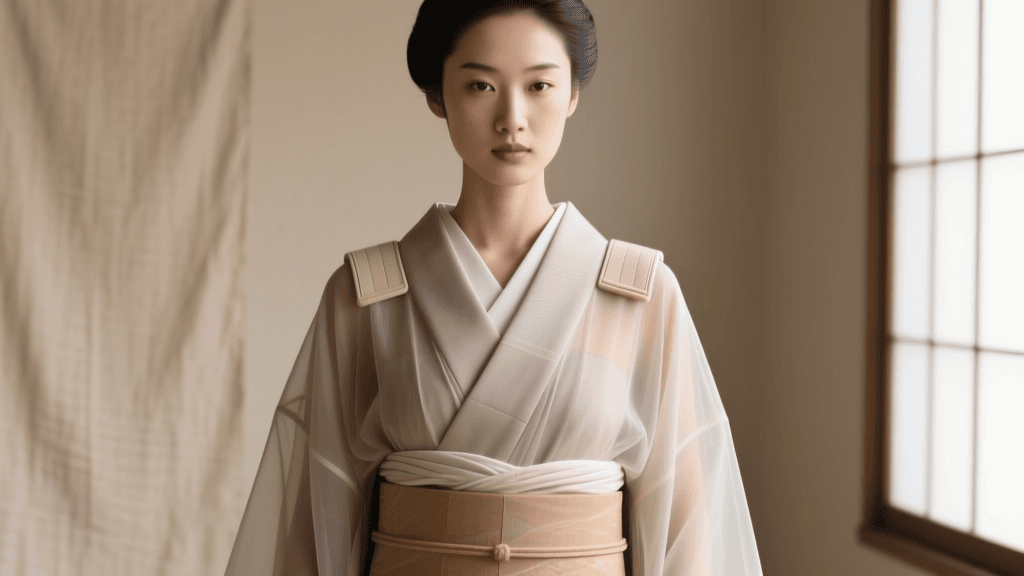
During the peak of summer, sheer outer kimonos made from ro or sha (loosely woven silk gauze) are worn. Because the outer layer is transparent, the undergarments are visible. Practitioners switch to a sheer, unlined nagajuban made of hemp or specialized cooling synthetic mesh. The han-eri is often made of ro fabric as well. In highly casual summer settings (like wearing a cotton yukata), the nagajuban is omitted entirely, and a specialized yukata slip is worn instead.
Winter (December to February)
Winter layering focuses on insulation without adding bulk. Thermal hadajuban (similar to long-sleeved heat-tech shirts) are worn beneath the standard cotton undershirt. The nagajuban may be lined (awase), and suteteko (long johns) replace the susoyoke to keep the legs warm. Wool-blend undergarments are also popular for their excellent heat retention and moisture-wicking properties.
Step-by-Step Layering Guide
Dressing in a kimono follows a strict, sequential order. Here is the practical workflow for preparing the undergarments:
- Prep the Body: Put on the kimono bra or wrap the sarashi to flatten the bust. Wrap a rolled towel around the waist and hips, securing it with a koshi-himo belt to create a straight silhouette.
- Apply the Hadajuban: Slip on the cotton undershirt. Ensure the neckline is pulled wide and low so it will not show.
- Secure the Susoyoke: Wrap the half-slip around the waist, overlapping the front panels (left over right, always). Tie it securely at the hip.
- Don the Nagajuban: Put on the long under-kimono. Align the center seam with your spine.
- Adjust the Collar: This is the most crucial step. Pull the collar snugly across the chest, then reach back and pull the center back seam down the spine. The collar should sit about 1 to 2 inches (2.5 to 5 cm) away from the nape of your neck, exposing the eri-nuki (collar stay) space, which is considered highly elegant.
- Bind the Chest: Use a datejime (a wide, elasticized binding belt) or a korin belt to secure the nagajuban collar tightly in place. This prevents the collar from shifting when the heavy outer kimono and obi are applied.
Care and Maintenance of Undergarments
Proper care extends the life of your kimono foundation. The han-eri should be removed and hand-washed with a gentle detergent after every 2-3 wears, as it directly contacts the skin. The nagajuban, if made of modern polyester, can usually be machine-washed on a delicate cycle inside a mesh laundry bag, then hung to dry. Silk nagajuban must be dry-cleaned or professionally washed. Always air out your susoyoke and hadajuban in a shaded, well-ventilated area before storing them to prevent mildew and odors.
Conclusion
Mastering kimono undergarments and layering is a journey into the meticulous, thoughtful world of traditional Japanese aesthetics. While the process of binding, padding, and layering may seem daunting to beginners, it is this very architecture that allows the outer kimono to drape flawlessly. By investing in high-quality foundation pieces and understanding the purpose of each layer, you ensure not only the longevity of your garments but also the grace and comfort of your wear. As documented by cultural institutions and experts in Japanese sartorial history, the beauty of the kimono is inextricably linked to the hidden layers that give it form.