Japanese Kimono Seasonality Guide: Fabric Weights and Care
The Philosophy of Japanese Textile Seasonality
In the realm of traditional Japanese dress, seasonality is not merely a matter of practical comfort; it is a profound aesthetic philosophy known as kisetsukan (seasonal feeling). Unlike Western fashion, which often reacts to current weather conditions, traditional kimono etiquette dictates that one should anticipate the changing of the seasons by approximately one month. This concept of hashiri (the beginning or early season) and nagori (the lingering or late season) ensures that the wearer is always in harmony with nature's subtle transitions. As noted by experts at The Metropolitan Museum of Art, the kimono serves as a canvas for the natural world, reflecting the precise botanical and meteorological shifts of the Japanese archipelago.
Understanding the intricate calendar of textile weights, weaves, and layering systems is essential for anyone looking to wear, collect, or preserve these garments. This comprehensive guide breaks down the seasonal wardrobe and provides a meticulous care calendar to ensure your silk, hemp, and cotton textiles remain pristine for generations.
The Seasonal Wardrobe: Fabric Weights and Weaves
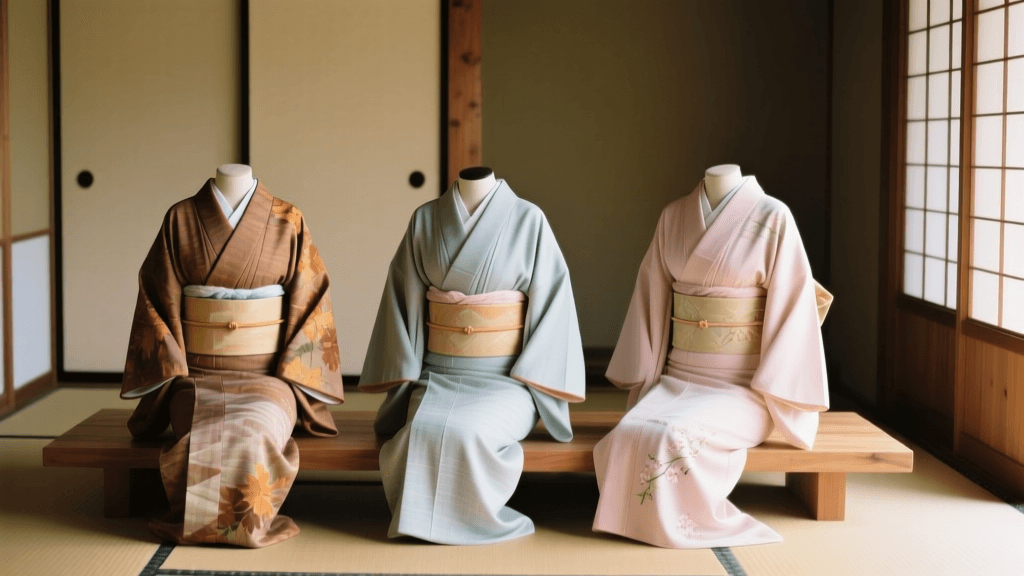
The traditional kimono wardrobe is strictly divided by the weight and weave of the textile, as well as the presence or absence of a lining. The transition between these garments is rigidly observed in formal settings, though modern casual wear allows for slightly more flexibility.
Winter and Spring (October to May): Awase and Dou
The awase is a fully lined kimono, designed to provide warmth and structure during the cooler months. The outer layer is typically made from medium-to-heavyweight silk crepe (chirimen), pongee (tsumugi), or rinzu (silk damask). The lining, usually made from lightweight habutai silk, adds insulation and allows the garment to glide smoothly over undergarments. In the depths of winter (January and February), a dou (a padded kimono) or an uchikake with thick wadding may be worn for extreme cold. During this period, the undergarment (nagajuban) is also lined, and a han-eri (detachable collar) made of warm, embroidered silk or velvet is utilized.
Early Summer and Autumn (June and September): Hitoe
As the humidity rises in June and lingers in September, the wardrobe transitions to the hitoe, an unlined kimono. The hitoe is crafted from a single layer of fabric, allowing for greater breathability. Textiles for this season include lightweight chirimen, ro (gauze), and sha (leno weave). The undergarments also shift to unlined versions, and the han-eri is swapped for breathable linen, cotton, or sheer silk ro. Wearing a lined awase in June is considered a faux pas, as it visually and physically suggests a lack of awareness of the changing climate.
High Summer (July and August): Natsugoromo (Ro and Sha)
During the peak of the Japanese summer, the natsugoromo (summer kimono) takes precedence. These garments are woven using specialized techniques to create maximum airflow. Ro features a leno weave with distinct horizontal stripes of open gaps, while sha has a more uniform, sheer mesh-like structure. Beyond silk, high-quality bast fibers like asa (hemp) and jofu (ramie) are highly prized for their cooling properties and crisp drape. The Victoria and Albert Museum highlights how these sheer textiles were historically layered to create a cooling visual effect, with the undergarments subtly visible through the translucent outer layers.
Data Table: Kimono Seasonality & Textile Weight Chart
The following chart provides a quick-reference guide for aligning your kimono, undergarments, and accessories with the traditional Japanese calendar.
| Month | Garment Type | Fabric Weave / Weight | Undergarment (Nagajuban) | Collar (Han-eri) |
|---|---|---|---|---|
| Jan - Feb | Dou / Awase | Heavy Chirimen, Tsumugi, Padded | Lined Silk | Velvet, Heavy Silk |
| Mar - May | Awase | Medium Chirimen, Rinzu, Silk | Lined Silk or Synth | Embroidered Silk |
| June | Hitoe | Unlined Lightweight Chirimen | Unlined Silk / Ro | Linen, Cotton, Sheer |
| July - Aug | Natsugoromo | Ro, Sha, Asa (Hemp), Jofu | Unlined Ro, Sha, Linen | Sheer Ro, Linen |
| September | Hitoe | Unlined Chirimen, Tsumugi | Unlined Silk | Linen, Cotton |
| Oct - Dec | Awase | Medium to Heavy Silk, Wool | Lined Silk | Silk, Crepe |
The Kimono Care Calendar: Year-Round Maintenance
Silk is a protein fiber that is highly susceptible to humidity, sweat, and light. Maintaining a kimono requires a disciplined, seasonal approach to cleaning and airing. Institutions like the Kyoto National Museum employ rigorous environmental controls to preserve historical textiles, but private collectors and wearers can achieve excellent results by following a traditional care calendar.
Mushiboshi (Airing Out)
Mushiboshi translates to 'insect airing' and is the practice of unpacking and airing out kimono to prevent mold, dissipate trapped odors, and check for hidden stains. This should be performed twice a year: once in late autumn (November) and once in late winter (February).
- Timing: Choose a dry, breezy, and sunny day. Avoid the rainy season (tsuyu) and high-humidity summer days at all costs.
- Method: Remove the kimono from its storage paper. Hang it on a wide, specialized kimono hanger (emono-kake) in a shaded, well-ventilated room. Never expose silk to direct sunlight, as UV rays will rapidly degrade the dye and weaken the protein fibers.
- Inspection: Check the collar, the back of the neck, and the hem for sweat stains or makeup transfer. Silk stains oxidize and turn yellow or brown over time if left untreated.
Professional Cleaning: Maruarai and Shiminuki
Unlike modern garments, a silk kimono should never be washed in water, as this will cause the fabric to shrink, lose its sizing, and ruin the dye. Instead, it must be taken to a specialist for maruarai (whole garment washing).
- The Process: Maruarai uses petroleum-based solvents rather than water. The kimono is not disassembled; it is cleaned as a whole tube to maintain its structural integrity and prevent the silk from warping.
- Cost: Expect to pay between 5,000 and 12,000 JPY (approx. $35 to $85 USD) per garment, depending on the formality and the presence of metallic threads or delicate embroidery.
- Frequency: A heavily worn formal kimono should be cleaned once a year. Casual garments worn over a protective nagajuban may only need cleaning every 3 to 5 years, provided they are aired regularly.
- Shiminuki (Stain Removal): If specific water-based stains (like sweat or tea) are present, request shiminuki. Artisans use specialized water-brushing techniques and volatile solvents to lift the stain without leaving a water ring. This costs an additional 1,000 to 3,000 JPY per spot.
Actionable Storage Solutions and Materials
Proper storage is the final pillar of kimono preservation. The goal is to manage moisture, prevent acid migration, and protect against pests like carpet beetles and clothes moths.
Tatou-shi (Storage Paper)
Every kimono should be folded precisely along its seam lines and wrapped in tatou-shi, a specialized, acid-free paper. Standard tatou-shi measures approximately 85cm by 100cm. Never use newspaper, standard tissue paper, or plastic bags, as these contain acids and trap moisture, leading to irreversible yellowing and mold growth. Replace tatou-shi every 5 to 10 years, or immediately if you notice brown spots or a musty odor.
Tansu (Wooden Chests) and Desiccants
Traditionally, kimono are stored in a tansu made from kiri (paulownia) wood. Paulownia is unique because it swells in high humidity to seal out moisture and shrinks in dry conditions to allow the wood to breathe. If you do not have a kiri tansu, use plastic storage bins with caution: ensure the bin is lined with acid-free paper and leave the lid slightly ajar during dry winter months to prevent condensation.
Always include silica gel desiccant packets in your storage containers. However, a critical rule of kimono care is that desiccants must never touch the silk directly. The concentrated drying effect can cause the silk fibers to become brittle and snap. Place the desiccant in the corner of the storage bin or in a separate cloth pouch away from the tatou-shi wrapped garments.
Conclusion
Mastering the seasonality and care of traditional Japanese garments transforms the act of dressing into a mindful, year-round practice. By respecting the boundaries of awase, hitoe, and ro, you participate in a centuries-old dialogue with the natural world. Furthermore, by adhering to a strict calendar of mushiboshi, professional maruarai, and proper storage, you ensure that these exquisite textiles remain vibrant and structurally sound, ready to be passed down as enduring cultural heirlooms.