The Sound Of Silk: Kimono Fabric Sensory Guide 2026
The Hidden Dimension of Japanese Garments
When we consider the traditional Japanese kimono, our minds immediately conjure vivid visual imagery: the sweeping silhouettes, the intricate Yuzen dyeing, and the vibrant seasonal motifs. However, to view the kimono solely as a visual medium is to miss a profound layer of its cultural and physical significance. In 2026, as global fashion increasingly embraces mindfulness and somatic awareness, the traditional Japanese garment is being celebrated for its deeply immersive sensory experience. The kimono is not merely worn; it is felt, heard, and internalized. From the distinct acoustic signature of rubbing silk threads to the grounding, weighted embrace of the obi sash, the sensory profile of the kimono offers a masterclass in tactile and auditory design. This guide explores the hidden dimensions of kimono fabrics, revealing how centuries-old weaving techniques continue to shape a uniquely Zen sensory experience in the modern era.
The Acoustic Signature: Understanding Kinu-Zure
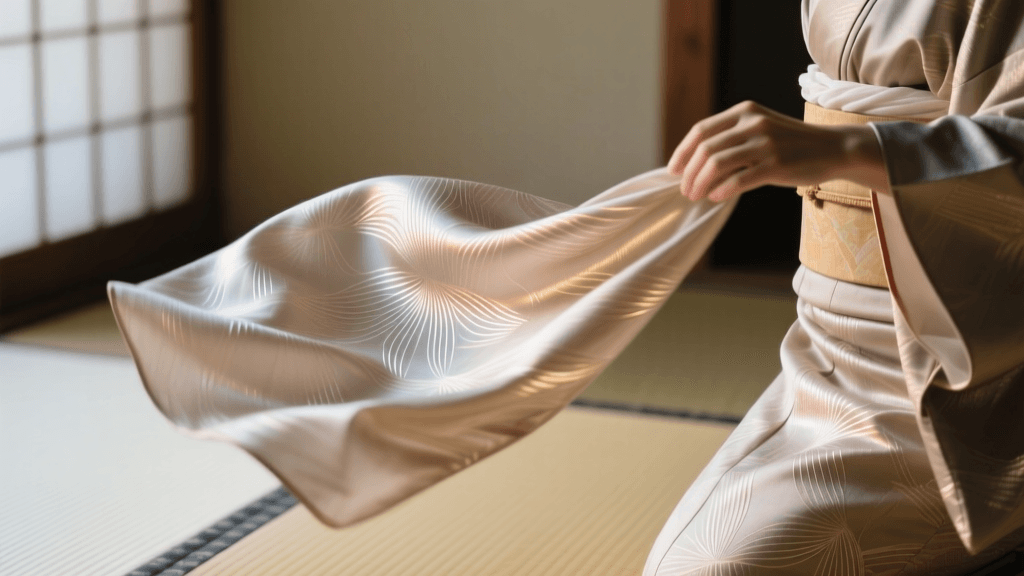
In the realm of traditional Japanese textiles, sound is not merely a byproduct of movement; it is a deliberate and highly prized design feature. The Japanese language possesses a specific term for the rustling sound of silk: kinu-zure (衣擦れ). Historically, particularly during the Edo period, the subtle, rhythmic swish of a woman's kimono hem and sleeves announced her presence before she was even seen. This acoustic signature was considered an essential element of elegance and refinement.
According to historical textile analyses documented by the Metropolitan Museum of Art, the acoustic properties of silk were highly valued in aristocratic and samurai households, where the sound of the fabric conveyed the wearer's status and the quality of their garments. Synthetic fabrics, which dominate the fast-fashion market today, lack this acoustic signature entirely. Their fibers are extruded to be perfectly smooth and uniform, resulting in a silent, frictionless glide. True kinu-zure requires the microscopic irregularities of natural silk fibers rubbing against one another, creating a soft, rhythmic friction that sounds like whispering leaves. In 2026, as consumers seek authentic, grounding experiences away from digital noise, the auditory feedback of a genuine silk kimono provides a deeply satisfying, real-world sensory anchor.
The Physics of the Rustle: Tango Chirimen
To understand why certain silks rustle more loudly than others, we must examine the physics of the weave. The undisputed champion of kinu-zure is Tango Chirimen, a traditional crepe silk produced in the Tango region of Kyoto Prefecture. The secret to its acoustic and tactile brilliance lies in the extreme twisting of the weft yarns. Artisans twist the raw silk threads up to 3,000 times per meter before weaving.
Once the fabric is woven, it is boiled in hot water to remove the sericin (the natural silk gum). As the sericin dissolves, the highly twisted threads attempt to untwist, shrinking the fabric and creating a microscopic, pebbled surface known as shibo. This three-dimensional texture is what generates the signature rustling sound when the fabric folds against itself. Furthermore, this pebbled texture prevents the silk from clinging to the skin, allowing air to circulate and providing a remarkably crisp, cool tactile sensation even in humid weather. The Japanese Ministry of Economy, Trade and Industry (METI) continues to strictly protect and designate Tango Chirimen as a traditional craft, ensuring that the specific tension and twisting methods required to produce this sensory masterpiece are preserved for future generations.
Tactile Weight and the Zen of Dressing
Beyond the auditory experience, the kimono offers a profound tactile and proprioceptive journey. The art of dressing, known as kitsuke, is a deliberate, mindful practice that transforms the act of getting dressed into a moving meditation. A fully assembled kimono ensemble—including the nagajuban (undergarment), the main kimono, the obi sash, the obijime (cord), and the tabi socks—can weigh anywhere from 1.5 to 3 kilograms.
This distributed weight provides a form of deep pressure stimulation, similar to the therapeutic effects of a weighted blanket. The firm, structured wrapping of the obi around the core engages the abdominal muscles and enforces an upright, centered posture. In 2026, wellness practitioners and Zen enthusiasts increasingly recognize kitsuke as a somatic grounding technique. The physical restriction of the garment naturally slows the wearer's pace, shortens their stride, and encourages deliberate, mindful movements. The tactile feedback of the heavy silk and the firm pressure of the sash serve as continuous physical reminders to remain present, embodying the Zen philosophy of finding stillness within motion.
Sensory Profiles of Major Kimono Fabrics in 2026
Not all kimono fabrics offer the same sensory experience. The choice of textile dramatically alters the acoustic, tactile, and thermal feedback of the garment. Below is a comparative guide to the sensory profiles of major traditional fabrics available in the 2026 market.
| Fabric Type | Tactile Profile | Acoustic Signature | Average Weight | Best Season |
|---|---|---|---|---|
| Tango Chirimen (Crepe Silk) | Pebbled, crisp, cool to the touch, non-clinging | Pronounced, rhythmic rustle (High kinu-zure) | Medium-Heavy | Spring / Autumn |
| Oshima Tsumugi (Mud-Dyed Pongee) | Supple, smooth, incredibly soft, drapes heavily | Muted, soft swish (Low friction) | Heavy | Autumn / Winter |
| Ro / Sha (Summer Gauze Silk) | Sheer, lightweight, slightly textured, breathable | Whisper-quiet, airy flutter | Very Light | Summer |
| Yuki Tsumugi (Hand-Spun Pongee) | Warm, fluffy, cotton-like softness, matte finish | Virtually silent, soft thud | Medium | Winter |
Acoustic Weaving: 2026 Innovations in Textile Preservation
As of 2026, the preservation of these sensory qualities has entered a new, technologically assisted era. With the decline of traditional sericulture and the aging population of master weavers, the exact acoustic frequency of vintage Meiji and Taisho-era silks was at risk of being lost. In response, a coalition of Kyoto-based textile conservationists and acoustic engineers has launched the 'Acoustic Silk Archive' initiative.
Using advanced audio spectrometers and AI-driven acoustic mapping, researchers are recording the precise decibel levels and frequency ranges of antique kinu-zure. This data is then used to calibrate modern computer-assisted looms, adjusting the tension and twist of newly spun silk to perfectly replicate the auditory signature of historical fabrics. This seamless blend of heritage and high-tech innovation ensures that the 'voice' of the silk remains intact. As noted by the Victoria and Albert Museum's extensive textile archives, the kimono is a living garment that constantly adapts to new technologies while retaining its core cultural DNA, and this 2026 acoustic preservation effort is a prime example of that evolution.
How to Experience the Sensory Kimono in 2026
For travelers and textile enthusiasts visiting Japan in 2026, experiencing the kimono goes far beyond a quick photo opportunity in Kyoto's Higashiyama district. To truly appreciate the sensory depth of the garment, one must seek out specialized, immersive workshops that prioritize tactile and auditory education.
1. Book a Sensory-Focused Kitsuke Session
Standard rental shops often use lightweight polyester blends that are silent and lack the grounding weight of true silk. Instead, seek out boutique dressing studios in Kyoto's Nishijin weaving district that offer 'Sensory Kitsuke' courses. These specialized sessions, which typically cost between ¥18,000 and ¥25,000 in 2026, guide you through the mindful process of dressing in authentic, heavy Tango Chirimen or Oshima Tsumugi. Instructors focus on the feeling of the fabric against the skin, the proper tension of the obi, and the deliberate movements required to make the silk 'sing' as you walk.
2. Visit the Tango Chirimen Weaving Cooperatives
To understand the origin of the rustle, travel to the Kyotango region on the Sea of Japan coast. Many traditional weaving cooperatives now offer acoustic tours where visitors can close their eyes and listen to the rhythmic clacking of the wooden looms and the subsequent rubbing of the raw, unboiled silk. Participating in the manual twisting of the weft yarns provides a profound appreciation for the physical labor required to engineer the fabric's sensory profile.
3. Practice Mindful Movement
When wearing a silk kimono, dedicate time to simply walking in a quiet environment, such as a traditional Zen rock garden or a cedar-lined temple path. Focus on the deep pressure of the obi supporting your core and the crisp, cool friction of the chirimen against your legs. Listen to the kinu-zure with each step. By shifting your focus from how you look in the garment to how you feel and sound within it, you unlock the true, meditative essence of traditional Japanese fashion.