Nishijin-ori & Yuzen: Mastering Kimono Silk Craftsmanship
The Soul of the Kimono: Understanding Traditional Japanese Fabrics
The creation of a traditional Japanese kimono is not merely an act of tailoring; it is a profound expression of cultural heritage, seasonal awareness, and master-level artistry. Unlike Western fashion, which often prioritizes the cut and silhouette of a garment, the kimono derives its primary value from the textile itself. The canvas of the kimono—the fabric—is where the true artistry lies. For collectors, cultural enthusiasts, and those looking to invest in authentic Japanese garments, understanding the distinction between weaving and dyeing techniques is essential.
Two of the most revered textile traditions in Japan are Nishijin-ori (brocade weaving) and Yuzen (resist dyeing). While both techniques frequently utilize high-grade silk, they represent entirely different approaches to garment creation, each with its own historical lineage, cost structure, and aesthetic outcome. According to the Ministry of Economy, Trade and Industry (METI), both techniques are officially designated as Traditional Craft Products of Japan, ensuring strict adherence to historical methods and regional authenticity.
Nishijin-ori: The Pinnacle of Japanese Silk Weaving
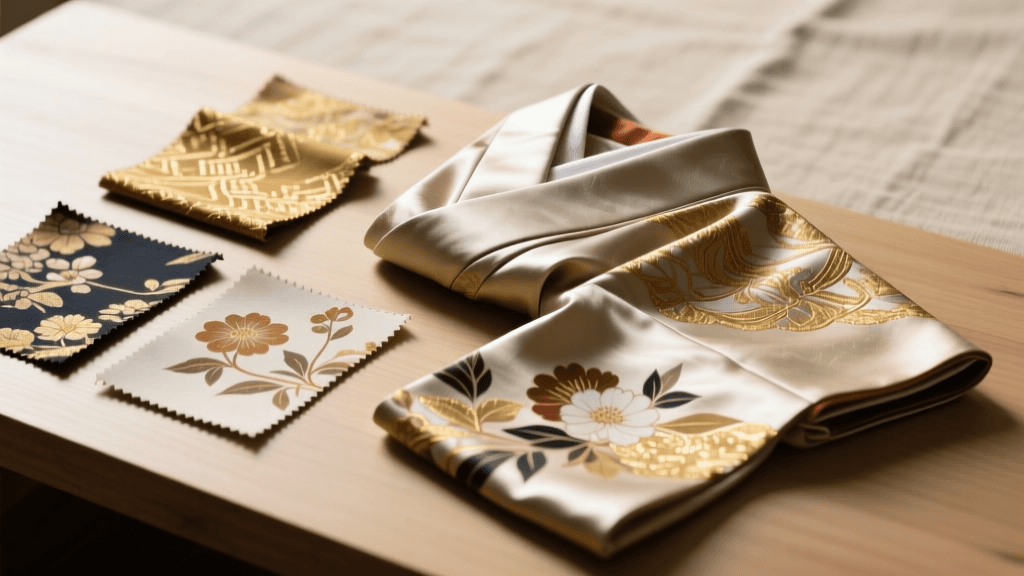
Originating in the Nishijin district of Kyoto over 1,200 years ago, Nishijin-ori is a luxury brocade weaving technique characterized by its dense, multi-layered thread work and opulent use of metallic threads. Unlike standard weaving, where the fabric is woven first and dyed later (a process known as sakizome), Nishijin-ori utilizes pre-dyed threads (sakizome) that are woven together to create complex, raised patterns directly into the fabric.
The Craftsmanship Process
The creation of a single Nishijin-ori obi or kimono involves over twenty distinct specialized steps, often requiring the collaboration of multiple master artisans. These steps include thread twisting, natural dyeing, pattern drafting, and the actual weaving on traditional Jacquard looms. The Nishijin Textile Industrial Association notes that a single weaver may produce only a few centimeters of high-grade brocade in a single day due to the meticulous tension control required for the metallic and silk threads.
'In Nishijin weaving, the pattern is not applied to the cloth; the pattern is the cloth. Every intersection of thread is a deliberate architectural decision.' — Master Weaver of the Nishijin Guild.
Practical Advice for Buyers
- Identification: Authentic Nishijin-ori features a raised, embossed texture. The reverse side of the fabric will show loose, floating threads where the pattern was not woven, unlike printed or dyed fabrics which look similar on both sides.
- Cost Expectations: A standard Nishijin-ori Nagoya obi starts around $800, while a highly intricate Maru obi or a full custom kimono can easily range from $5,000 to over $20,000.
- Best Use: Due to its heavy weight and formal appearance, Nishijin-ori is primarily used for formal occasions, weddings, and tea ceremonies.
Yuzen Dyeing: Painting on Silk
While Nishijin-ori relies on the loom, Yuzen dyeing transforms plain woven silk into a painter's canvas. Developed in the late 17th century by Miyazaki Yuzensai, this technique allowed for the creation of sweeping, pictorial designs that were previously impossible with weaving alone. The Victoria and Albert Museum highlights Yuzen as a revolutionary moment in Japanese fashion, as it liberated the kimono from rigid geometric patterns and allowed for fluid, nature-inspired motifs.
Kyo-Yuzen vs. Kaga-Yuzen
There are two primary regional styles of Yuzen dyeing:
- Kyo-Yuzen (Kyoto): Known for its vibrant, diverse color palette, extensive use of gold and silver leaf, and stylized, elegant motifs. It often features a softer, more diffused aesthetic.
- Kaga-Yuzen (Kanazawa): Characterized by a strict five-color palette (Kaga Gosai), hyper-realistic botanical illustrations, and the deliberate use of mushi-kui (insect bite marks) on leaves to reflect the beauty of impermanence.
The Resist-Dyeing Technique
The magic of Yuzen lies in the itosome-nori (rice paste resist). Artisans trace the design onto the silk using aobana (dayflower juice), then apply a thin line of waterproof rice paste along the outlines. When the fabric is dyed, the paste prevents the colors from bleeding into one another, resulting in crisp, white outlines that give Yuzen its signature stained-glass appearance.
Fabric Comparison Chart: Choosing the Right Kimono Silk
When sourcing a kimono, selecting the correct fabric type is crucial for seasonal appropriateness and formality. Below is a structured comparison of common kimono silks.
| Fabric Type | Technique | Weight & Texture | Best Season | Price Range (USD) |
|---|---|---|---|---|
| Nishijin-ori | Brocade Weaving | Heavy, stiff, embossed | Winter / Formal | $1,500 - $15,000+ |
| Tango Chirimen | Crepe Weave | Textured, matte, flexible | Year-round | $300 - $2,000 |
| Kyo-Yuzen | Resist Dyeing | Smooth, lightweight, crisp | Spring / Autumn | $800 - $10,000 |
| Rinzu | Damask Weave | Soft, glossy, subtle patterns | Year-round | $500 - $4,000 |
| Ro / Sha | Leno / Gauze Weave | Sheer, breathable, open | Summer (July-Aug) | $400 - $3,000 |
Practical Guide to Sourcing and Commissioning a Custom Kimono
Commissioning a bespoke kimono is a deeply rewarding process that connects you directly to Japanese artisanal networks. However, it requires an understanding of traditional measurements and timelines.
Measurements and the Tanmono
Traditional kimonos are not cut from wide bolts of fabric like Western suits. They are constructed from a single bolt of cloth called a tanmono. A standard women's tanmono measures approximately 38 centimeters (15 inches) in width and 12 meters (13 yards) in length. Because the fabric is so narrow, the kimono is made by sewing long, straight panels together without wasting any material. When commissioning, artisans will measure your mitsuhaba (arm span from wrist to wrist over the back of the neck) to determine the exact sleeve width and body panel overlap.
Timelines and Costs
- Yuzen Commission: Expect a timeline of 3 to 6 months. The process involves sketching, paste application, multiple dye baths, steaming, and washing. Costs generally start at $2,500 for a basic komon (repeating pattern) and can exceed $8,000 for a hand-painted furisode (long-sleeved formal kimono).
- Nishijin-ori Commission: Expect a timeline of 6 to 18 months. The lead time is longer due to the need to custom-dye hundreds of silk threads and program or punch the Jacquard loom cards. Prices typically begin at $4,000 for a custom obi and $12,000+ for a full garment.
Caring for Woven and Dyed Silks
Maintaining the integrity of these masterpieces requires specialized care. Never attempt to wash a silk kimono at home. Instead, utilize the traditional Japanese service known as arai-hari. In this process, the kimono is completely unstitched into its original rectangular panels, washed gently in water and specialized mild detergents, stretched on bamboo frames to dry and realign the fibers, and then re-sewn by a tailor. This process, costing between $150 and $300, should be done every 5 to 10 years to preserve the silk's luster and prevent permanent creasing.
For storage, always wrap your kimono in acid-free tatou-shi paper and store it in a paulownia wood box (kiri-bako). Paulownia wood naturally regulates humidity and repels insects, providing the perfect microclimate for preserving both the delicate metallic threads of Nishijin-ori and the vibrant dyes of Yuzen silk.