Kimono Storage Preservation 2026: Archival Care Guide
The Art and Science of Kimono Preservation in 2026
As the global appreciation for traditional Japanese garments continues to grow, the responsibility of maintaining these delicate textiles has evolved. In 2026, kimono storage preservation and collection management represent a fascinating intersection of centuries-old Japanese techniques and cutting-edge archival science. Whether you are a casual collector of vintage Meiji-era silk or a curator managing a contemporary wardrobe of formal furisode and uchikake, understanding the environmental and physical needs of your garments is paramount. The stakes are high; a single season of improper storage can lead to irreversible shattering of antique silk, permanent dye transfer, or devastating pest damage.
This comprehensive guide explores the most effective, museum-approved strategies for kimono preservation available today, ensuring your collection remains vibrant and structurally sound for generations to come.
Understanding Silk Degradation and Environmental Threats
Before selecting storage materials, it is crucial to understand the inherent vulnerabilities of kimono textiles. The majority of high-end kimonos are crafted from silk, a natural protein fiber that is highly sensitive to its environment. According to the Library of Congress, textiles are particularly susceptible to damage from fluctuating humidity, ultraviolet light, and acidic pollutants. When silk is exposed to high humidity, it becomes a breeding ground for mold and attracts textile-eating insects. Conversely, excessively dry conditions cause the protein structure to become brittle, leading to micro-fractures along the fold lines—a phenomenon known as 'silk shattering.'
Furthermore, the organic dyes used in traditional yuzen and shibori techniques are prone to acid migration. If a kimono is stored in standard cardboard or wrapped in non-archival tissue paper, the acidic compounds in the wood pulp will leach into the silk, causing severe yellowing and staining that cannot be reversed by professional dry cleaning. Modern collection management in 2026 strictly mandates the use of pH-neutral, buffered, or unbuffered archival materials depending on the specific dye profile of the garment.
Choosing the Right Storage Vessel: Traditional vs. Archival
Historically, kimonos were stored in tato (custom-folded paper wrappers) or kiribako (paulownia wood boxes). While these methods possess deep cultural significance and offer specific benefits, modern archival science provides alternative solutions that often surpass traditional methods in long-term chemical stability. Below is a comparison of the primary storage vessels utilized by collectors and institutions in 2026.
| Storage Method | Material Composition | Primary Advantages | Limitations | Est. 2026 Cost (USD) |
|---|---|---|---|---|
| Traditional Tato | Mulberry Washi Paper | Highly breathable; respects traditional folding geometry; lightweight. | Offers no structural protection; requires frequent replacement; susceptible to tearing. | $15 - $35 |
| Kiribako (Paulownia Box) | Untreated Paulownia Wood | Excellent natural humidity buffer; deters some pests; culturally authentic. | Heavy and bulky; wood acidity can vary; expensive; requires periodic airing. | $250 - $800 |
| Archival Corrugated Box | Acid-Free, Buffered Corrugated Board | Museum-grade chemical stability; rigid structural support; customizable sizes. | Lacks traditional aesthetic; requires careful monitoring of internal micro-climates. | $45 - $120 |
| Archival Textile Drawer | Powder-Coated Steel with Archival Liners | Maximum physical protection; ideal for large collections; prevents crushing. | Extremely high initial investment; requires dedicated floor space. | $800 - $2,500 |
For most private collectors in 2026, the acid-free archival corrugated box offers the best balance of preservation quality and cost-effectiveness. When utilizing these boxes, it is essential to line the bottom with unbleached, washed muslin or archival Tyvek to prevent any microscopic abrasion to the silk surface.
Climate Control and IoT Monitoring
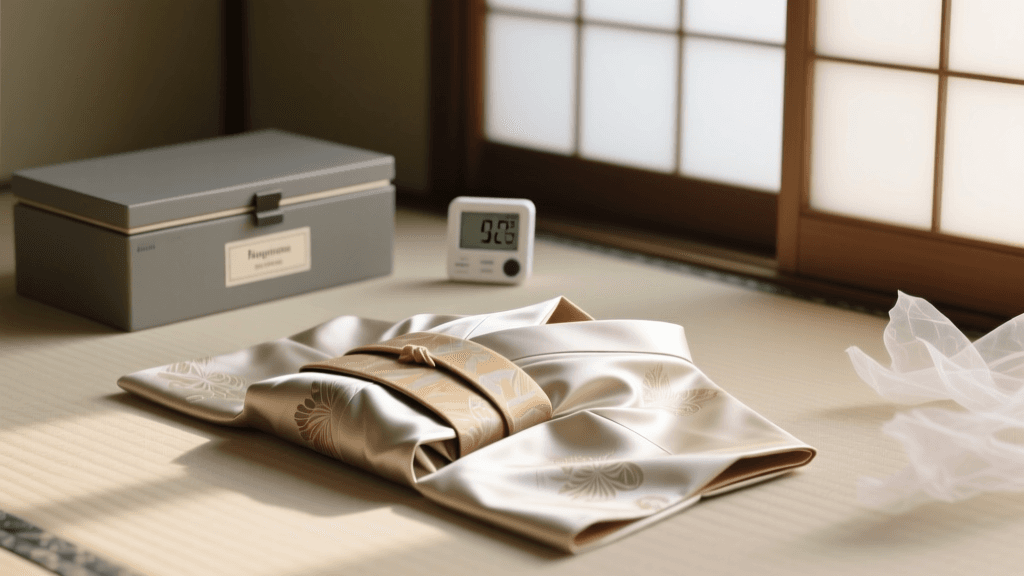
Temperature and relative humidity (RH) are the twin pillars of textile preservation. The Victoria and Albert Museum recommends maintaining a stable environment for historic textiles, ideally between 45% and 55% RH, with temperatures hovering around 18°C to 20°C (64°F to 68°F). In 2026, achieving this level of precision in a residential setting is easier than ever, thanks to the proliferation of advanced IoT (Internet of Things) micro-sensors.
Modern collectors no longer rely on analog hygrometers that require manual checking. Instead, Wi-Fi-enabled data loggers are placed directly inside archival boxes and storage closets. These devices transmit real-time data to smartphone applications, alerting the collection manager via push notification if the RH drops below 40% or spikes above 60%. This proactive approach allows collectors to deploy localized humidifiers or silica gel conditioning packs before irreversible damage occurs. For those managing high-value antique collections, integrating a dedicated HVAC zone with HEPA filtration to remove airborne particulate matter and sulfur dioxide is considered the gold standard.
Pest Management: The Chemical-Free Approach
Textile pests, particularly the webbing clothes moth (Tinea pellionella) and the carpet beetle (Anthrenus verbasci), view silk and wool under-kimono (nagajuban) as prime food sources. Historically, collectors relied on chemical mothballs containing naphthalene or paradichlorobenzene. However, these chemicals are now known to be highly toxic to humans and can actually degrade silk fibers and tarnish metallic threads (surihaku) over time.
In 2026, Integrated Pest Management (IPM) is the standard protocol for kimono storage. According to the National Park Service Museum Handbook, preventive conservation relies on monitoring and non-toxic deterrents rather than harsh chemicals. This involves three main strategies:
- Pheromone Traps: Placing non-toxic sticky traps with species-specific pheromones near storage areas to monitor and intercept adult male moths before they can mate.
- Natural Repellents: Utilizing sustainably harvested Japanese cedar (sugi) blocks and dried lavender sachets. While these do not kill larvae, they effectively deter adult insects from entering the storage space.
- Anoxia and Freezing: If an infestation is suspected, the affected kimono is sealed in an oxygen-barrier film and flushed with argon gas (anoxia), or carefully frozen at -20°C for 72 hours to eliminate all life stages of the pest. Always consult a professional textile conservator before attempting freezing, as rapid temperature changes can cause condensation and water staining on delicate dyes.
The Proper Folding Technique: Preventing Permanent Creases
The physical act of folding a kimono is a disciplined art form designed to protect the garment's structural integrity. Unlike Western clothing, which is often hung on hangers, kimonos are almost exclusively stored flat. Hanging a heavy silk kimono for extended periods places immense stress on the shoulder seams and can cause the fabric to stretch and distort permanently.
When folding a kimono for long-term storage, the goal is to align the seams perfectly and avoid sharp, hard creases. The traditional hon-datami folding method ensures that the garment folds into a neat, rectangular shape that fits perfectly within a tato or archival box. To prevent permanent creasing along the fold lines—which can eventually lead to fiber breakage—collectors in 2026 use acid-free, unbuffered tissue paper rolls. By gently stuffing the folds with crumpled archival tissue, the sharp angles are softened into gentle curves, distributing the stress across a wider area of the silk.
Additionally, it is vital to refold and air out your collection at least twice a year, ideally during the dry, cool days of late autumn and early spring. This practice, known as mushiboshi (insect airing), allows the fibers to breathe, releases trapped moisture, and gives the collector an opportunity to inspect the garments for early signs of mold, foxing, or pest activity.
Conclusion
Kimono storage preservation in 2026 is a meticulous but deeply rewarding practice that honors the incredible artistry of Japanese textile makers. By combining the breathability of traditional methods with the chemical stability of modern archival materials, and by leveraging smart technology to monitor environmental conditions, collectors can safeguard these magnificent garments against the ravages of time. Whether you are preserving a family heirloom or building a world-class collection, adherence to these preventive conservation principles ensures that the vibrant colors and intricate weaves of the kimono will continue to tell their stories for centuries to come.