Kimono Extreme Weather Guide 2026: Rain, Snow & Heat
The Resilience of the Kimono in a Changing Climate
The kimono is universally celebrated as a masterpiece of textile art, draping the wearer in centuries of cultural heritage. However, as global climate patterns shift, wearing traditional Japanese garments outdoors presents unique challenges. According to the Japan Meteorological Agency, Japan has experienced a steady increase in extreme weather events, including unprecedented summer heatwaves, intense monsoon downpours, and unpredictable winter snowstorms. For kimono enthusiasts and practitioners in 2026, mastering the art of dressing for extreme weather is no longer optional—it is essential.
Fortunately, the kimono is inherently adaptable. Historically, Japanese textile artisans developed specialized weaves, layering techniques, and protective accessories to combat the elements. Today, these traditional methods are being enhanced by 2026's cutting-edge textile technologies. Whether you are navigating the sweltering streets of Kyoto in August or attending a snowy winter tea ceremony in Kanazawa, this comprehensive guide will show you how to protect your garments and maintain your comfort in extreme conditions.
Surviving the Summer Heat: Breathability and Cooling Tech
Summer in Japan is notoriously hot and humid, with temperatures in 2026 frequently exceeding 35°C (95°F) in urban centers. Wearing multiple layers of silk in this environment requires strategic fabric selection and modern cooling interventions.
Traditional Summer Weaves: Ro and Sha
From June through August, the traditional rule is to transition to natsumono (summer garments). The two primary weaves are ro and sha. Ro features a leno weave with distinct horizontal and vertical gaps, creating a structured yet highly breathable fabric. Sha is a lighter, more delicate gauze weave that allows for maximum airflow. As noted in the Victoria and Albert Museum's comprehensive Kimono archive, the evolution of these sheer weaves during the Edo period was a direct response to the need for cooling elegance among the aristocracy and wealthy merchant classes.
2026 Modern Upgrades: Contact-Coling Innerwear
The true secret to surviving a 2026 summer in kimono lies beneath the outer layers. Modern hadajuban (under-kimono) and nagajuban (inner kimono) are now frequently crafted from advanced contact-cooling synthetic blends. These fabrics utilize high thermal conductivity fibers (achieving a Qmax value of 0.4 or higher) that instantly draw heat away from the skin. Paired with a bi-kuru (a wearable cooling neck ring that utilizes phase-change materials to lower core body temperature), wearers can comfortably attend outdoor summer festivals without suffering from heat exhaustion.
Monsoon Mastery: Navigating Heavy Rain and Humidity
The tsuyu (rainy season) and late-summer typhoons bring torrential downpours that can spell disaster for delicate silk garments. Water spots can permanently stain vintage silk, and high humidity can cause the garment's seams to stretch and warp.
Protective Outerwear: Shigure and Amagappa
Historically, travelers relied on amagappa (straw raincoats), but in 2026, the standard for rain protection is the shigure. A shigure is a lightweight, waterproof raincoat designed specifically to be worn over a kimono. Modern 2026 iterations are crafted from breathable, micro-porous polyurethane membranes that repel heavy rain while allowing trapped humidity to escape, preventing the wearer from sweating underneath.
Footwear and Hem Management
Walking in rain requires specialized footwear. Ama-geta are traditional rain clogs featuring a lacquered wooden base elevated on high ha (teeth) to keep the kimono hem above puddles. In 2026, artisan clog makers have integrated vulcanized rubber grip-pads onto the bottom of the ha to prevent slipping on wet asphalt. Additionally, wearers use ohashori clips to temporarily hike up the back hem of the kimono, securing it safely out of the splash zone.
Nano-Waterproofing Sprays
For added peace of mind, the latest generation of fluorine-free nano-waterproofing sprays introduced in early 2026 offers a breathable shield for silk and wool. Unlike older silicone sprays that stiffened the fabric and ruined the drape, these nano-coatings bond at the molecular level, causing water to bead up and roll off without altering the textile's hand-feel.
Winter Elegance: Layering for Snow and Freezing Winds
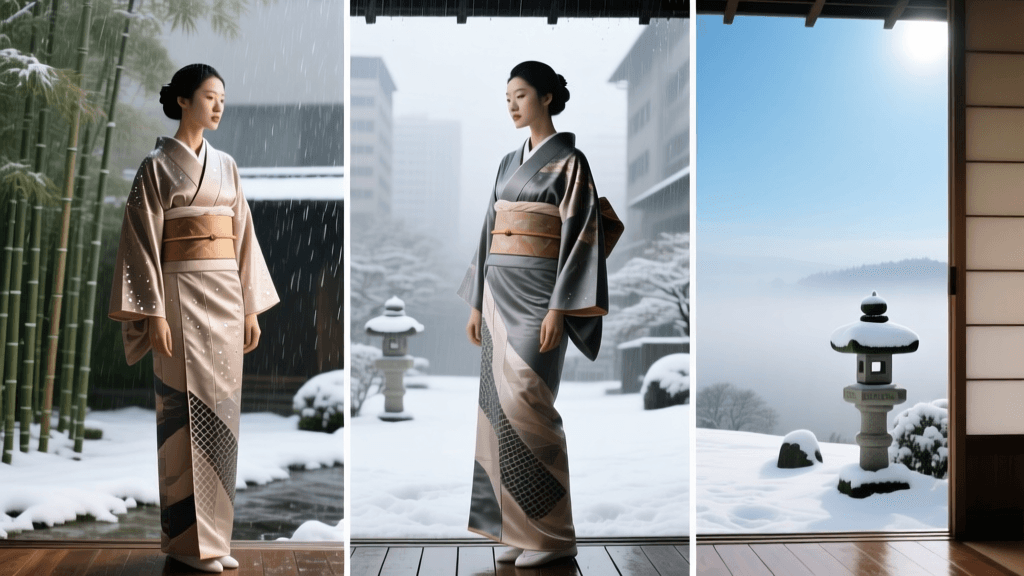
Winter in regions like Hokkaido or the Japanese Alps demands serious insulation. The kimono dressing system is inherently modular, making it perfect for the 'onion method' of layering.
The Layering System
A standard winter ensemble begins with a thermal hadajuban (often fleece-lined or made from merino wool blends). Over this, a thick nagajuban is worn, followed by the main kimono. The outermost layer of defense is the michiyuki (a traditional overcoat with a distinctive square neckline) or a heavy wool haori (jacket). According to exhibition records from the Kyoto National Museum, the layering of uchikake and heavy overcoats has been a staple of aristocratic winter wardrobes since the Muromachi period, a tradition that seamlessly translates to modern thermal management.
Winter Footwear: Lined Tabi and Snow Zori
Cold feet are the enemy of winter kimono wear. Standard cotton tabi (split-toe socks) are swapped for neri-tabí (flannel-lined) or velvet-lined tabi. For deep snow, 2026 has seen the rise of waterproof, insulated tabi boots featuring Vibram snow-grip soles, allowing wearers to traverse icy temple paths safely while maintaining the traditional split-toe aesthetic required for zori sandals. To protect the hem from snow slush, a yuki-wara (snow skirt) made of treated, water-resistant silk is often tied around the lower half of the kimono.
2026 Kimono Weather Adaptation Matrix
The following table summarizes the essential gear required for extreme weather conditions in 2026:
| Weather Condition | Traditional Garment/Solution | 2026 Modern Upgrade | Essential Accessory |
|---|---|---|---|
| Extreme Heat | Ro or Sha silk weave | Contact-cooling Qmax 0.4+ juban | Bi-kuru neck ring & sensu fan |
| Heavy Rain | Lacquered Ama-geta clogs | Micro-porous shigure raincoat | Hem clips & nano-waterproof spray |
| Deep Snow | Michiyuki overcoat | Insulated tabi boots with snow-grip | Yuki-wara (waterproof snow skirt) |
| Freezing Wind | Wool haori & layered silk | Merino wool thermal hadajuban | Heavy silk eri-maki (neck scarf) |
Emergency Fabric Care: What to Do When Disaster Strikes
Despite the best preparations, accidents happen. If your silk kimono is caught in a sudden downpour or stained by muddy snow, immediate action is critical. Never rub wet silk, as the fibers are weakest when saturated and will lose their color and shape. Instead, gently blot the moisture with a clean, dry, lint-free microfiber cloth.
Once you are indoors, hang the kimono on a specialized wide-shouldered kimono hanger (emono-kake) in a well-ventilated room away from direct sunlight and heat sources. Never use a hairdryer or place the garment near a radiator, as rapid drying will cause the silk to shrink and the natural dyes to bleed. For stubborn water spots or mud stains, take the garment to a professional arai-hari (traditional kimono cleaning) specialist who can disassemble, clean, and re-stretch the fabric panels using 2026's eco-friendly, pH-neutral enzymatic cleaners.
Conclusion
The kimono is not a fragile relic confined to climate-controlled museums; it is a living, breathing garment designed to interact with the natural world. By respecting traditional wisdom and embracing the textile innovations of 2026, you can confidently wear your kimono through the most extreme rain, snow, and heat. Whether you are admiring cherry blossoms in a sudden spring shower or watching autumn leaves fall against a backdrop of early snow, proper weather adaptation ensures that your focus remains on the beauty of the moment, rather than the elements.