Decoding Kimono Fashion in Edo Period Ukiyo-e Prints
Introduction to Ukiyo-e and the Kimono
During the Edo period (1603–1867), Japan experienced an unprecedented era of peace, economic growth, and cultural flourishing under the Tokugawa shogunate. At the heart of this cultural explosion was the 'floating world' (ukiyo), a vibrant urban lifestyle centered in cities like Edo (modern-day Tokyo), Kyoto, and Osaka. The visual documentation of this world was captured through ukiyo-e, or 'pictures of the floating world,' a genre of woodblock prints and paintings that became wildly popular among the merchant class.
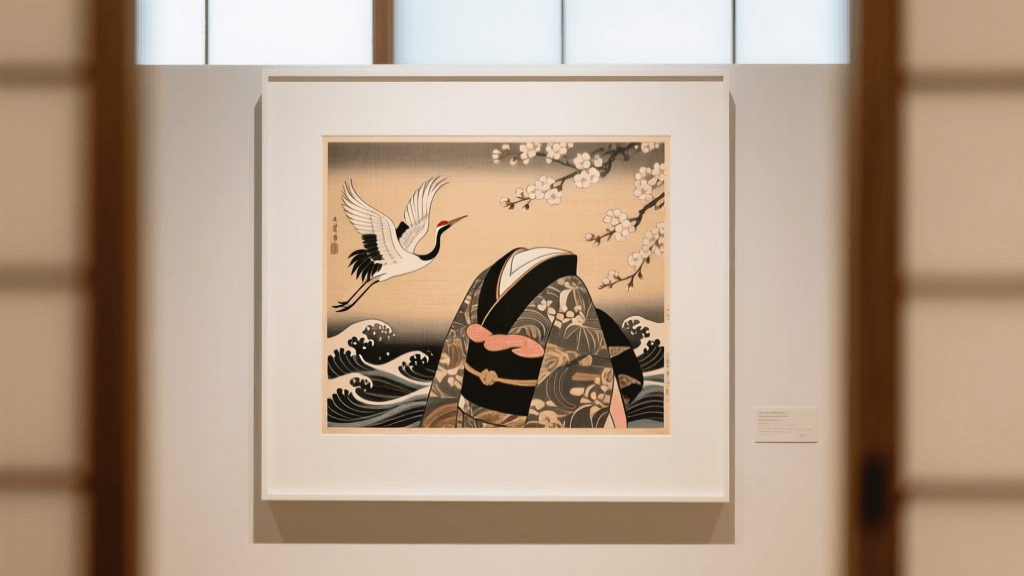
For the senior SEO content writer at The Garment Atlas, analyzing ukiyo-e is not merely an exercise in art history; it is a masterclass in historical fashion communication. In these prints, the kimono was never just a garment. It was a billboard of identity, wealth, seasonal awareness, and social standing. Artists like Kitagawa Utamaro, Utagawa Hiroshige, and Katsushika Hokusai meticulously documented the textiles, layering systems, and obi tying techniques of their time, providing modern historians and collectors with an invaluable visual archive of traditional Japanese clothing.
The Visual Vocabulary: Decoding Kimono Motifs
To truly appreciate kimono fashion in ukiyo-e, one must learn to read its visual vocabulary. Traditional Japanese garments rely heavily on motifs that convey seasonality, poetic allusions, and the wearer's aspirations. A well-dressed subject in an ukiyo-e print would never wear a winter motif in the spring; doing so would be a grave breach of sartorial etiquette.
Below is a structured guide to the most common motifs depicted in Edo-period woodblock prints, detailing their seasonal associations and symbolic meanings.
| Motif | Season | Symbolism & Meaning | Common Wearer in Ukiyo-e |
|---|---|---|---|
| Cherry Blossoms (Sakura) | Spring | Fleeting beauty, renewal, the ephemeral nature of life | Courtesans, young unmarried women |
| Irises (Shobu) | Early Summer | Warrior spirit, protection, aristocratic elegance | Samurai class, young boys, Kabuki actors |
| Maple Leaves (Momiji) | Autumn | Passage of time, melancholy, enduring beauty | Mature women, geisha, literati |
| Pine, Bamboo, Plum (Shochikubai) | Winter / New Year | Resilience, longevity, prosperity, steadfastness | Brides, high-ranking merchants, festive wear |
| Paulownia (Kiri) | Year-round | Imperial authority, high status, good fortune | High-ranking courtesans, aristocratic figures |
When examining a print, look closely at the hem and sleeve motifs. In many bijin-ga (pictures of beautiful women), the artist will use the hem of the kimono to introduce a secondary, subtle motif that hints at the subject's inner thoughts or current romantic entanglements.
Color Symbolism and Edo-Period Sumptuary Laws
The colors depicted in ukiyo-e prints are deeply tied to the socio-political climate of the Edo period. The Tokugawa shogunate frequently enacted sumptuary laws designed to curb the ostentatious displays of wealth by the newly rich merchant class (chonin). These laws dictated who could wear certain fabrics, colors, and patterns.
As a result, a sophisticated aesthetic known as 'iki' emerged. Iki valued subtle, understated elegance over loud displays of wealth. While the outer layers of a merchant's kimono might be dyed in muted, permissible colors like charcoal, navy, or brown (the 'rat colors' or nezumi-iro), the inner linings and undergarments (juban) were often dyed in brilliant, expensive hues like safflower red or gromwell purple. In ukiyo-e, artists like Utamaro masterfully captured this hidden luxury by depicting the subtle flash of a vibrant red under-collar or the rich silk lining revealed at the sleeve opening.
Furthermore, the evolution of color in ukiyo-e itself tells a story of textile history. Early prints relied on vegetable dyes, which were prone to fading. The introduction of synthetic aniline dyes from Europe in the mid-19th century (the Meiji era) led to a sudden explosion of harsh, vibrant reds and purples in woodblock prints, a stark contrast to the refined, natural palettes of the Edo period.
Practical Guide: Viewing and Collecting Ukiyo-e Today
For enthusiasts of traditional Asian garments, collecting or studying ukiyo-e offers a tangible connection to the fashion of the past. Whether you are looking to view museum-quality pieces or start your own collection, understanding the market and preservation standards is crucial.
Where to View Authentic Woodblock Prints
Studying high-resolution, well-preserved prints is essential for understanding the true drape, layering, and textile patterns of historical kimono. Several world-class institutions house extensive, digitized collections that are accessible to the public. The Museum of Fine Arts, Boston's Asian Art collection is widely considered to hold the finest and most comprehensive archive of Japanese woodblock prints outside of Japan, offering unparalleled resources for studying Edo-period fashion. Similarly, the Metropolitan Museum of Art's Asian Art department provides incredible high-resolution images of prints that highlight the intricate stenciling and mica-dusting techniques used to simulate silk textures. In Europe, the Victoria and Albert Museum's Asian collections offer extensive contextual essays and physical displays that bridge the gap between the two-dimensional print and the three-dimensional garment.
A Beginner’s Guide to Collecting
Collecting ukiyo-e is highly accessible, but it requires an understanding of print formats, condition grading, and market timing. Here is actionable advice for the aspiring collector:
- Understand Standard Measurements: The most common format you will encounter is the 'oban' size, which measures approximately 39 x 26 cm (15.3 x 10.2 inches). A smaller, more intimate format is the 'chuban', measuring roughly 26 x 19 cm (10.2 x 7.5 inches). Always measure the print; trimmed margins can significantly reduce a print's value.
- Budgeting and Costs: You do not need a massive budget to start. Late Edo and Meiji-era landscape prints, or reprints of Hiroshige's famous series, can frequently be acquired for $200 to $500. However, original, first-edition bijin-ga by masters like Utamaro or Sharaku will command prices ranging from $5,000 to well over $50,000, depending on rarity and condition.
- Condition Checking: When evaluating a print, look for 'foxing' (brown age spots caused by fungal growth or iron impurities in the paper), color fading (especially the loss of delicate pinks and blues), and centerfolds. Prints with intact margins, vibrant unfaded colors, and crisp woodblock key-lines (the black outlines) are the most desirable.
- Timing Your Purchases: The best times to acquire high-quality prints at competitive prices are during the major Asian Art auction weeks in New York and London, which typically occur in March and September. Alternatively, specialized online auctions and reputable dealers in Tokyo's Jimbocho district offer year-round opportunities.
Conclusion
Ukiyo-e woodblock prints are far more than beautiful historical artifacts; they are meticulous fashion plates that document the complex rules, seasonal poetry, and hidden luxuries of the traditional Japanese kimono. By learning to decode the motifs, understand the socio-political constraints of color, and navigate the modern collector's market, enthusiasts can gain a profound, tactile appreciation for the sartorial genius of the Edo period. Whether viewed behind the glass of a world-renowned museum or held carefully in a private collection, these prints continue to serve as the ultimate visual atlas of Asian traditional garments.