Kimono on Global Runways: 2026 Fashion Week Trends
The Evolution of the Kimono on Global Runways
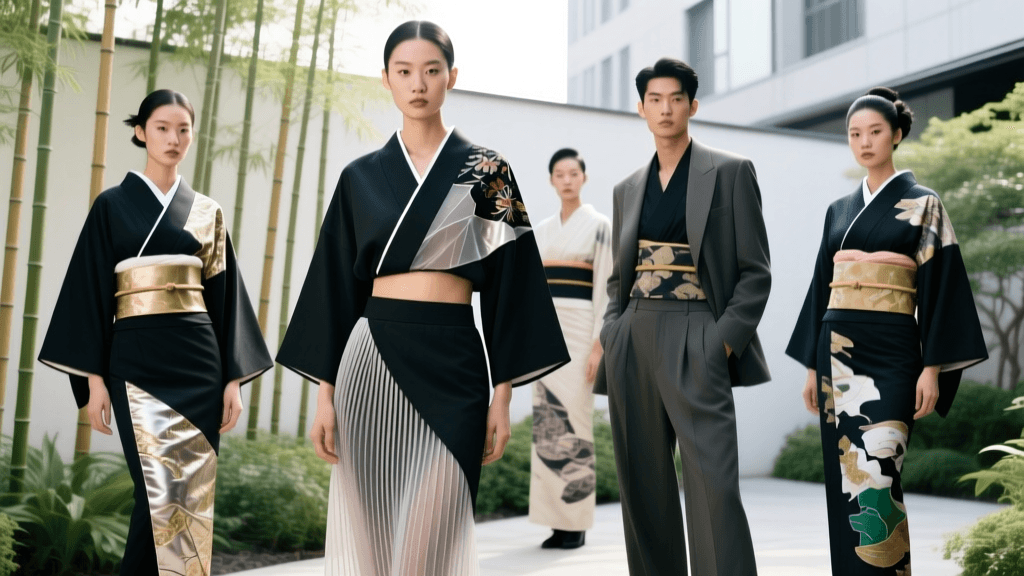
The intersection of traditional Japanese garment-making and Western haute couture has reached a breathtaking zenith in 2026. As international fashion weeks in Paris, Milan, and New York unveil their latest collections, the kimono is no longer just a historical reference point; it is the structural and philosophical foundation of the year's most avant-garde designs. Moving far beyond the superficial orientalism of past decades, today's top fashion houses are engaging in deep, respectful collaborations with Japanese artisans, studying the intricate mechanics of wafuku (Japanese clothing) to solve modern fashion's most pressing issues: sustainability, zero-waste pattern cutting, and modular versatility.
To understand the 2026 runway obsession with the kimono, one must look to the Kyoto Costume Institute Digital Archives, which extensively documents the genius of the tanmono system. Unlike Western tailoring, which cuts curved shapes from wide fabric bolts and discards the remnants, the traditional kimono is constructed from a single bolt of fabric measuring exactly 38 centimeters (about 15 inches) wide and 12 meters long. Every single centimeter is utilized, and the garment is sewn using straight seams. This means a kimono can be entirely disassembled, washed, re-dyed, and sewn back together, or passed down through generations. In 2026, with the global fashion industry under immense pressure to eliminate textile waste, European designers have adopted this strict 38cm grid. According to the Business of Fashion Sustainability Index, zero-waste pattern cutting has become a mandatory benchmark for luxury houses, and the kimono's ancient geometry provides the perfect blueprint.
Key Kimono-Inspired Trends at 2026 Fashion Weeks
The Neo-Obi: Architectural Corsetry and Waistlines
The obi belt, traditionally a complex arrangement of silk brocade tied in intricate knots like the taiko musubi, has been radically reimagined for the 2026 ready-to-wear season. Designers are merging the wide, stiff profile of the fukuro obi with modern corsetry boning. At Paris Fashion Week, we witnessed the debut of the 'Neo-Obi'—a wide, structured waist cincher crafted from biodegradable mycelium leather and upcycled denim. These pieces mimic the visual weight and posture-correcting rigidity of traditional formal obi but feature hidden magnetic closures and adjustable interior lacing, making them accessible for global consumers unfamiliar with the complex art of kitsuke (kimono dressing).
Yuzen Dyeing Meets Sustainable Digital Textiles
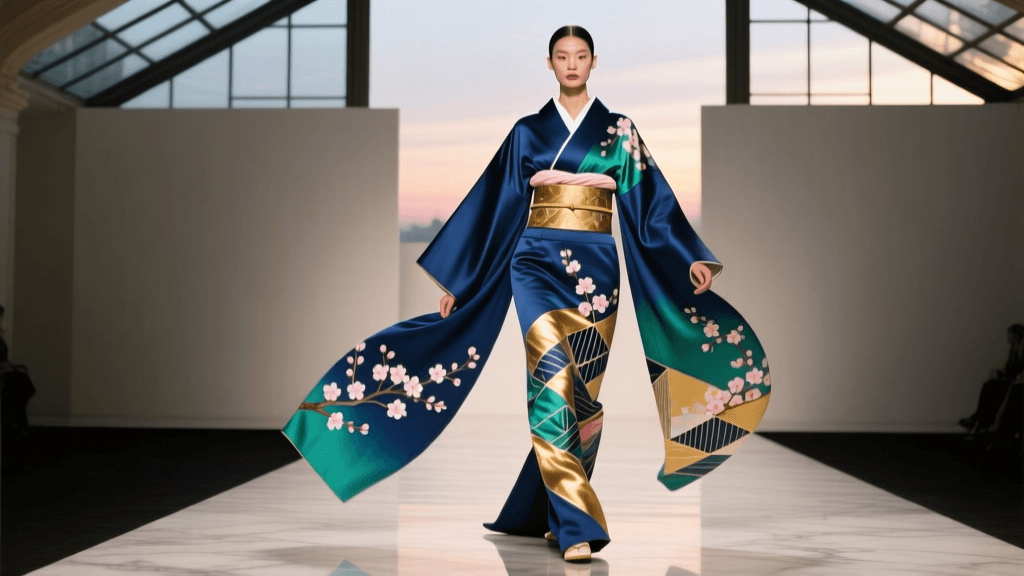
The vibrant, hand-painted yuzen resist-dyeing technique, historically reserved for luxurious silk kimono, is experiencing a technological renaissance. In 2026, heritage artisan cooperatives in Kyoto's Nishijin district have partnered with European textile labs to translate kata-yuzen (stencil dyeing) patterns into 3D digital printing on lab-grown, cruelty-free spider silk. The result is a hyper-detailed, eco-friendly textile that captures the precise, gradient-rich aesthetics of traditional Japanese nature motifs—cranes, cherry blossoms, and flowing water—without the heavy water pollution associated with historical chemical dyes. As documented on Vogue Runway, these digital-yuzen textiles have become the centerpiece of several major eveningwear collections this season, offering a luminous, fluid drape that rivals vintage chirimen (crepe silk).
Deconstructed Haori and Michiyuki Outerwear
While the full kimono remains largely reserved for the runway and red carpet, the haori (kimono jacket) and michiyuki (overcoat) have become the staple outerwear pieces of 2026 street style and high fashion alike. Runways feature cropped, asymmetrical haori jackets with exposed chidori (thousand bird) stitching and contrasting haori himo (ties) made from recycled marine plastics. Designers are playing with the traditional maemigoro (front panels), leaving them open and un-tied to create a sweeping, dramatic silhouette that layers effortlessly over modern slip dresses, wide-leg trousers, and even tailored suits. The juxtaposition of the haori's straight, unforgiving shoulder line against fluid, modern undergarments creates a striking visual tension that defines the 2026 aesthetic.
Designer Spotlight: East Meets West in 2026
This season's most critically acclaimed collections demonstrate a shift from cultural appropriation to genuine cultural appreciation and technical exchange. Maison Margiela's Artisanal show utilized boro (mended textiles) and sashiko (decorative reinforcement stitching) alongside deconstructed kimono silhouettes, highlighting the Japanese philosophy of wabi-sabi—finding beauty in imperfection and transience. Meanwhile, Dior integrated authentic nishiijin-ori (Nishijin weaving) into their structured evening coats, working directly with multi-generational weaving families in Kyoto to ensure fair compensation and the preservation of endangered loom techniques. This ethical approach to sourcing traditional Asian garments is setting a new industry standard, ensuring that the global popularity of wafuku directly supports the local artisans who keep these heritage crafts alive.
Comparison: Traditional Kimono vs. 2026 Runway Adaptations
To fully grasp how international fashion houses are translating traditional Japanese garments for a global audience, it is helpful to compare the core elements of authentic wafuku with their 2026 haute couture counterparts.
| Feature | Traditional Kimono | 2026 Runway Adaptation |
|---|---|---|
| Silhouette | T-shaped, straight seams, uniform width | Asymmetrical, draped, deconstructed panels |
| Fastening | Obi belt, koshihimo ties, no buttons | Hidden magnets, corsetry, obi hybrids |
| Sleeve Structure | Oscillating furisode/tomesode, attached to body | Exaggerated drop-shoulders, detachable elements |
| Textile | Silk, hemp, cotton, woven on tanmono bolts | Mycelium leather, lab-grown silk, upcycled |
| Pattern Cutting | Zero-waste 38cm grid, fully reversible | Zero-waste geometry, modular layering |
Sourcing and Styling: Bringing the Runway Home
You do not need a couture budget to incorporate the 2026 kimono runway trends into your personal wardrobe. The global secondhand market for vintage Japanese garments has exploded, making authentic pieces more accessible than ever. When sourcing a vintage haori or kimono to style in a modern, runway-inspired way, pay close attention to the yuki (sleeve length) and the mitake (back length). Standard vintage women's kimono often have a yuki of around 62 to 64 centimeters, which can feel restrictive when layered over modern winter knitwear. For the oversized, deconstructed look seen on the 2026 runways, seek out vintage men's haori or specifically search for modern wide-sleeve pieces with a yuki of 68 centimeters or more.
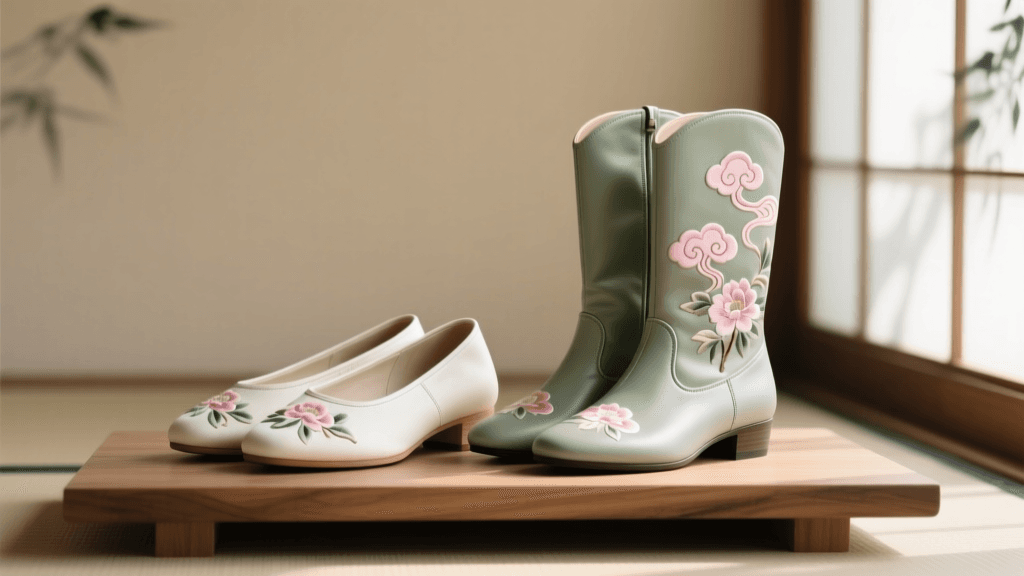
Styling a vintage kimono jacket for 2026 requires breaking a few traditional rules. Instead of tying the haori himo at the chest, leave the front panels completely open and belt the waist with a thin, modern leather corset or a structured obi-inspired cummerbund. Pair a heavy, lined winter haori with a sleek, minimalist silk slip dress and knee-high leather boots for an evening look that bridges the gap between Tokyo heritage and Parisian chic. For daytime, a lightweight, unlined ro (summer gauze) haori serves as the ultimate duster coat, providing dramatic movement and sun protection while showcasing the intricate, semi-transparent weave of the textile.
- Measure your yuki: Measure from the center back of your neck, over your shoulder, down to your wrist. Compare this to the vintage garment's yuki measurement to ensure the desired oversized or tailored fit.
- Mix textures: Pair the flat, matte finish of vintage tsumugi (pongee silk) with high-shine modern accessories like patent leather boots or metallic jewelry.
- Embrace the drape: Allow the straight seams of the kimono to hang naturally; avoid altering the shoulder seams, as the drop-shoulder effect is key to the authentic wafuku silhouette.
The Future of Wafuku in Global Fashion
The presence of the kimono on global runways in 2026 is a testament to the timelessness and technical brilliance of traditional Asian garment-making. By embracing the zero-waste philosophy of the tanmono, the architectural beauty of the obi, and the rich narrative of yuzen dyeing, the global fashion industry is not just borrowing from Japanese culture; it is learning from it. As consumers and fashion enthusiasts, our role is to engage with these trends mindfully, supporting ethical collaborations, investing in authentic vintage pieces, and honoring the centuries of artisanship that make these silhouettes possible. The kimono is no longer just a garment of the past; it is the blueprint for the sustainable, boundary-pushing fashion of the future.