Kimono vs Hanbok vs Cheongsam: 2026 Silhouette & Style Guide
The Renaissance of East Asian Heritage Garments in 2026
In 2026, the global fashion landscape has witnessed a profound renaissance in the appreciation and modernization of traditional East Asian garments. Far from being relegated to museum archives or strictly ceremonial use, the Japanese kimono, the Korean hanbok, and the Chinese cheongsam (qipao) have evolved into dynamic pillars of contemporary wardrobes. For fashion enthusiasts, cultural historians, and modern consumers alike, understanding the distinct silhouettes, construction methodologies, and styling nuances of these three iconic garments is essential. This comprehensive guide breaks down the structural DNA of each garment, exploring how heritage techniques are being reimagined with 2026 textiles and modern tailoring.
The Kimono: Flat-Pattern Mastery and Linear Elegance
Silhouette and Construction
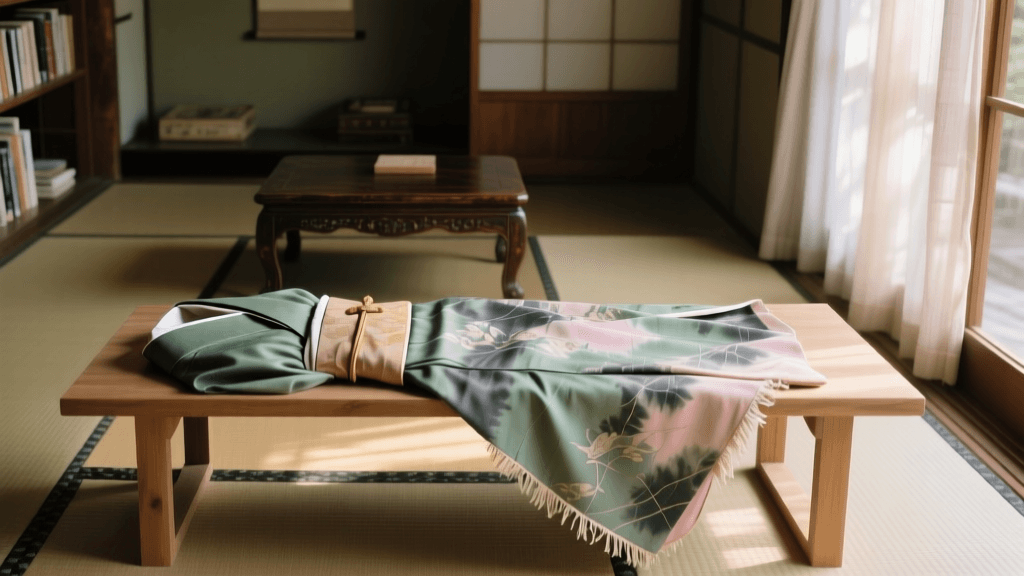
The kimono is defined by its T-shaped, straight-line silhouette. Unlike Western tailoring, which relies on darts and curved seams to contour the body, the kimono utilizes a revolutionary flat-pattern cutting system. According to Britannica's comprehensive guide to the kimono, the garment is constructed from a single bolt of fabric known as a tanmono, which is traditionally about 12 meters long and 36 centimeters wide. In 2026, to accommodate a more diverse global clientele, wider 40-centimeter bolts have become the industry standard for bespoke pieces. The fabric is cut into rectangular panels and sewn together with minimal waste, creating a garment that is entirely independent of the wearer's specific body curves. The shape is instead created during the dressing process (kitsuke), where padding and the folding of the obi (sash) manipulate the silhouette into a smooth, cylindrical form.
Fabrics and 2026 Innovations
Historically woven from silk, hemp, or cotton, the kimono's fabric weight is measured in momme (mm). A lightweight summer yukata might use 10mm cotton, while a formal winter kimono utilizes heavy 30mm silk crepe (chirimen). In 2026, the market has seen a massive surge in 'smart-silk' and washable polyester blends that mimic the luster of rinzu (silk damask) while offering machine-washable convenience. Bespoke silk kimonos in Kyoto now average between ¥400,000 and ¥600,000, reflecting the rising cost of raw silk and the scarcity of master dyers.
Modern Styling
The 2026 styling ethos for the kimono embraces 'heritage streetwear.' Younger demographics in Tokyo are pairing two-piece, shortened kimonos with chunky sneakers and denim obis. The traditional tabi socks are now frequently produced in vibrant, graphic-print neoprene, bridging the gap between Edo-period tradition and futuristic urban aesthetics.
The Hanbok: Volumetric Grace and Structural Contrast
Silhouette and Construction
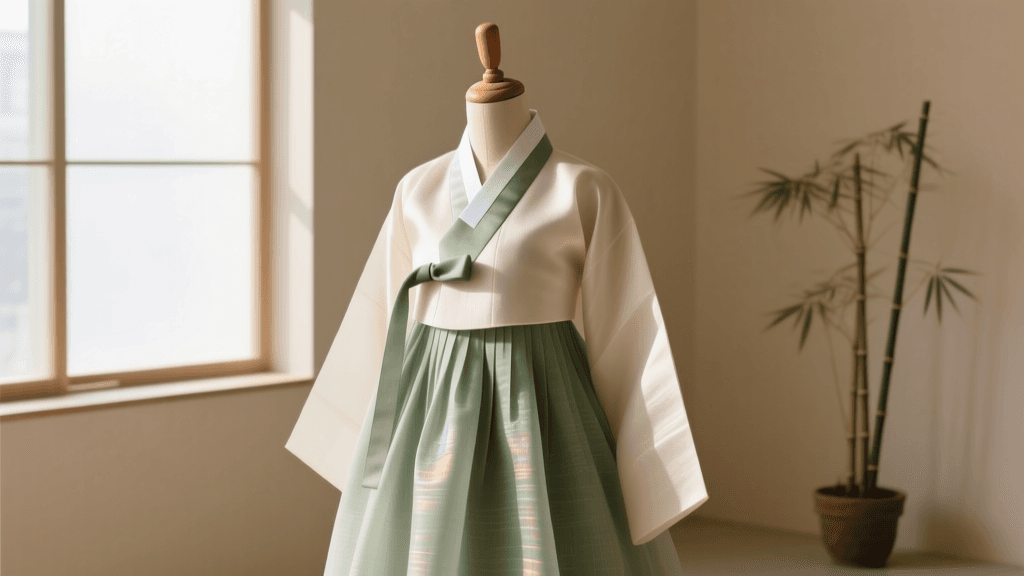
The Korean hanbok is celebrated for its striking contrast between a fitted upper half and a dramatically voluminous lower half. The traditional women's hanbok consists of the jeogori (a short jacket) and the chima (a full, wrap-around skirt). As noted in historical archives on the hanbok, the silhouette is designed to create a bell-like shape that glides gracefully over the body, obscuring its natural contours while emphasizing movement. The jeogori is fastened not by buttons, but by the goreum—long, elegant ribbon ties that drape down the chest. A crisp white paper collar, the dongjeong, provides a sharp visual boundary that frames the face and accentuates the vibrant colors of the silk.
Fabrics and 2026 Innovations
Traditional hanbok relies heavily on the interplay of light and shadow across crisp silk and stiff ramie. However, the 2026 'newtro' movement in Seoul has popularized the saenghwal hanbok (daily hanbok). These modern iterations utilize wrinkle-resistant cotton-linen blends, lightweight modal, and even recycled PET-fiber organzas. This shift allows the chima to maintain its structural bell shape without the heavy, restrictive under-petticoats of the past. Bespoke Gangnam boutiques now employ 3D body-scanning technology to perfectly calibrate the high waistline of the chima, ensuring it sits comfortably just below the bust without slipping.
Modern Styling
In 2026, the daily hanbok is a staple of Korean cafe culture and creative workspaces. Stylists are cropping the jeogori even further, pairing it with high-waisted wide-leg trousers or tailored midi-skirts for a minimalist look. The traditional norigae (ornamental pendant) has been reimagined by contemporary jewelers as modular, geometric metal charms that can be clipped onto modern handbags or minimalist lapels.
The Cheongsam (Qipao): Sculpted Tailoring and Fluid Lines
Silhouette and Construction
Unlike the kimono and hanbok, which obscure the body's natural shape, the Chinese cheongsam (or qipao) is celebrated for its form-fitting, sculpted silhouette. Originating from the loose-fitting robes of Manchu women, the garment was radically modernized in 1920s Shanghai to incorporate Western darting, set-in sleeves, and structured seams. The evolution of the qipao highlights its defining features: the stiff mandarin collar, the intricate pankou (knotted fabric buttons), and the daring side slits that allow for ease of movement while revealing glimpses of the leg. The cheongsam requires precise, three-dimensional tailoring, utilizing bust, waist, and hip darts to hug the wearer's figure flawlessly.
Fabrics and 2026 Innovations
While traditional cheongsams were crafted from heavy silk brocades and velvets, the 2026 market favors fluidity and stretch. Shanghai's top tailors are now utilizing 'peace silk' (ahimsa silk) blended with a 2% elastane core, allowing the garment to move with the body without straining the delicate pankou closures. Digital textile printing has also revolutionized the industry; consumers can now commission hyper-customized, high-definition botanical prints directly onto sustainable cupro fabrics, bypassing the months-long wait times of traditional hand-embroidered brocades. A custom-tailored cheongsam in Shanghai currently ranges from 4,500 RMB to over 15,000 RMB, depending on the complexity of the hand-rolled hems and knotwork.
Modern Styling
The 2026 styling of the cheongsam leans heavily into deconstruction and layering. Fashion-forward consumers are wearing sleeveless, A-line cheongsams over sheer turtlenecks or pairing cropped qipao jackets with high-waisted denim. The side slits are often exaggerated and finished with contrasting piping, transforming the garment into a versatile piece that transitions seamlessly from a corporate boardroom to an evening gallery opening.
Comparative Analysis: Structure, Drape, and Function
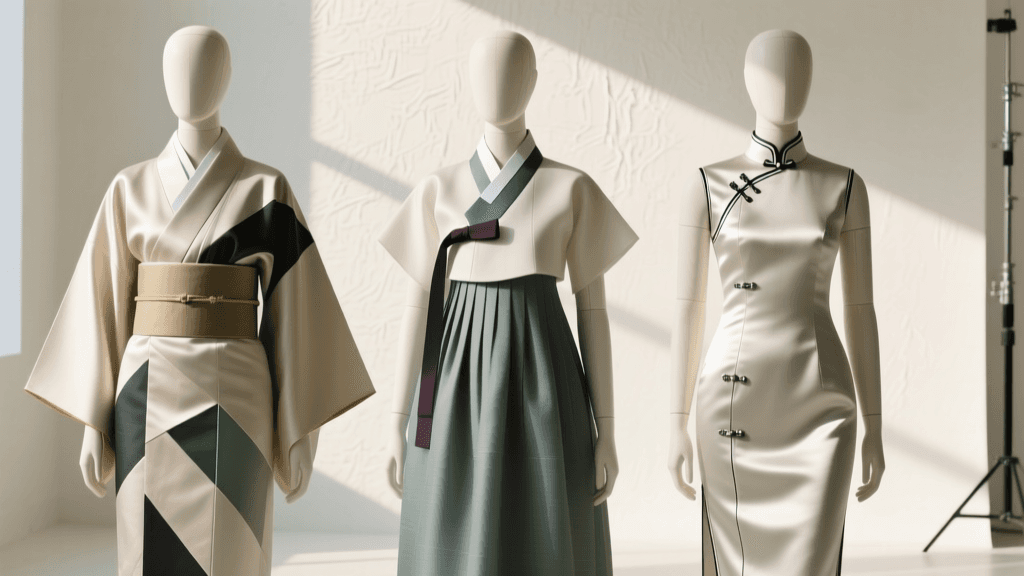
To fully grasp the distinctions between these three masterpieces of Asian garment engineering, it is helpful to compare their core structural elements side-by-side.
| Feature | Kimono (Japan) | Hanbok (Korea) | Cheongsam / Qipao (China) |
|---|---|---|---|
| Primary Silhouette | Cylindrical, T-shaped, linear | Bell-shaped, volumetric contrast | Form-fitting, sculpted, S-curve |
| Construction Method | Flat-pattern, straight seams, no darts | Flat upper, gathered/lower, minimal darts | 3D tailoring, Western-style darts |
| Fastening System | Obi (sash) and ties (koshihimo) | Goreum (ribbon ties), no buttons | Pankou (knotted buttons), zippers |
| Standard Fabric | Silk crepe, rinzu, cotton (yukata) | Silk, ramie, stiff organza | Silk brocade, velvet, stretch blends |
| 2026 Styling Trend | Two-piece sets, sneaker pairing | Minimalist daily wear, cropped jackets | Deconstructed layers, A-line cuts |
Sourcing, Etiquette, and Cultural Appreciation in 2026
As the global demand for these garments grows, navigating the ethics of sourcing and wearing them is paramount. In 2026, the conversation has shifted from strict cultural appropriation debates to a more nuanced framework of 'cultural appreciation and economic support.' The most respectful way to engage with these garments is to purchase directly from artisans, certified heritage brands, or specialized rental boutiques within the culture of origin.
For the kimono, renting from established shops in Kyoto or Asakusa ensures that your money supports local kitsuke (dressing) schools and traditional dyers. When purchasing a hanbok, seeking out designers who explicitly credit the regional origins of their textiles (such as Hansan ramie) supports rural artisan communities. For the cheongsam, investing in bespoke tailoring from Shanghai or Hong Kong preserves the highly specialized, dying art of hand-rolled edges and custom pankou knotting.
Footwear and Accessories
Footwear remains a critical component of the silhouette. The kimono requires zori or geta with tabi socks to maintain the grounded, gliding posture essential to its elegance. The hanbok is traditionally worn with kkotsin (silk shoes) or modern leather mules that complement the sweeping hem of the chima. The cheongsam, with its emphasis on elongating the leg, is most frequently paired with pointed-toe pumps or strappy heels in 2026, though minimalist leather loafers have become a popular choice for daytime, streetwear-inspired qipao styling.
Conclusion
The kimono, hanbok, and cheongsam are far more than mere clothing; they are architectural marvels of textile engineering that reflect the philosophical and aesthetic values of their respective cultures. While the kimono masters the art of linear restraint and flat-pattern geometry, the hanbok celebrates volumetric grace and structural contrast, and the cheongsam triumphs in sculpted, three-dimensional tailoring. As we navigate the fashion landscape of 2026, the continued evolution of these garments proves that true heritage is not static—it is a living, breathing dialogue between the artisans of the past and the innovators of the future.