Kimono Weather Adaptations 2026: Rain, Snow & Heat
The New Climate Reality for Traditional Garments
As we navigate the shifting climate patterns of 2026, wearing traditional Japanese clothing presents unique and formidable challenges. Japan's weather has become increasingly volatile over the last few years, with the tsuyu (rainy season) bringing torrential, unpredictable downpours, winters delivering sudden, heavy snowfalls to historically mild regions like Kyoto, and summers pushing past 38°C (100°F) with suffocating humidity. For kimono enthusiasts, collectors, and cultural practitioners, adapting to these extremes is no longer optional—it is essential for both personal comfort and the preservation of priceless garments.
The intersection of ancestral wisdom and 2026 textile technology offers a comprehensive toolkit for wearing kimono in any condition. According to the Metropolitan Museum of Art, the kimono has always been a dynamic garment, evolving in response to social and environmental shifts throughout history. Today, that evolution is driven by climate resilience. Here is your definitive guide to mastering kimono wear in extreme weather.
Monsoon Mastery: Kimono Adaptations for Heavy Rain
Rain is the natural enemy of silk. A single drop can leave a permanent water spot (mizu-jimi) on untreated chirimen (silk crepe), ruining the tension of the weave. In 2026, the traditional michiyuki (raincoat) and shigure-gasa (oiled paper umbrella) remain culturally significant and visually stunning, but modern adaptations have taken center stage for daily practicality.
Modern Raincoats and Nano-Coatings
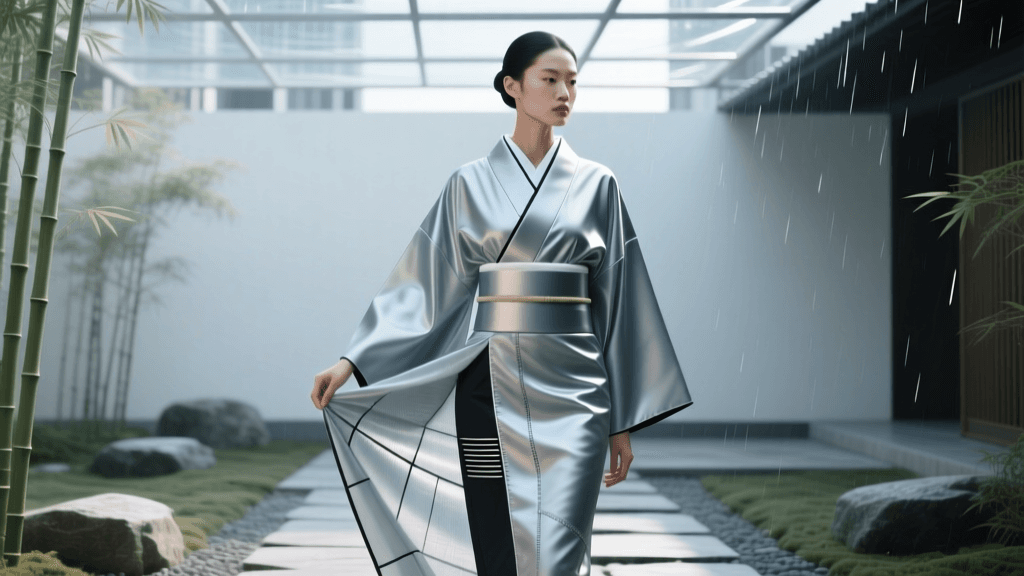
Today’s market is dominated by high-density, fluorocarbon-free water-repellent fabrics that mimic the drape and sheen of traditional silk. Brands are now producing do-chugu (dust and rain coats) from recycled PET materials, offering exceptional breathability that prevents the condensation buildup common in the vinyl raincoats of the early 2020s. Furthermore, 2026’s silk-safe hydrophobic nano-sprays create an invisible, breathable barrier on the kimono itself. Unlike the stiffening sprays of the past decade, these modern formulas do not alter the hand-feel of the textile, allowing the garment to drape naturally while causing water to bead and roll off harmlessly.
Footwear Protection in the Wet
The ame-geta (rain clogs) feature elevated wooden bases to keep the kimono hem clear of puddles. In 2026, these are frequently fitted with vulcanized rubber non-slip soles, a massive upgrade from the traditional straw or raw wood bottoms that become hazardous on wet asphalt. For those wearing standard zori, clear silicone toe-straps and full-enclosure silicone shoe covers are ubiquitous, costing around ¥1,500 and easily slipping over formal footwear to protect the brocade from water damage.
Navigating the Freeze: Snow and Sub-Zero Survival
Winter in Japan, particularly in the Yukiguni (Snow Country) and increasingly in urban centers during severe cold snaps, demands rigorous thermal management. The kimono is inherently a layered garment, which provides excellent insulation, but the extremities and the hem require specialized attention to avoid both hypothermia and textile damage.
Strategic Layering and Thermal Tech
The foundation of winter kimono dressing begins with the hadajuban (undergarment). In 2026, ultra-thin, heat-generating innerwear is worn seamlessly beneath the traditional cotton juban. Because modern thermal wear is incredibly thin, it does not add bulk, preserving the sleek, cylindrical silhouette required for proper kimono tying. Over the kimono, a hanten (padded cotton jacket) or a heavy wool haori provides core warmth. For the ultimate luxury, Yuki-tsumugi—a traditional snow-bleached silk from Ibaraki—is highly prized; its dense, matte weave traps body heat far more effectively than standard glossy silks.
Snow Footwear and Hem Guards
Lacquered zori are strictly forbidden in the snow, as the moisture and road salt will ruin the finish and the cold makes the lacquer brittle. Instead, practitioners wear fuku-zori (winter shoes) made of treated leather or water-resistant woven synthetics with deep treads. To prevent snow from packing between the toes, insulated tabi socks with fleece linings and silicone tsuma-kake (toe covers) are essential. To protect the kimono’s trailing hem (suso) from slush, a suso-yoke (hem guard) made of dark, washable synthetic crepe is temporarily tied around the waist underneath the main garment, allowing the wearer to hike up the expensive silk out of harm's way.
Beating the Swelter: Extreme Heat and Humidity Hacks
Summer heat in 2026 is relentless. Wearing multiple layers of silk in 35°C (95°F) heat with 80% humidity requires a shift in both material science and dressing techniques. The Victoria and Albert Museum notes that summer kimono historically relied on specific weaving techniques to create physical space between the garment and the skin, a principle that remains vital today.
Breathable Weaves and Contact-Cool Tech
For formal summer wear, ro (leno weave) and sha (gauze) silks are mandatory. These fabrics feature intentional gaps in the weave that allow air to circulate. For casual wear, Ojiya-chijimi, a highly textured ramie fabric from Niigata, is the gold standard. Its crepe-like surface sits lightly on the skin, preventing the fabric from clinging when sweating. The 2026 summer market is defined by 'contact cold' technology. Mesh juban infused with xylitol-based cooling fibers drop the skin's surface temperature upon contact. Additionally, the traditional datejime (wide under-belt) has been reimagined using breathable 3D-spacer fabrics that allow air to flow around the torso.
Wearable Tech Integration
While traditional bamboo fans (sensu) remain a staple, discreet, wearable neck fans and battery-powered cooling collars worn beneath the eri (collar) have become standard for outdoor summer festivals (matsuri). These devices are color-matched to the skin or the inner collar to remain invisible while providing a constant stream of air to the neck and face, preventing heatstroke during long outdoor ceremonies.
2026 Extreme Weather Kimono Gear Comparison
| Weather Challenge | Traditional Solution | 2026 Modern Adaptation | Estimated Cost (JPY) |
|---|---|---|---|
| Heavy Rain | Oiled paper umbrella (Wagasa) | Nano-spray & PET Michiyuki | ¥8,000 - ¥15,000 |
| Deep Snow | High-tooth Ame-geta | Silicone Zori grips & thermal Tabi | ¥2,500 - ¥4,500 |
| Extreme Heat | Ro silk & bamboo fans | Contact-cool mesh Juban & neck fans | ¥3,500 - ¥6,000 |
| High Winds | Heavy Haori weights | Magnetic hem clips & anti-static spray | ¥1,200 - ¥2,500 |
Post-Weather Care: Saving Your Silk
Surviving the weather is only half the battle; proper post-wear care in 2026 ensures the longevity of the garment. Never apply direct heat to a wet kimono. If caught in the rain, the garment must be hung on a specialized wide-shouldered kimono hanger (emono-kake) in a climate-controlled room. Modern dehumidifiers with dedicated 'garment care' modes are highly recommended to pull moisture from the silk without causing the fibers to become brittle.
If snow slush—which often contains urban pollutants and de-icing salts—touches the hem, do not attempt to wipe it. Allow it to dry completely, then take it to a professional arai-hari (traditional kimono laundry) specialist. In 2026, many of these specialists use advanced ozone-cleaning chambers that neutralize odors and lift salt stains without the harsh chemicals that degrade vintage silk dyes.
Conclusion
The kimono is not a fragile relic; it is a living, breathing garment that has survived centuries of environmental challenges. By embracing the weather adaptations of 2026—combining the structural genius of traditional layering with cutting-edge textile technology—wearers can continue to honor Asian traditions comfortably and safely, no matter what the sky decides to do. For more insights into integrating traditional garments into modern life and planning your cultural wardrobe, explore the comprehensive guides available via the Japan National Tourism Organization.