Styling Children in Traditional Chinese Clothing: A Parent's Guide
The 'Guochao' Movement and Kids' Fashion
Over the past decade, a powerful cultural renaissance has swept across Asia, fundamentally transforming how families engage with their heritage. Known as 'Guochao' (National Trend), this movement has seen a massive resurgence in the popularity of traditional Chinese garments, extending far beyond adult fashion into the realm of children's clothing. Today, dressing children in traditional attire is no longer reserved strictly for stage performances or tourist photos; it is a vibrant, everyday expression of cultural pride, especially during festivals, family gatherings, and cultural excursions.
According to a comprehensive report by BBC Culture, the revival of Hanfu and traditional aesthetics has been heavily propelled by social media platforms like Douyin and TikTok, where parents frequently share beautifully styled videos of their children in historical garments. This digital visibility has sparked a global demand for high-quality, historically inspired, yet child-friendly traditional clothing. As noted by cultural analysts at Sixth Tone, this revival is deeply rooted in an appreciation for aesthetics and a desire to pass down tangible cultural heritage to the next generation.
Hanfu vs. Tangzhuang: Choosing the Right Silhouette
When shopping for children's traditional Chinese clothing, parents generally navigate between two primary categories: Hanfu and Tangzhuang. Understanding the difference is crucial for selecting the right outfit for your child's age, the season, and the specific occasion.
1. Hanfu (Pre-Qing Dynasty Historical Clothing)
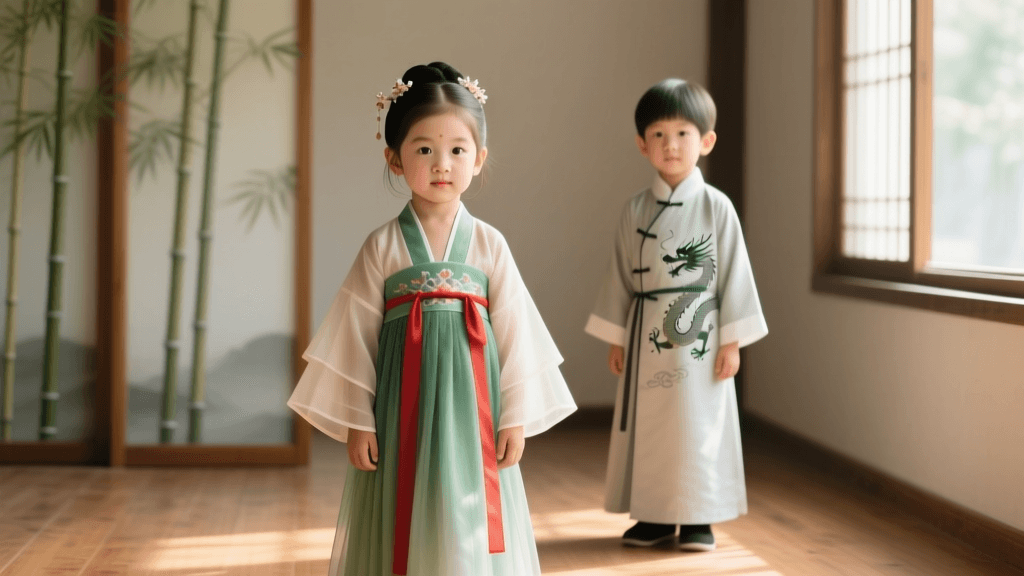
Hanfu refers to the historical clothing of the Han Chinese, characterized by flowing lines, cross-collars (jiaoling youren), and wide sleeves. For children, the most popular styles include the Ruqun (a top and high-waisted skirt combination for girls) and the Yuanlingpao (a round-collared robe for boys). Hanfu is ideal for outdoor photography, spring festivals, and cultural immersion events. However, because of the longer skirts and wider sleeves, it is generally better suited for children aged four and up who can manage the fabric safely.
2. Tangzhuang (Tang Suit / Qing-Era Inspired Jackets)
Despite the name, the modern Tangzhuang is actually derived from the Magua (riding jacket) of the late Qing dynasty. It features a structured collar and distinctive 'Pan Kou' (frog knot buttons). Tangzhuang is the undisputed champion of winter festivals and Lunar New Year celebrations. Its tailored, jacket-like fit makes it incredibly practical for toddlers and young children, allowing for full mobility and easy layering over modern thermal wear.
The Golden Rules of Sizing Traditional Kids' Clothing
One of the most common pitfalls for parents buying traditional Chinese clothing online is relying on Western age-based sizing. Authentic and high-quality Asian traditional garments are almost exclusively sized by height in centimeters. To ensure a proper fit, parents must measure their child's height, chest, and waist, and then apply the 'Layering Rule'—adding 10cm to the child's actual height if the garment will be worn over winter clothes.
Below is a practical sizing and measurement chart designed to help parents navigate Asian sizing standards for children's Hanfu and Tangzhuang.
| Size Label (Height) | Child's Actual Height | Chest Circumference | Approx. Age | Styling & Fit Tip |
|---|---|---|---|---|
| 90 cm | 80 - 90 cm | 52 - 56 cm | 1 - 2 Years | Opt for Tangzhuang; avoid long Hanfu skirts for walking safety. |
| 100 cm | 90 - 100 cm | 56 - 60 cm | 2 - 3 Years | Introduce ankle-length Ruqun; ensure waist ties are secure. |
| 110 cm | 100 - 110 cm | 60 - 64 cm | 4 - 5 Years | Great age for Beizi (open-front jackets) and layered Hanfu. |
| 120 cm | 110 - 120 cm | 64 - 68 cm | 6 - 7 Years | Can wear structured Yuanlingpao robes with traditional belts. |
| 130 cm | 120 - 130 cm | 68 - 72 cm | 8 - 9 Years | Transition to adult-like silhouettes; introduce Mamianqun (horse-face skirts). |
Fabric Safety and Toddler Considerations
While the visual appeal of silk brocade and heavily embroidered tulle is undeniable, children's skin is highly sensitive, and their play habits are rigorous. When selecting fabrics, prioritize breathability and safety.
- Everyday & Summer Wear: Look for cotton-linen blends or pure bamboo viscose. These fabrics mimic the drape of traditional silk but are machine-washable, highly breathable, and gentle on eczema-prone skin.
- Winter & Festival Wear: Brocade and velvet are excellent for Tangzhuang jackets. However, ensure the inner lining is 100% cotton to prevent static buildup and skin irritation.
- The Choking Hazard Warning: Traditional 'Pan Kou' (frog buttons) are beautiful but can be a choking hazard for children under three who are still in the oral exploration phase. For toddlers, look for Tangzhuang that utilizes hidden magnetic snaps or standard press-studs disguised as traditional knots.
- Sleeve Length: Avoid 'water sleeves' (elongated white cuffs) for any child attending an active event or playground. Opt for 'narrow sleeves' (zhixiu) which are historically accurate for daily wear and much safer for active kids.
Occasion-Based Styling Guide
Styling children in traditional clothing is an opportunity to teach them about the symbolism embedded in Chinese culture. Here is how to style your child for major cultural milestones:
Lunar New Year (Spring Festival)
This is the time for bold, auspicious colors. Red, gold, and deep crimson are standard. For girls, a red Tangzhuang jacket paired with a black or gold pleated skirt is classic. For boys, a crimson Tang suit with subtle dragon or cloud embroidery conveys strength and good fortune. Accessorize with a traditional velvet tiger-head hat for toddlers, which historically symbolizes protection against evil spirits.
Mid-Autumn Festival
Celebrating the moon calls for softer, ethereal aesthetics. Pastel blues, jade greens, and soft creams are perfect. Girls look stunning in a lightweight, cotton-blend Ruqun featuring subtle rabbit or mooncake embroidery. Boys can wear a light blue or beige cross-collared Shenyi (deep robe). This is also the perfect occasion to carry a traditional paper lantern for evening family walks.
Duanwu (Dragon Boat Festival)
Occurring in early summer, Duanwu requires lightweight, breathable fabrics. Historically, this festival is associated with warding off summer insects and diseases. Dress children in light linen Hanfu in earthy tones or soft yellows. A crucial accessory for this day is the 'Xiangbao' (fragrance pouch)—a small, embroidered silk sachet filled with mugwort and calming herbs, worn around the neck or tied to the waist sash.
Where to Buy and Budgeting Expectations
The market for children's traditional clothing has expanded significantly, offering options for every budget. As highlighted by the South China Morning Post, the Hanfu industry has grown into a multi-billion dollar market, with specialized children's lines becoming a major growth sector.
- Budget Tier ($20 - $45 USD): Platforms like AliExpress and Amazon offer mass-produced Tangzhuang sets and basic polyester Hanfu. These are excellent for one-off school events or quick festival photos, but they often lack breathability and historical accuracy.
- Mid-Range Tier ($50 - $120 USD): Specialized Taobao and Tmall boutiques (such as 'Shisanyu' or 'Hua Xiang Yi') offer incredible value. These brands use historically informed patterns, high-quality cotton-linen blends, and reinforced stitching meant to withstand a child's active lifestyle. Overseas buyers can use shopping agents like Superbuy or Wegobuy to access these domestic Chinese brands.
- Premium / Custom Tier ($150 - $300+ USD): For weddings, formal cultural performances, or family heirlooms, bespoke tailors and high-end boutiques offer real silk brocade, hand-embroidered motifs, and custom sizing. These garments are treated as keepsakes and are often passed down between siblings.
Final Thoughts on Cultural Connection
Dressing your child in traditional Chinese clothing is about much more than capturing a beautiful photograph. It is a tactile way to connect them to their ancestry, teaching them about the symbolism, artistry, and history of Asian traditions. By prioritizing accurate sizing, safe fabrics, and occasion-appropriate styling, parents can ensure that their children feel as comfortable and joyful in their heritage garments as they look. Whether it is the swish of a Mamianqun skirt or the structured elegance of a Tangzhuang collar, these garments help weave the threads of the past into the fabric of your child's modern identity.