Kesi vs Song Brocade: 2026 Hanfu and Cheongsam Fabric Guide
The Renaissance of Traditional Chinese Textiles in 2026
The landscape of Asian traditional garments has experienced a monumental shift as we move through 2026. The global resurgence of the Hanfu movement, coupled with a renewed appreciation for bespoke, heritage-crafted Cheongsams (Qipaos), has driven an unprecedented demand for authentic, historically accurate textiles. Discerning collectors and modern brides are no longer satisfied with mass-produced synthetic brocades or digital prints. Instead, the focus has pivoted toward two of China’s most prestigious and complex silk weaving techniques: Kesi (silk tapestry) and Song Brocade (Song Jin). Understanding the structural, aesthetic, and practical differences between these two luxury fabrics is essential for anyone commissioning a Ming-style Mamianqun (horse-face skirt), an Aoqun ensemble, or a formal winter Cheongsam in 2026.
Understanding Kesi (Silk Tapestry) Weaving
Kesi, which translates literally to 'cut silk,' is a weft-faced plain weave technique that dates back to the Tang Dynasty and reached its zenith during the Song and Ming dynasties. Unlike continuous weft weaving, Kesi utilizes discontinuous wefts. The weaver uses small, individual bobbins of colored silk to weave only the specific areas of the design, turning back at the edges of the color block. This creates tiny, intentional slits between color boundaries, giving the fabric its signature 'carved' appearance and a subtle, textured relief.
According to historical textile archives documented by The Metropolitan Museum of Art, Kesi was traditionally reserved for imperial dragon robes and high-ranking ceremonial mandarin squares due to the staggering amount of time required for its production. In 2026, authentic Suzhou Kesi remains one of the most expensive and time-consuming textiles in the world. A single master weaver can produce only a few centimeters a day. Consequently, genuine Kesi is rarely used for an entire garment. Instead, contemporary 2026 tailoring utilizes Kesi for strategic paneling—such as the intricate front and back panels of a Mamianqun, the collar and lapels of a high-end Cheongsam, or elaborate detachable cloud shoulders (Yunjian). The fabric is relatively stiff, holding structural shapes beautifully, which makes it ideal for garments that require architectural volume.
The Elegance of Song Brocade (Song Jin)
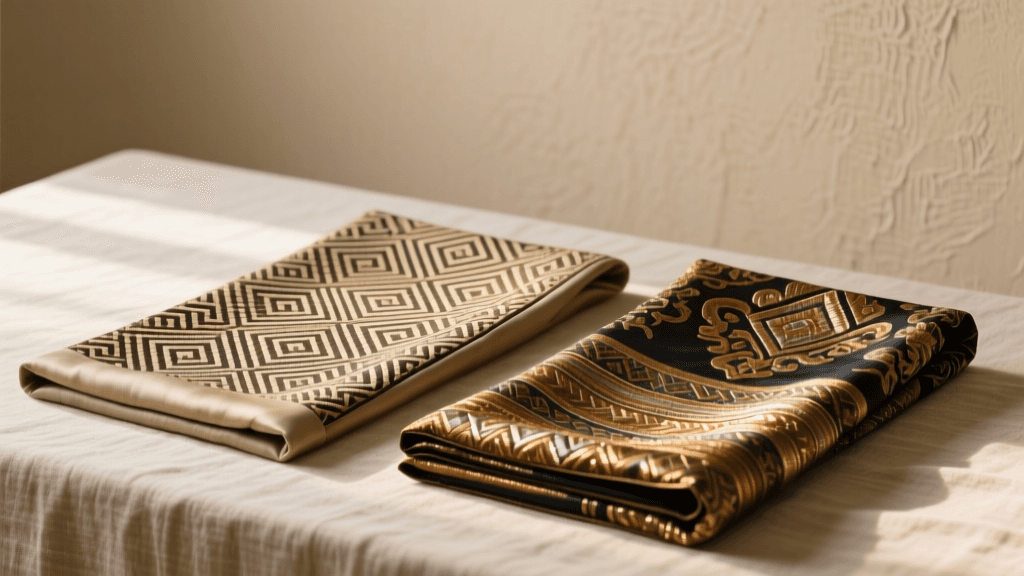
While Kesi is celebrated for its pictorial, tapestry-like qualities, Song Brocade (Song Jin) is revered for its lustrous, fluid elegance and complex geometric and floral patterns. Originating in the Song Dynasty, this weave is a type of warp-faced and weft-faced compound structure. It relies on a highly sophisticated drawloom technique (and today, advanced electronic Jacquard looms programmed with historical algorithms) to interlace multiple layers of warp and weft threads.
Song Brocade is characterized by its flat, smooth surface, subtle sheen, and incredible durability. The patterns are woven directly into the structure of the fabric rather than embroidered on top, meaning the reverse side often shows a negative of the pattern or a clean, floating weft structure. As highlighted by the Victoria and Albert Museum, Chinese brocades of this caliber represent the pinnacle of structural textile engineering. In 2026, Song Brocade is the premier choice for full-body garments. Its superior drape and flexibility make it the perfect candidate for flowing Ming-style Ao (jackets), pleated skirts, and full-length, form-fitting Cheongsams that require the fabric to move gracefully with the wearer's body. Modern 2026 iterations often incorporate sustainable, cruelty-free peace silk (Ahimsa silk) blends, offering an ethical alternative without sacrificing the historical luster of traditional mulberry silk.
Kesi vs. Song Brocade: A 2026 Tailoring Comparison
To help you make an informed decision for your 2026 bespoke commissions, we have broken down the practical differences between Kesi and Song Brocade across several key tailoring metrics.
| Feature | Kesi (Silk Tapestry) | Song Brocade (Song Jin) |
|---|---|---|
| Weave Structure | Weft-faced plain weave with discontinuous wefts (slit tapestry). | Compound weave (warp and weft-faced), continuous interlacing. |
| Visual Texture | 'Carved' look, visible slits between colors, textured relief. | Smooth, flat, lustrous surface with integrated geometric/floral motifs. |
| Drape and Stiffness | Stiff, structured, holds architectural shapes well. | Fluid, excellent drape, moves gracefully with the body. |
| Best Garment Use (2026) | Mamianqun panels, Cheongsam lapels, Yunjian (cloud shoulders), obis. | Full Aoqun sets, full-length Cheongsams, flowing outer robes (Pifeng). |
| Estimated 2026 Cost | $800 - $2,500+ per meter (depending on metallic thread usage). | $250 - $600 per meter for authentic electronic-Jacquard heritage weaves. |
| Durability & Snagging | Delicate; slits can catch on jewelry. Requires careful handling. | Highly durable; tight interlacing resists snagging and everyday wear. |
Sourcing Authentic Fabrics for Your 2026 Garments
The proliferation of counterfeit textiles and cheap, digitally printed polyester masquerading as 'brocade' is a significant issue in the online Hanfu and Cheongsam market. When sourcing materials in 2026, provenance is paramount. True Kesi and Song Brocade are deeply tied to the Jiangnan region, specifically the cities of Suzhou, Hangzhou, and the weaving hub of Shengze.
According to the UNESCO Intangible Cultural Heritage registry, the sericulture and silk craftsmanship of China involve centuries-old knowledge that cannot be easily replicated by fast-fashion mills. When purchasing from boutique textile vendors or direct-from-mill suppliers in 2026, look for the China National Silk Museum authentication tags or the official Suzhou Kesi Intangible Heritage certification.
For international buyers, specialized online ateliers based in Singapore and Shanghai now offer verified swatch books before you commit to a full garment commission. Always request a burn test sample if purchasing unbranded yardage: genuine mulberry silk will smell like burning hair and leave a crushable, dark ash, whereas synthetic blends will melt into a hard, plastic bead. Furthermore, 2026 has seen a rise in 'traceable silk' QR codes woven into the selvedge of premium Song Brocade, allowing buyers to scan and view the exact loom, weaver, and silk farm origin.
Styling Heritage Silks for Modern 2026 Ceremonies
Integrating these heavy, opulent silks into contemporary wardrobes requires a balanced approach to styling. Because both Kesi and Song Brocade feature dense, visually complex patterns, the 2026 styling ethos leans toward minimalist pairing.
If you are commissioning a Mamianqun with Kesi panels, pair it with a solid-color, lightweight silk satin or organza Ao (jacket) to let the skirt's tapestry panels serve as the focal point. Conversely, a full Song Brocade Cheongsam commands attention on its own; keep accessories understated. In 2026, the trend has moved away from heavy, gaudy gold jewelry in favor of carved Hetian jade, matte-finish pearls, and minimalist platinum hairpins that complement the silk's sheen without competing with it.
For winter ceremonies, layering is essential. Song Brocade's tight weave makes it an excellent windbreaker when lined with cotton or lightweight wool. Kesi, being more porous due to its slit-tapestry nature, requires a full silk lining to provide warmth and protect the delicate weft threads from friction against the skin.
Care and Maintenance for Luxury Silks
Investing in heritage textiles requires a strict adherence to proper garment care. The structural integrity of Kesi and the luster of Song Brocade can be easily compromised by improper cleaning and storage.
- Cleaning: Never machine wash or aggressively hand-wash Kesi or Song Brocade. The water tension and friction can distort the discontinuous wefts of Kesi and dull the sheen of Song Brocade. Always seek out a dry cleaner who specializes in historical garments and traditional Asian silks. In 2026, several major cities offer 'eco-friendly' liquid silicone dry cleaning, which is significantly gentler on natural silk proteins and metallic threads than traditional perc (perchloroethylene) chemicals.
- Storage: Never hang heavy Kesi or Song Brocade garments on wire or thin wooden hangers, as the weight of the silk will cause the shoulders to stretch and the weave to distort over time. Store Cheongsams flat in acid-free archival tissue boxes. For Hanfu skirts, fold them along their original pleat lines, interleaving the folds with unbleached, acid-free cotton muslin to prevent permanent creasing.
- Pest Control: Silk is a protein fiber and is highly susceptible to carpet beetles and clothes moths. Avoid chemical mothballs, which can permanently stain and degrade the silk fibers. Instead, use natural alternatives such as sandalwood blocks, dried lavender sachets, or Japanese camphor, and ensure your storage environment maintains a stable humidity level between 45% and 55%.
Conclusion
The choice between Kesi and Song Brocade ultimately depends on the silhouette, function, and aesthetic of your desired garment. Kesi offers unparalleled structural artistry, turning your Mamianqun or Cheongsam lapels into wearable tapestries. Song Brocade provides a fluid, durable, and deeply elegant foundation for full-body ensembles that move beautifully in contemporary settings. By understanding the unique properties of these textiles and committing to ethical, verified sourcing, you ensure that your 2026 traditional garments are not just clothing, but enduring pieces of Asian cultural heritage.