Kabuki Noh Bunraku Theater Kimono Costumes Guide 2026
The Living Threads of Japanese Theater in 2026
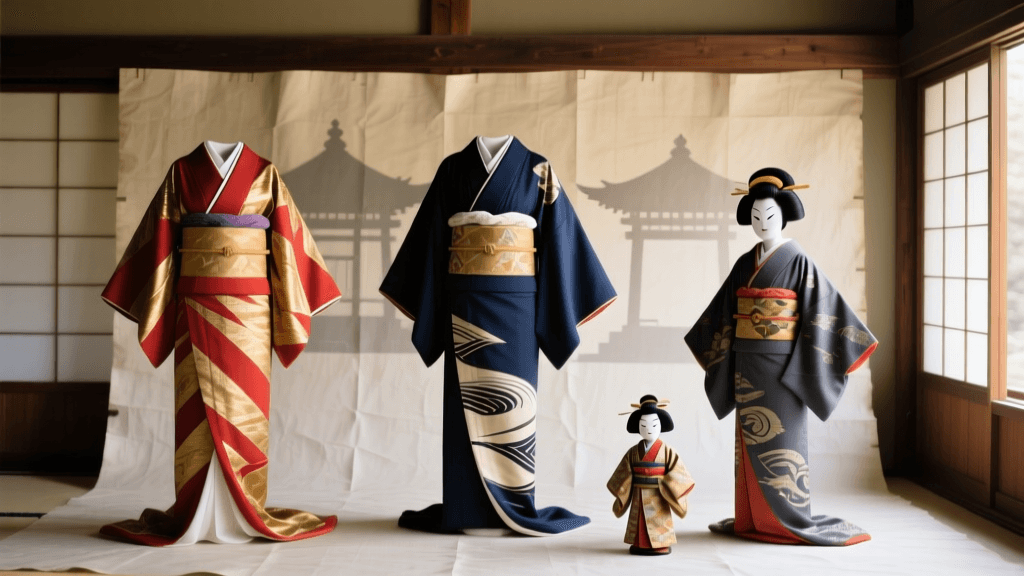
In 2026, the preservation and appreciation of traditional Japanese theatrical garments have reached a fascinating intersection of heritage conservation and modern textile innovation. The kimonos used in Noh, Kabuki, and Bunraku are not merely clothing; they are vital, structural components of the performance itself. They dictate movement, convey character archetypes, and serve as spiritual vessels. As the Nishijin weaving district in Kyoto faces a critical generational shift, new initiatives launched this year have focused on digitizing centuries-old theatrical patterns and training a new cohort of artisans in specialized stage-weaving techniques. For collectors, theater students, and cultural enthusiasts, understanding the distinct textile languages of these three classical forms is essential.
Noh Shozoku: The Weight of Spiritual Elegance
Noh theater, the oldest of the three forms, relies on an aesthetic of profound subtlety and mysterious beauty known as yugen. The costumes, collectively called Noh Shozoku, are designed to obscure the human form, transforming the actor into a deity, demon, or grieving spirit. According to the Japan Arts Council Noh Archive, the garments are intentionally heavy and stiff, forcing the actor into the slow, deliberate, and highly stylized movements characteristic of Noh.
Key Noh Garments and Techniques
- Karaori: Often translated as 'Chinese weave,' this is actually a highly complex Japanese brocade technique. It features floating weft threads that mimic embroidery. In 2026, authentic Karaori remain some of the most expensive theatrical textiles in the world, with new commissions taking over two years to complete on traditional Jacquard looms.
- Atsuita: Meaning 'thick board,' this garment is woven with stiff, heavy threads and features bold, geometric patterns like dragons or lightning. It is worn exclusively by male roles, gods, and demons to project immense power and rigidity.
- Mizugoromo: The 'water robe' is a lightweight, unlined silk garment worn by female spirits or roles depicting travel and exhaustion. Its delicate drape contrasts sharply with the heavy brocades, emphasizing the fragility of the character.
The color palette in Noh is strictly codified. A red Karaori indicates a young, aristocratic woman, while a darker, muted Karaori with subdued floral motifs represents an older woman or a spirit in mourning. The preservation of these natural dyeing techniques, particularly the use of safflower red and indigo, has been a major focus for the Noh Actor Association in 2026.
Kabuki Isho: Spectacle, Hikinuki, and Bold Geometry
If Noh is a whisper, Kabuki is a shout. Kabuki costumes, or Isho, are designed for maximum visual impact, engineered to be seen from the back of large, multi-tiered theaters. The Japan Arts Council Kabuki Archive notes that Kabuki textiles heavily utilize metallic threads, bold geometric patterns, and oversized motifs that coordinate directly with the actor's kumadori (stylized makeup).
The Engineering of Kabuki Spectacle
Kabuki costumes are marvels of stage engineering. The most famous technique is Hikinuki, a rapid costume change performed in full view of the audience. A single kimono is basted together with specialized threads; at a dramatic climax, stage assistants (kuroko) pull these threads, causing the outer layer to instantly fall away and reveal a completely different, brightly colored kimono underneath. This requires precise tailoring and specific tension-weighted silk that can withstand repeated, forceful pulling without tearing.
Another defining feature is the Ogoshi, an exceptionally wide and heavily padded sash worn by male heroes and villains. The Ogoshi alters the actor's center of gravity, requiring immense core strength to maintain the dramatic, wide-stanced poses known as mie. In 2026, contemporary Kabuki productions have begun integrating lightweight, synthetic-core padding for the Ogoshi to reduce physical strain on aging star actors, while maintaining the traditional silk exterior.
Bunraku Costumes: Engineering Silk for Puppet Mastery
Bunraku, the traditional puppet theater of Osaka, presents a unique set of challenges for costume makers. The puppets (ningyo) are roughly one-half to two-thirds the size of a human and are operated by three visible puppeteers. The Japan Arts Council Bunraku Archive highlights that Bunraku costumes must drape like heavy, realistic human garments while being structurally modified to accommodate the puppeteers' hands and arms.
Structural Modifications for the Ningyo
- The Open Back: Unlike human kimonos, Bunraku costumes are completely open at the back. This allows the Omozukai (the master puppeteer who controls the head and right arm) to insert their arm directly into the puppet's torso.
- Arm Loops and Articulation: The sleeves feature specialized internal loops. The Hidarizukai (left-hand operator) uses these loops to manipulate the puppet's left arm, creating the illusion of fluid, human gestures like weeping or drawing a sword.
- Weight Distribution: The textiles used must be heavy enough to hang realistically and simulate human body weight, but light enough that the three puppeteers can sustain the performance without fatigue. Artisans in 2026 frequently use a specialized silk-cotton blend for the under-layers to reduce overall weight while keeping the outer visual layer in pure, lustrous silk.
Comparative Analysis: The Three Theatrical Textile Traditions
| Feature | Noh Shozoku | Kabuki Isho | Bunraku Costumes |
|---|---|---|---|
| Primary Aesthetic | Spiritual, subtle, heavy drape | Bold, spectacular, high-contrast | Realistic scale, structural utility |
| Key Garments | Karaori, Atsuita, Mizugoromo | Hikinuki layers, Ogoshi sash | Open-back kimono, internal arm loops |
| Movement Impact | Restricts movement, enforces slow grace | Allows explosive poses (mie) and quick changes | Accommodates three puppeteers simultaneously |
| Textile Weight | Extremely heavy, stiff brocades | Variable; heavy outer layers, light inner layers | Medium; weighted hems for realistic drape |
| 2026 Preservation Focus | Digital archiving of Tang-inspired weaves | Synthetic-core padding for actor health | Silk-cotton blending for puppeteer ergonomics |
Sourcing and Studying Theatrical Kimonos in 2026
For textile collectors, costume designers, and cultural historians, acquiring or studying authentic theatrical kimonos requires specialized knowledge and a reputable network. The market in 2026 is highly regulated, with many museum-grade pieces protected under Japan's cultural heritage laws. However, vintage pieces, retired stage garments, and high-quality study reproductions are available.
Navigating the Antique Markets
The most reliable source for vintage theatrical textiles remains the Toji Temple Antique Market in Kyoto, held on the 21st of every month. In 2026, specialized dealers in the Nishijin sector have set up dedicated stalls focusing exclusively on retired stage garments. When evaluating a vintage Noh Karaori or a Kabuki Uchikake, collectors must check for 'silk shattering'—a degradation process caused by historical use of metallic salts in black and dark blue dyes. A pristine, pre-war Karaori can easily command prices starting at 800,000 JPY, while a beautifully preserved, albeit slightly oxidized, Kabuki stage kimono might range from 150,000 to 300,000 JPY.
Investing in Study Reproductions
For theater students and costume designers who need to understand the structural engineering of these garments without the risk of damaging antiques, study reproductions are the ideal path. In 2026, several Nishijin weaving cooperatives offer 'educational grade' Karaori and Atsuita garments. These pieces utilize modern, color-fast synthetic threads for the complex brocade backgrounds, while reserving real gold and silver leaf for the primary motifs. Priced between 60,000 and 120,000 JPY, these garments allow students to practice the intricate folding, tying, and Hikinuki basting techniques required for the stage.
Experiencing the Garments Live
Textiles must be seen in motion to be truly understood. The Minami-za theater in Kyoto and the National Bunraku Theatre in Osaka continue to offer backstage tours and costume exhibitions. In 2026, the Shochiku Ofuna Kabuki Studio has expanded its interactive workshops, allowing participants to physically handle the heavy Ogoshi sashes and practice the rapid thread-pulling of the Hikinuki technique under the guidance of veteran stage assistants. Engaging with these garments in their intended environment remains the most profound way to appreciate the intersection of Japanese textile art and performative mastery.