2026 Jingle Dress Regalia Guide: Cones, Fabric & Sewing
The Sacred Origins and 2026 Evolution of the Jingle Dress
The Jingle Dress, known in the Ojibwe language as Ziibaaska'igan-agamaazo, stands as one of the most recognizable and spiritually significant forms of Native American regalia in North America. As we navigate the 2026 powwow season, the Jingle Dress remains a powerful symbol of healing, resilience, and cultural continuity. Originating among the Ojibwe (Anishinaabe) people in the early 20th century—often tied to the era of the 1918 influenza pandemic and the subsequent 1920s—the dress was born from a vision. A medicine man dreamed of a dress adorned with metal cones that, when danced in a specific manner, would bring healing to his ailing granddaughter. Today, the Jingle Dress dance is a staple at intertribal powwows across the Americas, celebrated for its distinctive sound and profound spiritual purpose. For a deeper understanding of Indigenous cultural preservation and history, the National Museum of the American Indian offers extensive archives on Anishinaabe traditions and the evolution of powwow regalia.
Regalia vs. Costume: A Crucial Distinction
Before beginning any construction, it is vital to understand the terminology used within Indigenous communities in 2026. The garments worn for powwows and ceremonies are universally referred to as regalia, never 'costumes.' A costume implies a disguise or a theatrical performance, whereas regalia represents a sacred, deeply personal expression of identity, heritage, and spiritual connection. Approaching the creation of a Jingle Dress requires respect for its healing origins and an understanding that every stitch and cone carries intentional weight.
Sourcing Materials in the 2026 Textile Market
The landscape of textile sourcing has shifted significantly by 2026, with a strong movement toward sustainable, ethically produced, and Native-owned supply chains. Modern regalia makers are increasingly moving away from cheap, synthetic poly-blends that trap heat during intense summer powwows, favoring instead breathable, natural fibers.
Choosing the Right Base Fabric
For the base of the dress, 100% cotton broadcloth or high-quality calico remains the gold standard. In 2026, organic cotton broadcloth weighing between 4 to 5 ounces per square yard is highly recommended. This weight provides the necessary structural integrity to support the heavy metal cones while maintaining a fluid drape that responds beautifully to the dancer's movements. Expect to pay between $12 and $18 per yard for premium, ethically sourced broadcloth in 2026. You will typically need 6 to 9 yards of fabric, depending on the dancer's height and the desired fullness of the skirt.
Ribbon Appliqué and Notions
Traditional Jingle Dresses feature intricate ribbon appliqué. In 2026, geometric color-blocking and asymmetrical designs are highly popular, moving beyond the traditional horizontal bands. When sourcing double-fold satin or cotton bias tape, look for colorfast dyes that will not bleed during the inevitable summer rainstorms common at outdoor powwows. Heavy-duty upholstery thread or bonded nylon thread is mandatory for attaching the cones, as standard cotton thread will snap under the kinetic stress of the dance.
The Anatomy of the Jingles: Sizing and Sound Profiles
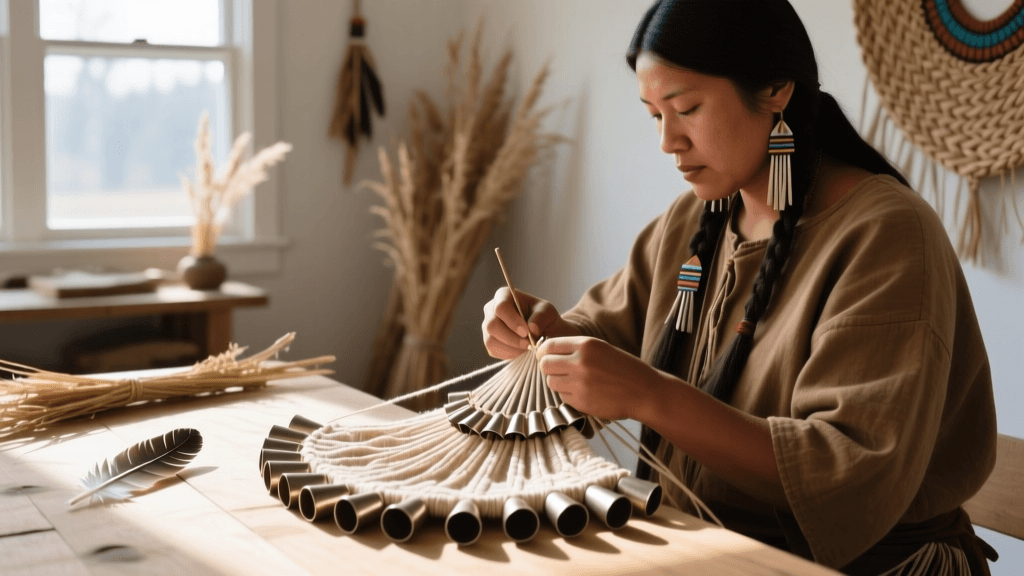
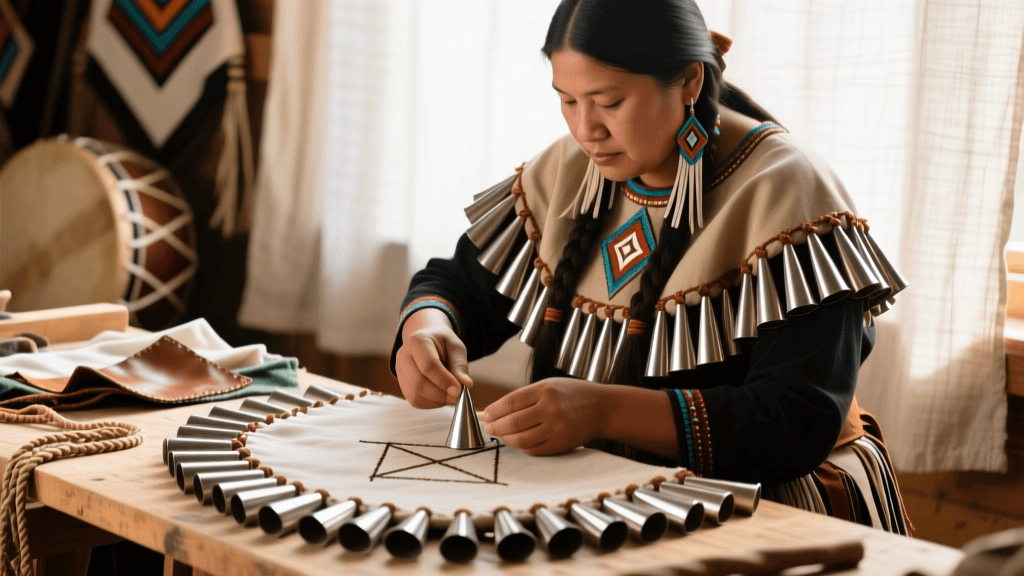
The defining feature of the regalia is the metal jingle, historically crafted from the rolled lids of tobacco tins. Today, while some artisans still hand-roll copper and brass for a custom, mellow tone, the vast majority of dancers use commercially stamped steel cones. The sound produced by the jingles is meant to mimic the sound of rain, a vital element for healing and agricultural life. The cost for high-quality stamped steel cones in 2026 averages $0.25 to $0.45 per cone, depending on bulk pricing and the supplier (with Native-owned vendors like Crazy Crow or local powwow artisans being the preferred sources).
| Cone Size | Diameter | Sound Profile | Best Placement on Regalia |
|---|---|---|---|
| Large (Jumbo) | 1.5 - 2.0 inches | Deep, resonant bass with a slower, echoing ring. | Bottom hem of the skirt, yoke accents, and belt line. |
| Medium (Standard) | 1.0 - 1.25 inches | Balanced, traditional chime; the core 'rain' sound. | Primary bodice rows, main skirt body, and sleeves. |
| Small (Petite) | 0.5 - 0.75 inches | High-pitched, rapid shimmer; bright and piercing. | Collar, cuffs, intricate geometric appliqué patterns. |
The Mathematics of Cone Placement: The 365 Tradition
A widely respected tradition dictates that a fully completed Jingle Dress should feature exactly 365 cones—one for every day of the year, symbolizing continuous, year-round prayer and healing. Achieving this requires meticulous mathematical planning before a single stitch is made.
Mapping the Dress
To map your cone placement, lay the fully sewn base dress flat on a large surface. Using a fabric-safe chalk or water-soluble marker, draw your guide lines. For standard 1-inch medium cones, a spacing of 1.5 inches between the centers of each cone is optimal. This prevents the metal from tangling while ensuring a dense, rich sound. If your skirt circumference is 60 inches, a single row will hold 40 cones. By calculating the surface area of the bodice and sleeves, you can adjust the spacing slightly to ensure the final count lands precisely on 365. Many 2026 regalia makers use digital tablet apps designed for quilters to map out geometric cone grids, ensuring perfect symmetry.
Step-by-Step Construction Overview
Constructing the dress requires intermediate to advanced sewing skills, as the weight of the metal demands reinforced seams.
- Step 1: The Base Pattern. Draft a simple, comfortable shift dress pattern with a slightly flared A-line skirt. The bodice should be loose enough to allow for deep breathing and unrestricted shoulder movement during the dance.
- Step 2: Ribbon Appliqué. Before attaching any cones, sew your ribbon patterns. Use a zigzag stitch or a blind hem stitch to secure the ribbons flat against the broadcloth. In 2026, laser-cut ribbon templates are available from Indigenous craft suppliers, allowing for flawless, sharp geometric corners.
- Step 3: Reinforcement. Iron heavy-duty interfacing onto the inside of the fabric wherever cones will be heavily concentrated, particularly along the bottom hem and the shoulder yoke. This prevents the metal from tearing through the cotton over time.
- Step 4: Tying the Cones. Each cone is attached using a short piece of ribbon, twill tape, or sinew. Thread the tie through the top loop of the cone, tie a secure double or triple knot on the outside of the dress, and seal the knot with a tiny drop of flexible fabric glue to prevent it from slipping during vigorous movement.
Powwow Etiquette and 2026 Dance Trends
The Jingle Dress dance is characterized by its unique footwork. Unlike the high-stepping of the Fancy Shawl or the sweeping motions of the Traditional dance, the Jingle Dress dancer keeps her feet close to the earth. The choreography involves a rhythmic, bouncing step where one foot is always in contact with the ground, symbolizing a continuous connection to Mother Earth and the grounding of healing energy. As noted by the National Park Service in their cultural heritage guidelines, understanding the spiritual intent behind Indigenous dance forms is essential for both participants and spectators.
Modern Styling and Accessories
In 2026, regalia styling has embraced bold, high-contrast color palettes. While traditional calico prints remain beloved for elder dancers and healing ceremonies, youth and competitive dancers are frequently utilizing color-blocked broadcloth in striking combinations like deep indigo with neon coral, or emerald green with metallic gold ribbons. Accessories, such as beaded leggings, moccasins, and matching hair barrettes, are often commissioned from local Indigenous beadwork artists to complete the cohesive look of the regalia.
Caring for and Preserving Your Regalia
Because a Jingle Dress is a sacred item and a significant financial and temporal investment, proper storage is critical. Never store the dress on a standard wire hanger, as the immense weight of 365 steel cones will distort the shoulder seams and stretch the broadcloth. Instead, store the dress flat in a breathable cotton garment bag or an archival-quality acid-free box. If the dress becomes soiled, spot clean the fabric carefully; machine washing is highly discouraged as it will cause the steel cones to rust and the fabric to warp. For those interested in the historical preservation of vintage Indigenous textiles, the Library of Congress provides excellent open-access resources on archival textile care and the conservation of historical Native American garments.
Conclusion
Creating a Jingle Dress in 2026 is a profound journey that bridges historical Anishinaabe teachings with contemporary Indigenous artistry. From carefully sourcing sustainable broadcloth to calculating the precise placement of 365 metal cones, every step of the process is an act of devotion and cultural pride. Whether you are sewing your first dress for a healing ceremony or crafting a competitive showpiece for the Grand Entry, approaching the work with patience, respect, and mathematical precision will result in a garment that not only sounds like the healing rain but carries the enduring spirit of Indigenous resilience.