Mastering the Japanese Jibata Loom: 2026 Weaving Guide
The Renaissance of the Jibata Loom in 2026
As the global slow fashion and heritage textile movements reach new heights in 2026, the traditional Japanese Jibata loom is experiencing a profound renaissance among international artisans and domestic preservationists. Unlike the heavy, rigid floor looms common in Western weaving traditions, the Jibata is a uniquely intimate, low-to-the-ground apparatus that relies on the weaver's own body weight to maintain warp tension. This deeply physical connection between the artisan and the textile is precisely why contemporary weavers are seeking out this method. In 2026, mastering the Jibata is not merely about producing cloth; it is an embodied practice of preserving rural Japanese history, specifically the minshugei (folk craft) movement that championed everyday, utilitarian beauty.
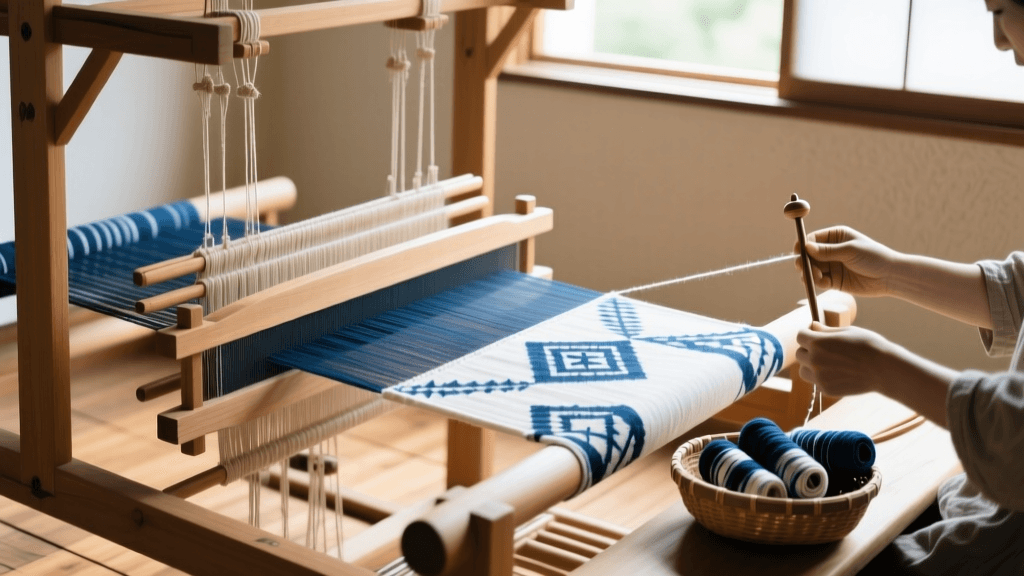
The Jibata is most famously associated with the production of Kasuri (ikat) cotton textiles, particularly those originating from the Kurume region in Fukuoka Prefecture. The rhythmic clack of the wooden beater and the subtle scent of natural indigo define the sensory experience of this craft. For modern practitioners, understanding the mechanics, sourcing the equipment, and executing the meticulous tie-dye weaving methods are essential steps toward achieving authentic results.
Understanding Traditional Japanese Loom Types
Before investing in equipment, it is crucial to understand how the Jibata fits into the broader ecosystem of Japanese traditional looms. The choice of loom dictates the posture of the weaver, the type of fiber used, and the complexity of the weave structure. Below is a comparative overview of the three primary traditional looms utilized by Japanese artisans today.
| Loom Type | Weaver Posture | Primary Textile Application | Tension Mechanism | 2026 Avg. Market Cost (USD) |
|---|---|---|---|---|
| Jibata | Seated on floor, legs extended | Cotton Kasuri, everyday workwear | Back-strap (body weight) | $1,200 - $3,500 |
| Takahata | Seated on a bench | Silk Nishijin-ori, complex brocades | Wooden frame and foot treadles | $4,500 - $12,000 |
| Izari-bata | Seated in a sunken floor pit | Heavy silk Obi sashes, tapestries | Frame with suspended harnesses | $2,000 - $5,500 |
For those focusing on cotton and traditional folk textiles, the Jibata remains the undisputed standard. Its portability and relatively lower cost make it the most accessible entry point for serious weavers in 2026.
Sourcing a Jibata Loom and Materials Today
Acquiring an authentic Jibata in 2026 requires navigating a specialized market. While antique looms can occasionally be found at the famous Toji Temple flea market in Kyoto, international buyers must be aware of Japan's stringent cultural property export laws. Looms classified as historical artifacts over a certain age may require lengthy export permits. Consequently, most international and modern domestic weavers opt for newly crafted reproductions built by specialized woodworkers in Fukuoka and Kyoto.
When budgeting for a complete Jibata setup in 2026, consider the following cost breakdown:
- Loom Frame (Hinoki Cypress): $1,500 - $2,200. Hinoki is preferred for its natural resistance to humidity and its smooth grain, which prevents silk and fine cotton warp threads from snagging.
- Heddles (Soukou) and Reed (Osa): $250 - $400. Custom-made bamboo reeds are still handcrafted by artisans in Nara, priced based on the dents-per-inch (DPI) required for your specific cotton count.
- Shuttles (Hi) and Bobbins: $80 - $150. Weighted persimmon-wood shuttles are essential for achieving the correct momentum when throwing the weft across a wide warp.
- International Shipping & Crating: $400 - $800. Professional art-shipping services are highly recommended to prevent the wooden joinery from shifting during transit.
For authoritative guidance on traditional craft tools and recognized artisan workshops, the Kogei Japan portal, maintained by the Ministry of Economy, Trade and Industry, remains an invaluable resource for verifying the authenticity of tool makers and textile preservation societies.
The Art of Kasuri: Tie-Dye Weaving Preparation
The soul of the Jibata is the Kasuri technique. Unlike printed textiles, Kasuri patterns are created by resist-dyeing the threads before they are ever placed on the loom. In 2026, while synthetic indigo is available for hobbyists, serious practitioners exclusively use natural sukumo (fermented indigo leaves) from Tokushima Prefecture to achieve the deep, living blues that age beautifully over decades.
The preparation process is mathematically rigorous and requires immense patience:
- Design Mapping: The weaver drafts the pattern on graph paper, calculating the exact shrinkage rate of the cotton (typically 8-12%) during the dyeing and weaving processes.
- Thread Tying (Kukuri): Using a specialized cotton string, the weaver tightly binds the sections of the warp and weft threads that must remain undyed. The pressure applied must be uniform; if the tie is too loose, indigo will bleed into the resist area, blurring the motif.
- Indigo Dyeing (Aizome): The bound threads are submerged in the indigo vat, oxidized in the air, and re-submerged up to twenty times to achieve the desired depth of color. The bound sections resist the dye, remaining pristine white.
- Drying and Alignment: Once dried, the ties are removed. The weaver must then align the dyed warp threads with mathematical precision on the warping board so that the pattern will emerge perfectly when the weft is woven across.
'The thread remembers the hands that spun it, the vat that dyed it, and the breath of the weaver who beats it into cloth.' — Proverb from the Kurume Kasuri preservation societies.
Step-by-Step Weaving Execution on the Jibata
Operating a Jibata is a full-body endeavor. Because there are no foot treadles to lift the harnesses, the weaver uses a back-strap (koshi-ita) and a manual sword to manipulate the shed. Here is the actionable sequence for executing a basic plain weave Kasuri textile:
1. Tensioning the Warp
The weaver sits on the floor with legs extended, leaning back slightly against the back-strap. This backward lean pulls the warp beam away from the cloth beam, creating the necessary tension. The tension must be constantly adjusted by shifting body weight; leaning forward loosens the warp for beating, while leaning back tightens it for shedding.
2. Creating the Shed
Using the right hand, the weaver pulls the shed stick or operates the simple hand-lever attached to the heddles. This separates the warp threads into two distinct layers, creating a tunnel (the shed) for the shuttle.
3. Throwing the Shuttle
The weighted wooden shuttle, loaded with a bamboo bobbin of weft thread, is flicked swiftly through the shed with the right hand and caught by the left. The speed of the throw is critical; a slow throw can cause the shuttle to dip and snag the lower warp threads.
4. Beating the Weft
With the weft thread in place, the weaver grasps the heavy wooden beater (osa) suspended from the top of the frame. Pulling it forward with firm, even force, the weaver packs the weft tightly against the fell of the cloth. The rhythmic 'thwack' of the beater is the heartbeat of the Jibata.
Maintaining Your Jibata in Modern Climates
Wooden looms are highly sensitive to environmental changes. In 2026, with extreme weather fluctuations becoming more common, climate control in your weaving studio is non-negotiable. The ideal environment for a Hinoki cypress Jibata is a relative humidity (RH) of 45% to 55%, with a stable temperature around 68°F (20°C). If the air becomes too dry, the wooden joints may shrink and rattle, causing uneven tension. If it is too humid, the wood can swell, and the cotton warp threads may mildew.
Every six months, the wooden tracks where the shuttle glides and the pivot points of the beater should be lightly polished with pure tsubaki (camellia) oil. Avoid synthetic lubricants or heavy waxes, which can attract dust and degrade the natural fibers of your textiles. For weavers looking to study these maintenance techniques and historical contexts firsthand, organizing a cultural tour through Japan National Tourism Organization to visit active weaving villages in Fukuoka and Kyoto is highly recommended to witness master artisans caring for looms that have been in continuous use for over a century.
Conclusion
Mastering the Japanese Jibata loom in 2026 is a commitment to a slower, more intentional way of creating. It demands physical endurance, mathematical precision, and a deep respect for natural materials. Whether you are weaving a simple indigo-dyed cotton scarf or embarking on a multi-month Kurume Kasuri project, the Jibata offers a profound connection to the generations of Japanese artisans who transformed raw fiber into enduring cultural heritage.