Japanese Wedding Kimono: Shiromuku, Uchikake & Costs
Introduction to Japanese Bridal Fashion
Traditional Japanese weddings, known as shinzen shiki (Shinto ceremonies), are steeped in centuries of ritual, symbolism, and breathtaking sartorial elegance. At the heart of these ceremonies is the bridal kimono, a garment that transcends mere clothing to become a canvas of cultural heritage, familial blessing, and artistic mastery. Unlike Western bridal fashion, which often centers on a single white gown, a traditional Japanese bride may change outfits multiple times throughout her wedding day, transitioning from solemn Shinto rituals to joyous reception celebrations. According to The Metropolitan Museum of Art, the evolution of Japanese dress reflects deep societal shifts, with bridal garments preserving some of the most intricate textile techniques in the world, such as Nishijin-ori brocade weaving and Yuzen resist-dyeing.
The Shiromuku: The Ultimate Symbol of Purity
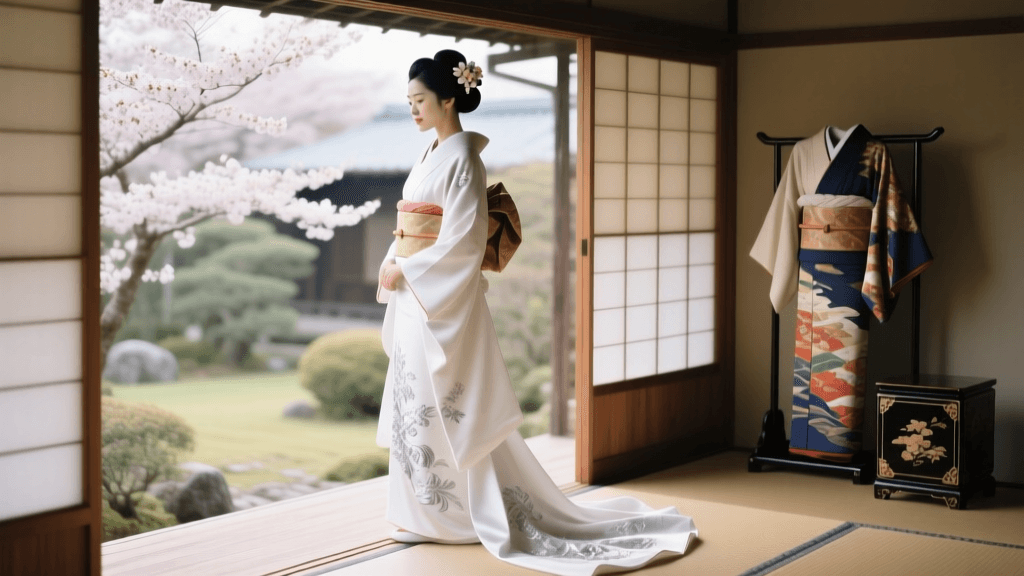
The shiromuku is the most formal and sacred of all Japanese wedding garments. Translating literally to 'pure white,' this entirely white ensemble is worn exclusively during the Shinto wedding ceremony. The color white in Shinto tradition represents purity, maidenhood, and the bride's willingness to be 'dyed' in the colors of her new family. The shiromuku is not just a single layer; it is a complex assembly of garments including the kakeshita (the main kimono), the uchikake (the heavy, padded outer robe), and the hiyoku (a secondary lining layer that peeks out at the collar and hem to symbolize double happiness).
Because the shiromuku is entirely white, the artistry lies in the subtle textures and woven patterns. Master weavers use rinzu (silk damask) and chirimen (silk crepe) to create tone-on-tone motifs of cranes, pine trees, and cherry blossoms that catch the light as the bride moves. The ensemble is paired with specific headpieces: the wataboshi, a large, domed white hood that hides the bride's face from everyone but her groom, or the tsunokakushi, a narrower white band that symbolically 'hides the horns' of jealousy and ego, signifying the bride's resolve to become a gentle and obedient wife.
The Iro-Uchikake: Vibrant Elegance for the Reception
Following the solemnity of the shrine ceremony, the bride transitions into the iro-uchikake (colored outer robe) for the hiroen, or wedding reception. As highlighted by the Victoria and Albert Museum, the use of vibrant colors and lavish embellishments in Japanese formal wear reached its zenith during the Edo period, a legacy that lives on in modern iro-uchikake designs. While red remains the most popular color—symbolizing joy, vitality, and protection against evil spirits—modern brides frequently opt for regal purples, deep blacks with gold accents, or pastel pinks.
The iro-uchikake is heavily padded at the hem, allowing it to trail elegantly on the floor without the need for an obi tie at the back. The visual impact of the iro-uchikake is defined by its lavish motifs. Brides often select the shochikubai motif (pine, bamboo, and plum blossom) for resilience and longevity, or the oshidori (mandarin ducks) to represent marital fidelity. The garment is heavily embroidered with metallic gold and silver threads, and sometimes adorned with delicate beads or pearls, making it a true masterpiece of Japanese textile art.
The Hikizuri: The Trailing Bridal Kimono
The hikizuri, meaning 'trailing skirt,' is a specialized style of kimono characterized by its exceptionally long hem and padded waist. Historically worn by aristocratic women and later adopted by geisha and maiko for formal performances, the hikizuri has seen a resurgence in modern bridal fashion. Unlike the standard kimono which is folded at the waist (the ohashori) to adjust the length, the hikizuri is worn at its full length, allowing the beautifully dyed or embroidered hem to sweep the floor. Brides choosing a hikizuri for their shrine ceremonies often pair it with a tsunokakushi and carry a long, elegant fan. The hikizuri offers a more fluid, romantic silhouette compared to the rigid, columnar shape of the heavily padded uchikake.
Essential Bridal Accessories and Undergarments
A Japanese bridal look is incomplete without its highly specific accessories. The foundation begins with the nagajuban (under-kimono) and specialized padding used to create the ideal cylindrical body shape, which prevents the kimono from wrinkling and ensures the obi sits perfectly flat. Key accessories include:
- Kanzashi: Elaborate hair ornaments made of tortoiseshell, lacquer, silk flowers, or precious metals, inserted into the traditional bunkin-takashimada bridal updo.
- Hakoseko: A small, ornate silk pouch worn tucked into the front of the obi, originally used to hold a small mirror and perfumed cloth, now serving as a decorative symbol of wealth.
- Sensu: A ceremonial folding fan, often featuring gold leaf and auspicious motifs, held by the bride during photographs and rituals.
- Zori and Tabi: White silk zori sandals worn with pristine white tabi (split-toe socks).
Comparison Chart: Shiromuku vs. Iro-Uchikake vs. Hikizuri
| Feature | Shiromuku | Iro-Uchikake | Hikizuri |
|---|---|---|---|
| Primary Occasion | Shinto Shrine Ceremony | Wedding Reception (Hiroen) | Ceremony or Photography |
| Color Palette | Pure White (tone-on-tone) | Red, Gold, Black, Pastels | Varied (often Yuzen dyed) |
| Hem Style | Heavily padded, trails slightly | Thickly padded, trails on floor | Unpadded or lightly padded, trails |
| Average Rental Cost | ¥150,000 - ¥300,000 | ¥200,000 - ¥500,000 | ¥180,000 - ¥350,000 |
| Dressing Time | 45 - 60 minutes | 30 - 45 minutes | 45 - 60 minutes |
Practical Guide: Renting, Fitting, and Timeline
Planning for a traditional Japanese wedding requires meticulous attention to detail, particularly regarding the kimono. According to Japan Guide, most modern Japanese couples opt to rent their bridal garments due to the exorbitant costs of purchasing and the immense storage requirements for silk textiles. Here is a practical, actionable timeline and guide for brides planning their kimono experience.
1. Budgeting and Costs
When budgeting, brides should look for comprehensive 'bridal packages' at specialized kimono salons. A standard rental package for a shiromuku or iro-uchikake typically ranges from ¥250,000 to ¥450,000 ($1,700 to $3,000 USD). This package generally includes the kimono, all undergarments, accessories, hair styling, makeup, and the services of a professional kitsuke-shi (kimono dresser). Purchasing a brand-new, hand-painted silk uchikake from a prestigious house like Chiso or Takashimaya can easily exceed ¥1,500,000 ($10,000+ USD).
2. Measurements and Fittings
Kimono are not sized by standard Western measurements (S, M, L). Instead, they are tailored based on two critical metrics:
- Shincho (Height): Standard rental kimono fit heights between 150 cm and 165 cm. The body length (mitake) is calculated as height minus 10 cm.
- Yuki (Arm Span): Measured from the center back of the neck, over the shoulder, down to the wrist bone. Standard yuki is around 64-68 cm.
Actionable Tip: If you are taller than 165 cm or have a broader shoulder span, you must request o-shitate (custom tailoring) or source a specialized tall-size rental. This requires an additional fee of ¥30,000 to ¥50,000 and must be arranged at least four months in advance.
3. The Booking Timeline
- 6 to 8 Months Prior: Book your venue and select your kimono salon. High-end salons in Kyoto and Tokyo book their premium, antique, or celebrity-worn garments up to a year in advance, especially for auspicious dates in the Rokuyo calendar (like Taian).
- 3 to 4 Months Prior: Attend your first fitting. Select the base garments, the obi, and the color of the obijime (decorative cord). This is also the time to finalize your hair and makeup trial.
- 1 Month Prior: Finalize accessory selections, including the specific kanzashi hairpins that match your seasonal motifs.
- Day of the Wedding: Plan to arrive at the salon at least 3.5 hours before your ceremony. Hair and makeup take 90 minutes, and the intricate process of dressing in a shiromuku takes a full hour. The weight of the garments (often exceeding 15 kg / 33 lbs) requires the bride to move slowly and deliberately, aided by an attendant.
Conclusion
The Japanese wedding kimono is far more than a beautiful garment; it is a profound expression of cultural continuity, artistic dedication, and familial hope. Whether draped in the sacred, unblemished white of the shiromuku or the vibrant, embroidered splendor of the iro-uchikake, a bride participating in these traditions wears centuries of history on her shoulders. By understanding the distinct styles, planning meticulously for fittings, and respecting the intricate timeline of bridal preparation, modern couples can honor this magnificent sartorial heritage while celebrating their unique union.