Japanese Kimono Types Guide 2026: Furisode to Yukata
Introduction to Japanese Kimono in 2026
The Japanese kimono remains one of the most iconic and structurally fascinating garments in global fashion history. As we navigate the sartorial landscape of 2026, the kimono is experiencing a profound renaissance. Driven by a global shift toward sustainable, zero-waste fashion and a deep appreciation for artisanal craftsmanship, traditional Japanese garments are no longer relegated to museum archives or strictly ceremonial use. Today, fashion enthusiasts, cultural historians, and modern wearers alike are embracing the nuanced hierarchy of kimono types, adapting them for contemporary life while respecting their deep-rooted cultural significance.
Understanding the different types of kimono is essential for anyone looking to purchase, rent, or style these garments correctly. The Japanese concept of TPO (Time, Place, Occasion) strictly dictates which kimono is appropriate for a given event. From the sweeping, dramatic sleeves of the furisode to the breezy, casual cotton of the summer yukata, each garment tells a story of marital status, seasonality, and social formality. In this comprehensive 2026 guide, we break down the definitive types of Japanese kimono, their construction, and how to source them in today's market.
The Hierarchy of Formality: Kimono Types Explained
Furisode (Unmarried Women's Formal Wear)
The furisode (literally "swinging sleeves") is the most formal kimono worn by unmarried women. Characterized by its exceptionally long, flowing sleeves that can measure anywhere from 85 to 114 centimeters in length, the furisode is a breathtaking display of textile art. In 2026, modern furisode designs frequently feature bold, contemporary interpretations of traditional motifs, such as oversized cranes, modern geometric florals, and vibrant gradient dyeing techniques. This garment is typically reserved for Seijin Shiki (Coming of Age Day), university graduations, and attending weddings as an unmarried guest. Because of its high formality, a furisode is almost always made of premium, heavily patterned silk and paired with a luxurious, stiff maru or fukuro obi.
Tomesode (Married Women's Formal Wear)
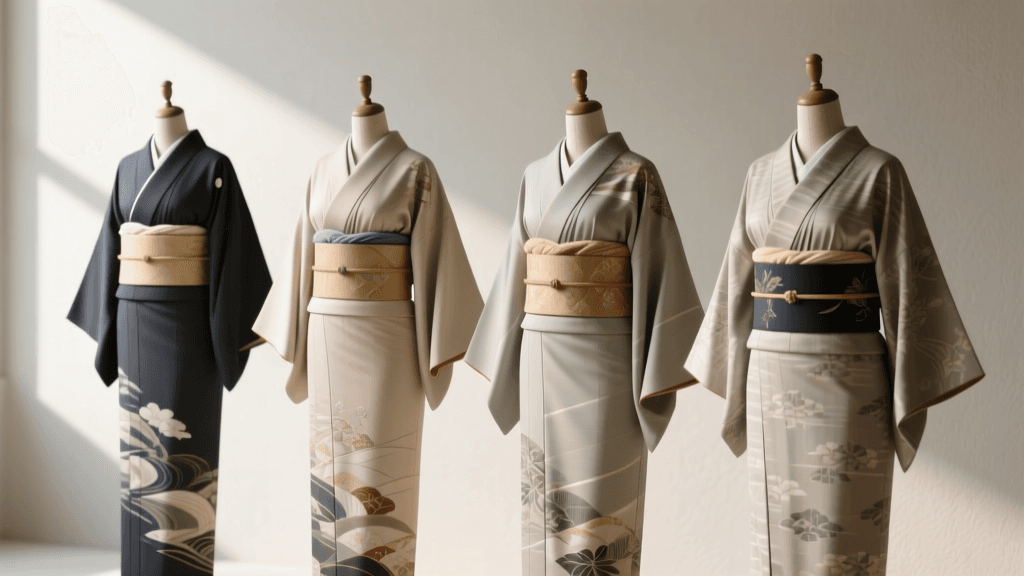
Once a woman marries, the furisode is traditionally retired, and the tomesode takes its place as the highest level of formal wear. The tomesode is divided into two categories: the kurotomesode (black) and the irotomesode (colored). The kurotomesode is the absolute pinnacle of formality for married women, worn exclusively by close relatives of the bride and groom at weddings. It features a solid black background with elegant patterns restricted only to the lower half of the garment (the eba design), and it always bears five family crests (kamon). The irotomesode, featuring a colored background, is slightly less formal and can be worn to other celebratory events like imperial garden parties or high-level tea ceremonies.
Houmongi (Visiting Wear)
The houmongi is the ultimate versatile formal garment, appropriate for both married and unmarried women. Translating to "visiting wear," it is characterized by a continuous pattern that flows seamlessly across the seams, shoulders, and sleeves when the garment is laid flat. This complex dyeing technique, known as eba-moyo, requires immense skill and makes the houmongi a highly prized wardrobe staple. In 2026, the houmongi remains the go-to choice for attending tea ceremonies, formal dinners, and visiting shrines during the New Year. It is less formal than the kurotomesode but significantly more elevated than everyday wear.
Komon (Everyday Casual)
For daily wear, casual outings, and informal classes, the komon is the standard choice. The term komon refers to a kimono with a repeating, all-over pattern that does not necessarily align at the seams. Because the pattern is uniform and lacks the directional, continuous flow of the houmongi, it is considered casual. Modern wearers in 2026 often pair vintage komon with contrasting, brightly colored hanhaba (half-width) obi to create a playful, personalized look. Komon are excellent entry-level garments for those learning how to dress themselves, as the rules for coordination are much more forgiving.
Yukata (Summer & Bathhouse Wear)
The yukata is the most widely recognized and accessible form of Japanese traditional dress globally. Originally worn as a bathrobe by the nobility during the Heian period, it evolved into the standard casual summer garment for festivals and fireworks displays. Yukata are made from unlined cotton or, increasingly in 2026, advanced breathable cotton-blends and textured polyester that mimic the slub of raw cotton while offering machine-washable convenience. Unlike silk kimono, yukata are worn directly over undergarments without the need for a nagajuban (under-kimono), and they are paired with simple wooden geta sandals and casual half-width obi.
Comparison Chart: Kimono Types, Formality, and 2026 Pricing
To help you navigate your purchasing or rental decisions, we have compiled a comprehensive comparison chart reflecting the current 2026 market landscape. Prices reflect average retail costs for new, high-quality garments in USD, though vintage markets offer significant discounts.
| Kimono Type | Formality Level | Sleeve Length | Typical 2026 Retail Price (USD) | Best Suited Occasions |
|---|---|---|---|---|
| Furisode | Very High (Unmarried) | 85 - 114 cm | $1,500 - $4,000+ | Coming of Age, Graduations, Weddings |
| Kurotomesode | Highest (Married) | Standard (approx 49 cm) | $1,200 - $3,500 | Weddings (close relatives) |
| Houmongi | High (All Women) | Standard (approx 49 cm) | $800 - $2,500 | Tea Ceremonies, Formal Dinners |
| Komon | Casual | Standard (approx 49 cm) | $300 - $900 | Daily wear, informal classes, shopping |
| Yukata | Very Casual | Standard (approx 49 cm) | $50 - $200 | Summer festivals, hot springs, lounging |
Kimono Construction and the Zero-Waste Movement
One of the most remarkable aspects of the kimono, and a major reason for its resurgence in the sustainable fashion discourse of 2026, is its construction. Traditional kimono are constructed from a single bolt of fabric known as a tanmono. According to the Metropolitan Museum of Art, a standard tanmono is approximately 36 centimeters wide and 11.5 meters long. This specific dimension dictates the entire structure of the garment.
Unlike Western tailoring, which relies on cutting curved armholes, darts, and shaped seams to fit the body's contours, the kimono is constructed using straight-line sewing. The fabric is cut into rectangular pieces—two for the body, two for the sleeves, and smaller strips for the collar and overlapping front panels. Crucially, almost no fabric is wasted in this process. Furthermore, because the garment is sewn with running stitches, it can be entirely taken apart, washed, re-dyed, and resewn. This inherent modularity and zero-waste philosophy make the traditional kimono a masterclass in sustainable garment engineering, a fact heavily celebrated by modern eco-conscious designers and the Victoria and Albert Museum in their extensive textile archives.
Sourcing and Buying Kimono in 2026
The market for acquiring kimono has evolved dramatically. While purchasing brand-new, custom-tailored silk kimono from traditional districts like Kyoto's Nishijin remains the gold standard for formal wear, it requires a significant financial investment and weeks of waiting for tailoring. For the modern enthusiast, the 2026 market offers several accessible avenues:
- Vintage and Recycled Markets: Japan's secondhand markets, both physical stores in Tokyo's Shimokitazawa and online global platforms, are treasure troves for high-quality silk komon and houmongi. Due to changing demographics, many pristine, mid-century garments are available for a fraction of their original cost, often ranging from $50 to $200.
- Washable Modern Blends: Brands specializing in washable polyester and advanced synthetic blends have perfected the art of mimicking the drape and texture of silk. These are highly recommended for beginners, rainy climates, and frequent travelers who want the aesthetic of a kimono without the strict dry-cleaning requirements.
- Rental Services: For tourists visiting Japan or attendees of specific one-off events, rental services in major cities like Kyoto, Kanazawa, and Tokyo offer full dressing packages. In 2026, these packages typically cost between $40 and $80 for the day, including hair styling, accessories, and professional dressing assistance.
Modern Styling and Accessories
Wearing a kimono requires a specific ecosystem of accessories. The obi (sash) is the most prominent, with formal maru obi and semi-formal nagoya obi dictating the overall silhouette. In 2026, a popular styling trend among younger wearers is the "retro-modern" aesthetic, which pairs vintage, muted-toned silk kimono with obijime (decorative cords) and obiage (sash scarves) in neon or highly saturated contemporary colors.
Footwear also plays a critical role. Formal kimono require zori (flat, woven or brocade sandals) worn with split-toe tabi socks. Yukata are paired with geta (wooden clogs). Understanding how to mix and match these elements allows the wearer to express personal style while maintaining the structural integrity and respect for the garment's cultural origins.
Conclusion
The Japanese kimono is far more than a static historical artifact; it is a living, breathing tradition that continues to adapt to the needs and aesthetics of the modern world. Whether you are investing in a formal houmongi for a significant life event, exploring the sustainable brilliance of zero-waste tanmono construction, or simply slipping into a cotton yukata for a summer evening, understanding the distinct types of kimono is your first step into a deeply rewarding sartorial journey. As we move through 2026, the global appreciation for these magnificent garments ensures that the art of the kimono will continue to thrive for generations to come.