Mastering Kimono Tanmono Zero-Waste Construction 2026
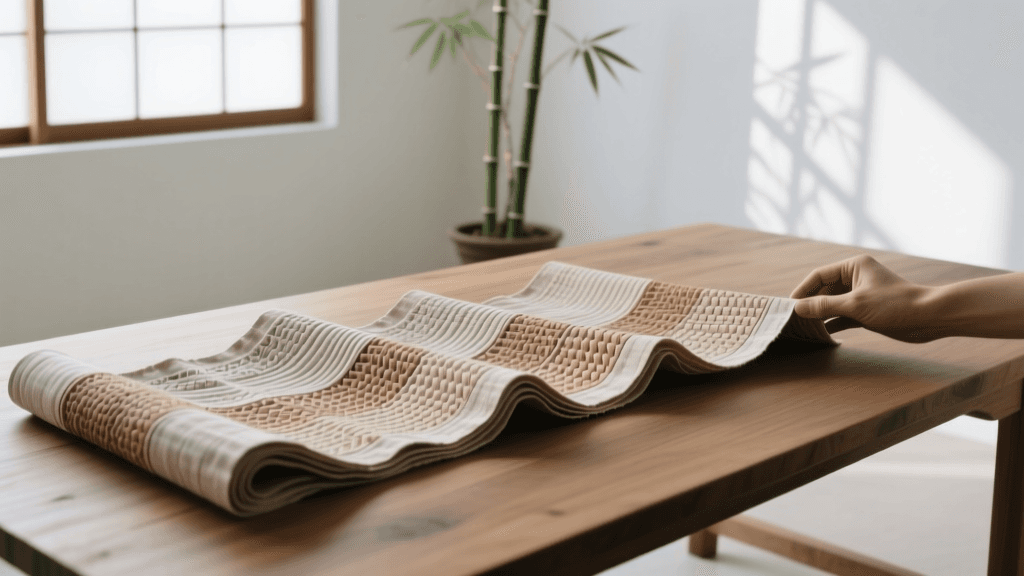
In 2026, the global fashion industry is grappling with strict environmental regulations, particularly the new international directives on textile waste and circular manufacturing. As contemporary designers scramble to develop complex "zero-waste" pattern-cutting software, a centuries-old masterclass in sustainable garment construction has been hiding in plain sight: the traditional Japanese kimono. Unlike Western tailoring, which sculpts fabric to the body's curves and discards up to 15% of the textile as offcuts, the kimono is born from a single, unbroken bolt of cloth known as the tanmono. By examining the precise geometry and construction techniques of the tanmono system, modern sewists, indie designers, and heritage enthusiasts can unlock a truly circular approach to fashion.
The Genius of the Tanmono: Standardized Loom Widths
The foundation of kimono construction is the tanmono, a standardized bolt of fabric woven specifically for a single garment. Historically, and still today among traditional weavers in heritage regions like Nishijin and Kiryu, the tanmono is woven to a precise width of approximately 36 to 40 centimeters (about 14 to 15.5 inches) and a length of roughly 12 meters (about 13 yards). This is not arbitrary; these dimensions are mathematically calculated to yield exactly the amount of fabric required to construct a standard adult kimono, with virtually zero waste.
Because the fabric is woven to the exact width needed for the garment's panels, the selvedge edges (the tightly woven finished edges of the fabric) are incorporated directly into the garment's seams. This means that when the kimono is eventually taken apart for cleaning, re-dyeing, or recycling—a traditional practice known as arai-hari—the fabric remains a series of pristine, reusable rectangular panels. According to the Victoria and Albert Museum, this inherent modularity is what allowed historical garments to be passed down, resized, and repurposed across generations, a stark contrast to the planned obsolescence of modern fast fashion.
Deconstructing the Kimono: The Eight-Panel System
A standard kimono is constructed from eight primary rectangular panels. Understanding this geometry is crucial for anyone looking to replicate the technique. The panels are:
- Migoro (Main Body): Two long panels that form the front and back of the torso.
- Sode (Sleeves): Two rectangular panels attached to the migoro, featuring the iconic deep, open pouches.
- Okumi (Front Overlaps): Two narrower panels that extend the front of the migoro to allow the garment to wrap securely.
- Eri (Collar): One long, narrow panel folded in half and attached to the neckline.
- Tomo-eri (Replaceable Collar): A secondary protective collar piece.
Because every single piece is a rectangle or a simple straight-line cut, there is no need for complex curved armholes, princess seams, or darts. The fit is achieved not through the cut of the fabric, but through the wrapping of the garment and the tying of the obi (sash). The Metropolitan Museum of Art highlights that this T-shaped silhouette prioritizes the surface design and textile artistry over the structural tailoring favored in Western dress.
Traditional Sewing Techniques: Basting and Ease
Constructing a kimono requires specific hand-sewing techniques that differ vastly from modern machine garment assembly. In 2026, while machine-sewn kimonos exist for the mass market, high-end and bespoke garments still rely on traditional hand-stitching to ensure longevity and drape.
Shitsuke (Basting): Before any permanent stitching occurs, the panels are meticulously basted together. This temporary stitching allows the artisan to check the alignment of complex woven or dyed patterns across the seams, ensuring that motifs flow seamlessly from the back panels to the sleeves.
Nuishiro (Seam Allowances): Unlike Western patterns where seam allowances are trimmed and finished with sergers, kimono seam allowances are left wide and folded inside the garment. The selvedges are often left intact and simply folded over, meaning the raw edges are never exposed to fraying.
Hika (Ease): When joining the outer fabric to the lining (in an awase, or lined kimono), the outer fabric is cut slightly larger than the lining. This technique, called hika, creates a natural ease that prevents the lining from pulling on the delicate silk exterior, ensuring the garment drapes beautifully over the body.
The Role of the Obi and Accessories in the Zero-Waste Ecosystem
The zero-waste philosophy of the kimono extends beyond the main garment to its accessories. The obi (sash) is traditionally woven on a much narrower loom, typically around 30 to 33 centimeters wide and up to 4.5 meters long. Like the tanmono, the obi is designed to use the exact yardage required for its intricate tying methods, such as the taiko musubi (drum knot) or bunko musubi (bow knot). Furthermore, auxiliary accessories like the koshihimo (tying cords) and datejime (under-sashes) are often made from the leftover ends of the tanmono bolt or from repurposed fabrics from older, damaged kimonos. In 2026, contemporary stylists are highlighting these modular accessories as the ultimate example of a closed-loop textile economy, where every single thread produced by the weaver serves a distinct, functional purpose in the final ensemble.
Comparison: Western Tailoring vs. Kimono Flat-Pattern Construction
To truly appreciate the engineering of the tanmono system, it is helpful to compare it directly with standard Western garment construction methodologies prevalent in contemporary 2026 fashion design.
| Feature | Western Tailoring (Standard 2026) | Kimono Tanmono Construction |
|---|---|---|
| Pattern Geometry | Curved, complex, multi-piece | Straight lines, rectangles only |
| Textile Waste | 10% to 20% offcuts | Near 0% (selvedge integrated) |
| Fit Mechanism | Darts, easing, stretch fabrics | Wrapping, folding, obi sash |
| Seam Finishing | Serged, zigzag, bound edges | Folded selvedges, hidden raw edges |
| End-of-Life | Difficult to recycle (mixed cuts) | Easily disassembled into flat bolts |
2026 Sustainability: What Modern Designers Are Learning
In 2026, the concept of "circular fashion" has moved from a buzzword to a legal requirement in many global markets. Forward-thinking designers are adopting the "straight-line" or "zero-waste" pattern cutting popularized by the kimono. By utilizing the full width of the fabric bolt and designing garments that rely on geometric folding rather than curved subtraction, designers are eliminating pre-consumer textile waste.
Furthermore, the kimono's modular nature is inspiring new business models. Some contemporary sustainable brands in Tokyo and Kyoto are now offering "take-back" programs where modern, tanmono-inspired wrap coats and jackets are disassembled at the end of their lifecycle, re-dyed using natural botanical pigments, and reassembled into new garments, mimicking the historical arai-hari process but scaled for the modern eco-conscious consumer.
Practical Guide: Sourcing and Sewing a Modern Tanmono-Style Garment
For home sewists and indie pattern makers looking to experiment with zero-waste construction in 2026, you do not need to import a vintage silk tanmono to practice these techniques. You can adapt the methodology using modern, sustainable textiles.
Step 1: Sourcing the Right Fabric
Look for narrow-width sustainable fabrics, such as organic hemp blends, regenerative agriculture cotton, or peace silk, woven on shuttle looms. If you can only access standard 115cm (45-inch) or 150cm (60-inch) wide fabrics, you can simulate the tanmono by cutting your fabric into 36cm strips along the grainline before drafting your pattern. Ensure you preserve the selvedge edges during this initial cutting phase.
Step 2: Drafting the Rectangles
Calculate your panel lengths based on your height. For a modern hip-length jacket, your migoro panels might only need to be 80cm long, leaving you with ample fabric from a standard 3-meter cut to create the sode and okumi panels without any curved cutting. Map out your rectangles on paper first to ensure the total square footage matches your fabric yardage perfectly.
Step 3: Seam Construction
Avoid serging. Instead, use a French seam or a traditional folded seam to enclose the raw edges. If you have preserved the selvedge, simply fold the fabric along the selvedge line and use a slip stitch or a topstitch to secure the seam allowance flat against the inside of the garment. This not only reduces thread waste but also creates a beautiful, clean interior finish that honors the traditional aesthetic.
Conclusion
The traditional Japanese kimono is far more than a beautiful cultural artifact; it is a triumph of sustainable engineering. The tanmono bolt system and its eight-panel rectangular construction prove that zero-waste fashion is not a modern invention, but a time-tested discipline. As the fashion industry in 2026 continues to confront its environmental impact, the geometric purity and circular lifecycle of the kimono offer a profound blueprint for the future of garment construction. Whether you are a historian, a sustainability advocate, or a hands-on sewist, mastering these traditional techniques provides a vital link between heritage craftsmanship and the future of eco-conscious design.