Japanese Kimono Milestones 2026: Dressing For Life Stages
The Enduring Legacy of the Kimono in 2026
In Japan, the kimono is far more than a traditional garment; it is a wearable calendar that maps the most significant milestones of a human life. While Western fashion dominates the daily streets of Tokyo and Osaka in 2026, the kimono remains the undisputed sovereign of life-stage celebrations. From the tender age of three to the twilight years of late adulthood, specific silhouettes, fabrics, and motifs are prescribed by centuries of custom, even as modern innovations reshape how these garments are sourced and worn. Understanding the sartorial language of Japanese milestones offers a profound glimpse into a culture that deeply reveres the passage of time, familial duty, and spiritual growth.
Childhood Blessings: Shichi-Go-San (Ages 3, 5, and 7)
Held annually in November, Shichi-Go-San (Seven-Five-Three) is a rite of passage celebrating the survival and growth of young children. Historically, childhood mortality was high, and reaching these odd-numbered ages—considered auspicious in Japanese numerology—was a cause for immense gratitude. In 2026, families flock to shrines like Meiji Jingu and Fushimi Inari, dressing their children in highly specific, age-appropriate ensembles.
Age 3: The Hifu Vest
At age three, both boys and girls traditionally participate, though it is now predominantly a celebration for girls. A three-year-old girl wears a standard children's kimono layered with a hifu, a padded, sleeveless silk vest. The hifu eliminates the need for a tight obi sash, ensuring the toddler remains comfortable throughout the lengthy shrine prayers. In 2026, modern parents are increasingly opting for machine-washable, high-grade synthetic silks for the hifu sets, balancing traditional aesthetics with the practicalities of managing young children.
Age 5: The First Hakama
Five-year-old boys celebrate by wearing their first formal hakama (pleated trousers) over a kimono, topped with a haori (half-coat) bearing the family crest. The ensemble mimics the formal wear of adult samurai and courtiers. A traditional kabuto (helmet) or a formal fan is often carried as a prop for photographs, symbolizing the boy's entry into the wider societal sphere.
Age 7: The Yotsutsu Obi
At age seven, girls transition from the simple, cord-tied garments of early childhood to a more structured kimono secured with a yotsutsu (four-piece) obi. This marks a symbolic step toward womanhood, as the child learns to endure the slightly more restrictive and formal dressing process. The motifs on these kimonos frequently feature cranes, pine trees, and peonies, representing longevity and prosperity.
Coming of Age: Seijin-shiki and the Furisode (Age 20)
Despite the Japanese government's 2022 revision to the Civil Code that lowered the legal age of adulthood to 18, the cultural and sartorial celebration of Seijin no Hi (Coming of Age Day) remains firmly anchored at age 20 in 2026. This is largely because age 20 still marks the legal threshold for drinking, smoking, and participating in certain public offices, but more importantly, it is the traditional age for the furisode.
The Anatomy of the Furisode
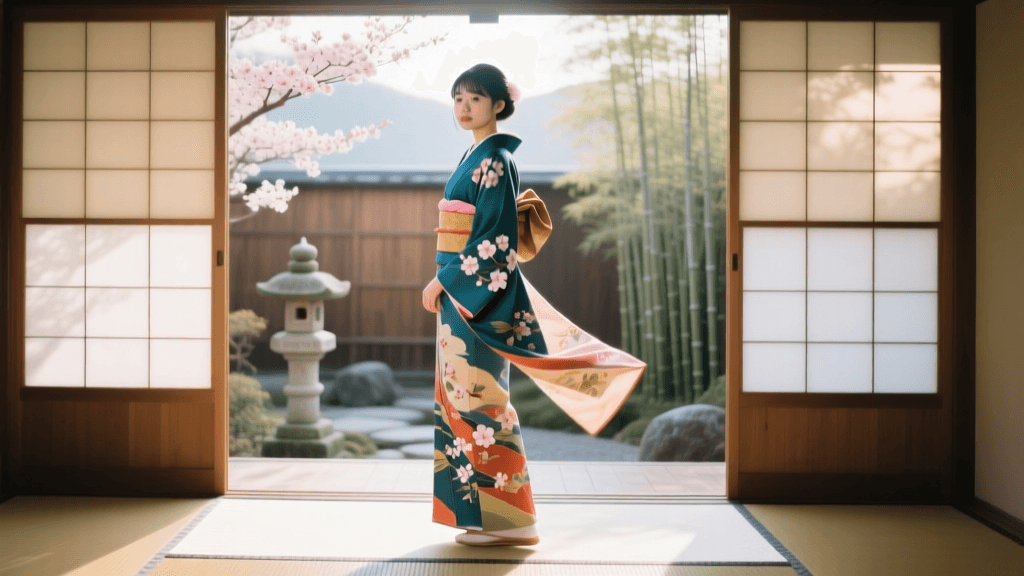
The furisode is the most formal kimono worn by unmarried women, instantly recognizable by its long, swinging sleeves. The length of the sleeves denotes the wearer's status and the formality of the event:
- Ofurisode (Large Furisode): Sleeves measuring approximately 114 cm. Reserved for brides and the most formal state occasions.
- Chufurisode (Medium Furisode): Sleeves measuring around 100 cm. The most popular choice for 20-year-olds attending their Coming of Age ceremonies in 2026.
- Kofurisode (Small Furisode): Sleeves measuring roughly 85 cm. Often worn for graduation ceremonies.
2026 Furisode Trends and Styling
The 2026 rental market has seen a massive resurgence of 'Taisho Roman' aesthetics—a retro-modern style blending early 20th-century Japanese motifs with Western Art Deco influences. Deep burgundies, emerald greens, and bold geometric patterns are highly sought after. Furthermore, young women are experimenting with modern obijime (decorative cords) featuring lace or pearl accents, and pairing their furisode with Western-style designer handbags rather than traditional zori bags, reflecting a personalized, contemporary approach to heritage fashion.
The Wedding Stage: Shiromuku and Uchikake
The traditional Japanese wedding requires a wardrobe change that is as theatrical as it is symbolic. The bridal kimono ensemble is among the heaviest and most complex in the world of traditional garments, often weighing upwards of 20 kilograms.
The Shiromuku: Pure White Beginnings
The ceremony typically begins with the shiromuku, an entirely white kimono ensemble. The white symbolizes purity and the bride's willingness to be 'dyed' in the traditions and colors of her new family. It is worn with a wataboshi (a white silk hood) that historically hid the bride's 'horns of jealousy' from the groom's family, though today it serves as a striking, elegant veil alternative.
The Iro-Uchikake: Celebratory Colors
For the reception, the bride changes into an iro-uchikake, a heavily padded, vibrant outer robe. In 2026, rich jewel tones, metallic gold leaf (surihaku) techniques, and intricate embroidery of phoenixes and pine trees dominate the luxury bridal market. The hem is padded with cotton to allow the heavy fabric to trail elegantly on the floor, requiring the bride to walk with a specialized, gliding gait taught by professional kitsuke (kimono dressers).
Later Life Milestones: Kanreki (60) and Kiju (77)
As individuals enter their later years, Japanese culture celebrates specific birthdays known as choju (longevity celebrations), each associated with distinct colors and garments.
Kanreki: The 60th Birthday Rebirth
The 60th birthday, or Kanreki, marks the completion of the traditional sexagenary zodiac cycle. The celebrant is symbolically 'reborn' and dons a red chanchanko (a padded, sleeveless vest) over a kimono. Red is believed to ward off evil spirits and represents the vitality of a newborn. In 2026, luxury textile brands have introduced lightweight, breathable silk blends for the chanchanko, catering to active seniors who prioritize comfort without sacrificing ceremonial authenticity.
Kiju: The 77th Birthday Elegance
At age 77, the Kiju (Happy Character Age) is celebrated. The kanji for 'happy' can be deconstructed to represent the number 77. The traditional color for this milestone is purple, a hue historically reserved for the highest ranks of the imperial court and Buddhist clergy, signifying profound respect, wisdom, and spiritual elevation.
2026 Kimono Milestone Comparison Chart
| Milestone | Age | Primary Garment | Key Accessories | 2026 Avg. Rental Cost (JPY) |
|---|---|---|---|---|
| Shichi-Go-San (Girls) | 3 | Kosode with Hifu | Hair ribbons, Zori sandals | ¥15,000 - ¥25,000 |
| Shichi-Go-San (Boys) | 5 | Kimono & Hakama | Haori jacket, Fan | ¥18,000 - ¥28,000 |
| Shichi-Go-San (Girls) | 7 | Yotsutsu Obi Kimono | Kanzashi, Shigoki belt | ¥20,000 - ¥35,000 |
| Seijin-shiki | 20 | Chufurisode | Obi-age, Obi-jime, Zori | ¥60,000 - ¥150,000 |
| Traditional Wedding | Adult | Shiromuku / Uchikake | Wataboshi, Bunkin-takazada | ¥250,000 - ¥500,000 |
| Kanreki | 60 | Red Chanchanko | Red Zukin (hood) | ¥10,000 - ¥20,000 |
The Economics of 2026: Rentals, Purchases, and Sustainability
The economic landscape of milestone kimonos in 2026 reflects a broader shift toward sustainability and experiential spending. Purchasing a brand-new, hand-painted Yuzen furisode can easily exceed ¥800,000, leading the vast majority of young adults to utilize high-end rental salons. These 2026 salons offer comprehensive 'one-stop' packages that include the garment, professional dressing, hair styling, and photography.
Furthermore, 2026 has seen a notable rise in eco-conscious textile choices. Innovations in traceable, ethically farmed Japanese silk, as well as Washi-silk blends (integrating traditional Japanese paper fibers), are appealing to environmentally aware Millennials and Gen Z parents dressing their children for Shichi-Go-San. Vintage and upcycled kimonos, remodeled to fit modern milestone requirements, also represent a booming sector of the market, preserving family histories while reducing textile waste.
Preservation of the Art Form
The survival of these milestone traditions relies heavily on the preservation of the artisans who create the garments and the dressers who assemble them. The Japan National Tourism Organization continues to play a vital role in promoting traditional arts, encouraging both domestic and international appreciation for the intricate craftsmanship behind garments like the furisode and shiromuku. Simultaneously, the Agency for Cultural Affairs provides essential grants and recognition to master weavers and dyers in regions like Kyoto and Kanazawa, ensuring that techniques such as Nishijin-ori weaving and Kaga-Yuzen dyeing survive into the next generation.
Ultimately, dressing for life stages in Japan is an act of cultural continuity. Whether it is a three-year-old girl clutching her chitose-ame (thousand-year candy) bag, or a 60-year-old man laughing as he dons his red vest, the kimono in 2026 remains a vibrant, living testament to the beautiful, fleeting, and celebrated stages of the human journey.