2026 Kimono Guide: Birth, Coming-of-Age & Memorial Ceremonies
The kimono is far more than a beautiful garment; it is a woven tapestry of Japanese history, familial duty, and cultural continuity. As we navigate the cultural landscape of 2026, the role of traditional Japanese clothing in family ceremonies remains profoundly significant, even as the methods of sourcing and styling these garments evolve. From the joyous shrine visits welcoming a newborn to the solemn observances honoring departed ancestors, the kimono serves as a visual language communicating respect, transition, and remembrance. In 2026, families are increasingly blending time-honored etiquette with sustainable practices, utilizing high-end rental services and vintage restorations to dress for life's most pivotal milestones. This comprehensive guide explores the specific kimono requirements for birth ceremonies, coming-of-age celebrations, and memorial services, providing actionable advice, current pricing, and styling rules for the modern era.
Omiyamairi: Welcoming the Newborn
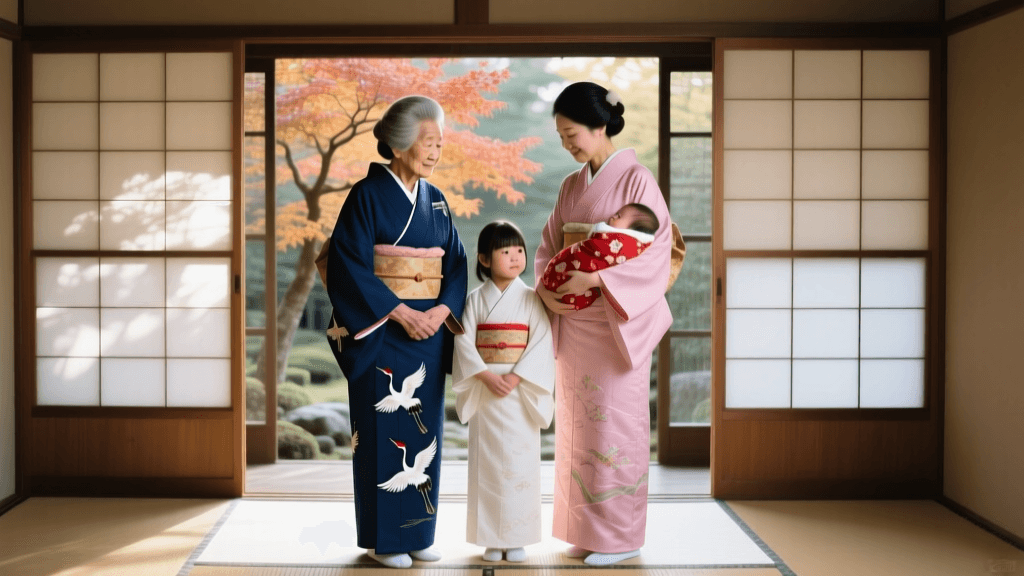
The Omiyamairi is a traditional Shinto shrine visit that takes place roughly one month after a baby is born, serving to introduce the child to the local tutelary deity and pray for their health and longevity. While the exact timing in 2026 is often adjusted based on the mother's recovery and seasonal weather extremes, the sartorial rules remain deeply rooted in tradition.
The Baby's Attire
The infant is traditionally dressed in a white cotton inner robe called an ubugi, symbolizing purity. Over this, the baby wears a celebratory outer garment known as an iwatagi or hatsumode-gi. In 2026, parents frequently choose yuzen-dyed silk crepe (chirimen) featuring auspicious motifs like cranes, turtles, or pine trees. For baby boys, dark backgrounds with hawk or helmet motifs are popular, while girls often wear vibrant reds or pinks with floral patterns. The baby is typically carried by the paternal grandmother, though modern family structures in 2026 see maternal grandmothers or even fathers taking on this honored role.
Adult Attire for the Shrine Visit
The adults accompanying the infant must dress formally but joyfully. The mother, still recovering, often opts for a homongi (visiting kimono) or a slightly less formal tsukesage in soft, celebratory colors. Grandmothers typically wear an edoiro (a formal kimono with patterns only on the lower half and sleeves) or a refined homongi featuring their family crest (kamon). It is crucial that the adults' attire does not overshadow the baby; therefore, overly flashy obi sashes are avoided in favor of elegant, subdued brocades.
Seijin-shiki: The Coming-of-Age Milestone
Held annually in January, Seijin-shiki celebrates young adults who have reached the age of majority. Following the legal shift in Japan that lowered the adult age to 18, municipalities in 2026 largely continue to hold ceremonies for 20-year-olds to align with traditional coming-of-age milestones and university schedules. This event is the undisputed pinnacle of the kimono rental and retail calendar.
Furisode for Young Women
The furisode, characterized by its dramatically long, swinging sleeves, is the mandatory formal wear for unmarried young women. In 2026, Seijin-shiki fashion is experiencing a massive revival of vintage Showa-era aesthetics, with young women seeking out bold, contrasting color blocks and retro floral patterns rather than the pastel gradients that dominated the early 2020s. The obi is tied in elaborate, sculptural knots (such as the fukura-suzume or sparrow knot), requiring the expertise of a professional kitsuke (kimono dresser). Because demand is exceptionally high, booking a furisode rental package for the 2026 ceremonies required reservations as early as mid-2024. A standard 2026 rental package includes the kimono, obi, undergarments, zori sandals, and professional dressing and hair styling, costing between $300 and $600 USD.
Hakama and Montsuki for Young Men
While many young men opt for Western suits in 2026, those embracing tradition wear a montsuki hakama. This ensemble consists of a plain black silk kimono adorned with five white family crests, paired with a stiff, pleated hakama skirt in dark gray or navy. A haori (jacket) bearing the family crest is worn over the kimono, secured by a white braided haori-himo cord. The look is completed with white tabi socks and formal zori sandals.
Sososhiki and Hoji: Memorials and Funerals
Japanese mourning etiquette is highly codified, and the kimono worn during these times communicates the wearer's relationship to the deceased and the specific stage of the mourning period. Understanding the distinction between a funeral (sososhiki) and subsequent memorial services (hoji) is vital to avoid grave cultural faux pas.
Mofuku: The Funeral Garment
For the funeral and the immediate cremation or burial, close female relatives wear mofuku, the highest level of mourning attire. Mofuku is entirely plain, matte black silk, devoid of any dyed patterns or woven textures. It must bear five family crests (one on the back of the neck, two on the sleeves, and two on the chest). Every accessory must also be matte black: the obi, the obi-jime (cord), the zori sandals, and the bag. Even the jubban (under-kimono) collar must be stark white to provide a sharp, solemn contrast. In 2026, while purchasing a new mofuku is rare due to its single-use nature and high cost (often exceeding $1,500 USD), specialized rental services and family inheritances remain the standard.
Iromuji: Subsequent Memorial Services
Buddhist memorial services occur on specific anniversaries of the passing (e.g., the 49th day, 1st year, 3rd, 7th, 13th, and 33rd years). As the mourning period progresses, the strictness of the attire relaxes. For the 3rd-year and subsequent memorials, women transition from mofuku to iromuji. An iromuji is a solid-colored kimono in subdued, muted tones such as slate gray, deep navy, or dark plum. It typically bears one to three family crests. The obi can feature subtle, tonal patterns, and the accessories can include muted silver or dark purple, signaling a gradual return to everyday life while maintaining deep respect for the ancestor.
2026 Kimono Ceremony Cost & Sourcing Guide
Navigating the financial and logistical aspects of ceremonial kimono requires careful planning. The table below outlines the estimated costs and booking requirements for 2026.
| Ceremony | Primary Garment | Est. Purchase (USD) | Est. Rental (USD) | Booking Lead Time |
|---|---|---|---|---|
| Omiyamairi (Birth) | Baby Iwatagi / Mother Homongi | $400 - $1,200 | $150 - $250 | 1 - 2 Months |
| Seijin-shiki (Coming-of-Age) | Furisode / Montsuki Hakama | $1,500 - $5,000+ | $300 - $600 | 12 - 18 Months |
| Sososhiki (Funeral) | Mofuku (5-crest Matte Black) | $1,500 - $3,000 | $100 - $200 | Immediate (1-3 Days) |
| Hoji (Memorial Anniversary) | Iromuji (1 to 3 crests) | $600 - $1,500 | $120 - $220 | 1 Month |
Sustainable Sourcing and Modern Etiquette in 2026
The environmental impact of textile production has led to a significant shift in how families acquire ceremonial garments in 2026. The market for upcycled and vintage kimono has exploded, with specialized boutiques in Tokyo and Kyoto offering professionally cleaned, restored, and sometimes re-tailored vintage pieces. According to cultural heritage experts at the Metropolitan Museum of Art, the kimono has always been a garment designed for longevity, often passed down through generations or repurposed into other textiles when worn. Modern families are embracing this circular economy, purchasing high-quality vintage homongi or iromuji for a fraction of the cost of new, hand-dyed silk, while simultaneously preserving traditional craftsmanship.
Furthermore, the rules of kitsuke (kimono dressing) remain strict, but the tools have modernized. In 2026, many professional dressers utilize breathable, eco-friendly synthetic undergarments and adjustable koshi-himo (tying cords) made from recycled materials, ensuring comfort during long, multi-hour ceremonies without compromising the traditional silhouette. As noted in comprehensive cultural overviews by Encyclopaedia Britannica, the kimono's structure allows it to be continuously adapted to contemporary needs while retaining its profound symbolic weight.
When attending any family ceremony, the most critical rule of etiquette is to align your attire's formality with your role. Immediate family members must wear garments with more family crests and higher formality than guests or extended relatives. By understanding these nuanced traditions, families in 2026 continue to use the kimono not merely as clothing, but as a vital, living bridge between their ancestors, their present moment, and the generations yet to come.