2026 Japanese Kimono Guide: Birth, Coming-of-Age & Memorials
The Evolution of Ceremonial Kimono in 2026
In Japan, the kimono is far more than a beautiful garment; it is a wearable archive of family history, social status, and cultural continuity. As we navigate the cultural landscape of 2026, the intersection of deep-rooted tradition and modern sustainability is reshaping how families approach ceremonial dress. While everyday wear has largely transitioned to Western clothing, the kimono remains an indispensable element of life’s most significant milestones. From the first shrine visit of a newborn to the vibrant celebrations of early adulthood, and finally to the solemn observances of memorials, understanding the strict etiquette and evolving market of ceremonial kimono is essential for anyone participating in Japanese family traditions today.
Omiyamairi: Celebrating Birth and Shrine Visits
The Omiyamairi is a traditional Shinto ceremony held approximately one month after a baby is born. The family visits a local shrine to express gratitude for the safe delivery and to pray for the child’s health and protection. In 2026, this ceremony remains a vital family gathering, often followed by a communal meal and professional photography.
Garments for the Baby and Parents
The infant is traditionally dressed in a white cotton or silk undergarment called a juban, wrapped in an ubugi (swaddling garment). Over this, the baby is draped in a ceremonial outer garment known as a miyamairi-gi. For boys, these garments are typically crafted from habutae silk and feature bold, auspicious motifs such as tigers, hawks, samurai helmets (kabuto), or drums, symbolizing strength and courage. Girls’ garments often showcase delicate floral patterns like peonies, cherry blossoms, or rabbits, representing grace and beauty.
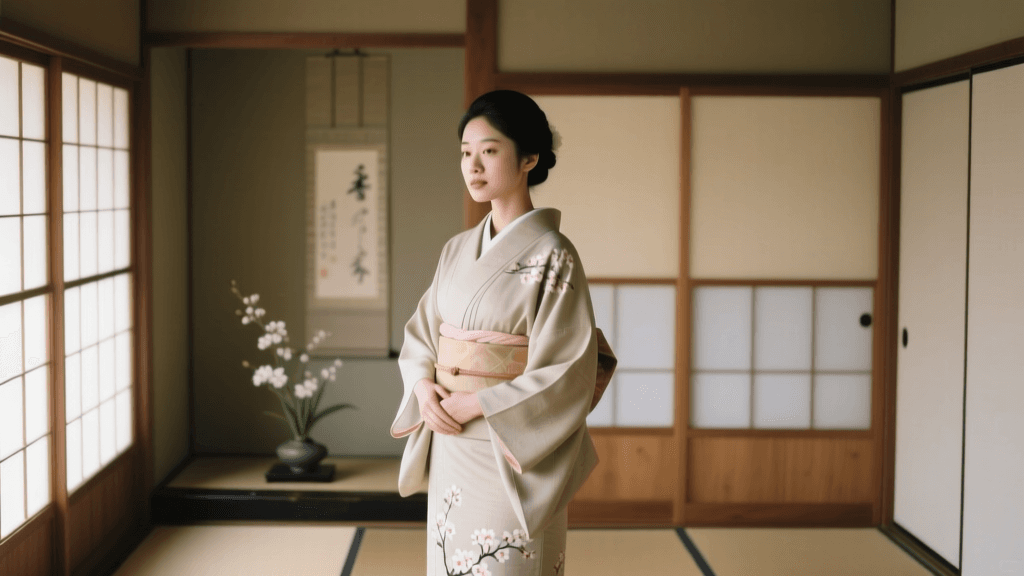
The mother, who is the focal point of the ceremonial dressing alongside the baby, typically wears a Houmongi (visiting kimono) or an Iromuji (solid-colored kimono with a single family crest). In 2026, there is a strong preference among young mothers for pastel-toned Houmongi with subtle yuzen dyeing, avoiding overly flashy gold leaf work to maintain an air of refined elegance appropriate for a shrine setting. The father usually wears a formal Western suit or, less commonly, a formal montsuki hakama ensemble.
Seijin-shiki: The Coming-of-Age Ceremony
Held annually on the second Monday of January, Seijin-shiki celebrates those who have reached the age of majority. Although Japan officially lowered the legal age of adulthood to 18 in 2022, the cultural tradition of celebrating with kimono at age 20 remains a vibrant, fiercely protected cornerstone of 2026 society. Municipalities across the country host ceremonies, and the streets are flooded with breathtaking silk garments.
The Furisode: A Masterpiece of Silk
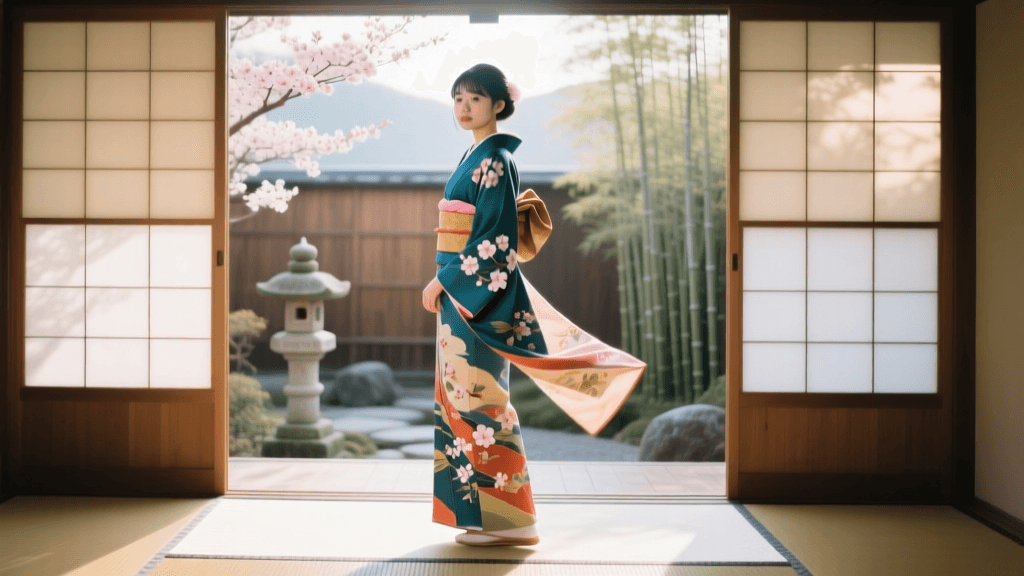
Unmarried young women mark this occasion by wearing a furisode, a highly formal kimono characterized by its dramatically long, swinging sleeves. The sleeve length denotes the formality and the wearer's status: oburisode (approx. 114 cm), chuburisode (approx. 100 cm), and koburisode (approx. 85 cm). The chuburisode is the most popular choice in 2026 due to its balance of visual impact and practical mobility.
The motifs on a furisode are sprawling and continuous, often flowing across the back and shoulders in a style called e-ba. Classic motifs include cranes, pine trees, and flowing water. However, 2026 trends have seen a surge in digital yuzen printing combined with traditional hand-painting, allowing for hyper-detailed, contemporary artistic expressions—such as abstract geometric overlays on classic floral backgrounds—while significantly reducing the water waste associated with traditional paste-resist dyeing.
The obi is tied in elaborate, sculptural knots at the back, such as the fukura-suzume (puffed sparrow) or tateya-musubi (standing arrow). Coordinating accessories, including kanzashi (hair ornaments), zori (sandals), and a plush shigoki sash, complete the ensemble.
Mourning and Memorial Ceremonies (Obon and Funerals)
While birth and coming-of-age are celebrations of life, Japanese tradition places equal, if not greater, emphasis on the veneration of ancestors and the proper mourning of the deceased. The rules governing mourning attire (mofuku) are the most rigid in the entire kimono lexicon.
Mofuku and Iromofuku: The Rules of Mourning
For a funeral or the immediate mourning period, close family members wear Mofuku. This is a completely solid black kimono made of matte silk (often ro for summer or matte habutae for winter). It must bear five family crests (itsutsu-mon) dyed in white, located on the center back, the back of the sleeves, and the front lapels. The obi, obijime (cord), and obiage (sash) must also be strictly black or matte white. Glossy fabrics, shiny threads, and any hint of color are strictly forbidden, as they are considered disrespectful to the solemnity of the event.
As time passes, subsequent memorial services—such as the 49-day ceremony, the first Obon, and the 3rd, 7th, 13th, and 33rd anniversaries—allow for a transition into Iromofuku (half-mourning attire). In 2026, Iromofuku utilizes subdued, muted colors such as murasaki (deep purple), hai-iro (slate grey), kon-iro (navy), and ebicha (dark brown). These garments typically feature one or three family crests. The obi can feature subtle, non-celebratory patterns in silver or matte gold, but bright colors and festive motifs like cranes or cherry blossoms remain entirely taboo.
2026 Ceremonial Kimono Cost and Rental Comparison
The economic landscape of 2026 has seen a rise in the cost of raw silk, pushing the price of newly commissioned, hand-dyed kimono higher than in previous decades. Consequently, the high-end rental market and the vintage 'recycle kimono' sector have exploded in popularity. Below is a comparative breakdown of estimated costs for family ceremonies in 2026.
| Ceremony | Primary Garment | Key Features & Crests | 2026 Avg. Rental Cost (JPY) | 2026 Avg. Purchase Cost (JPY) |
|---|---|---|---|---|
| Omiyamairi (Birth) | Miyamairi-gi (Baby) / Houmongi (Mother) | Auspicious motifs / 1 to 3 Crests | ¥20,000 - ¥35,000 (Package) | ¥150,000 - ¥300,000 |
| Seijin-shiki (Coming-of-Age) | Furisode | Long sleeves, 3 to 5 Crests, E-ba pattern | ¥60,000 - ¥120,000 | ¥350,000 - ¥800,000+ |
| Funeral (Immediate Mourning) | Mofuku | Matte black silk, 5 White Crests | ¥15,000 - ¥25,000 | ¥80,000 - ¥150,000 |
| Memorial / Obon (Half-Mourning) | Iromofuku | Muted colors, 1 to 3 Crests | ¥12,000 - ¥20,000 | ¥100,000 - ¥250,000 |
The Anatomy of Ceremonial Kitsuke in 2026
Wearing a kimono, known as kitsuke, is an intricate architectural process. For formal ceremonies, the layering is non-negotiable. The foundation begins with the hadajuban (under-kimono) and susoyoke (half-slip). Over this sits the nagajuban, a full-length undergarment whose collar (han-eri) is the only part visible beneath the main kimono's neckline. In 2026, smart-textile nagajuban made from breathable, moisture-wicking bamboo blends are highly favored for summer ceremonies to combat Japan's increasingly intense heatwaves.
The main kimono is secured using a series of koshihimo (thin cotton ties) and datejime (wide elastic or silk sashes) to ensure the torso is perfectly cylindrical, which is the required silhouette for formal obi tying. The obi itself is supported by an obi-ita (board) to prevent wrinkling and an obi-makura (pillow) to give volume to the back knot. The ensemble is finalized with the obiage (a silk scarf-like cloth hiding the pillow) and the obijime (a braided cord tied over the obi). For Seijin-shiki, young women often spend upwards of 45 minutes in the hands of a professional kitsuke-shi (dresser) to achieve the flawless, sculptural furisode silhouette.
Sourcing, Sustainability, and Heirloom Preservation
The conversation around ceremonial kimono in 2026 is heavily influenced by sustainability. The environmental impact of traditional silk sericulture and chemical dyeing has led many families to seek alternative sourcing methods. According to insights from the Victoria and Albert Museum's extensive Kimono archive, the historical preservation of textiles is deeply tied to the modern practice of repurposing. Today, it is incredibly common for young adults to wear their mother’s or grandmother’s vintage furisode, professionally cleaned and re-tailored (maru-arai and shitate-naoshi) to fit modern proportions.
For mourning attire, many families maintain a shared family mofuku set, passed down and carefully stored in specialized tatou-shi (anti-tarnish paper) inside cedar chests. Because mourning kimono do not follow seasonal fashion trends, a well-maintained mofuku can easily serve three or four generations.
For those looking to purchase or rent, the 2026 market is dominated by hybrid boutiques that offer both new, ethically sourced silk garments and authenticated vintage pieces. As reported in cultural reviews by The Japan Times, the revival of regional weaving techniques—such as Oshima tsumugi and Yuki tsumugi—has been bolstered by government subsidies aimed at preserving intangible cultural properties, ensuring that the artisans who create these masterpieces can continue their craft.
Final Thoughts on Ceremonial Etiquette
Navigating the world of Japanese ceremonial kimono requires a delicate balance of aesthetic appreciation and strict adherence to social protocol. Whether you are wrapping a newborn in the protective silk of a miyamairi-gi, adjusting the sweeping sleeves of a furisode for a coming-of-age photograph, or bowing in silent respect in a matte black mofuku, the garment serves as a profound physical connection to the past. In 2026, while the methods of sourcing and the technologies of textile care may have evolved, the spiritual and cultural weight of the kimono in family ceremonies remains as powerful and essential as ever.