Styling the Japanese Haori with Modern Streetwear in 2026
The Renaissance of the Haori in 2026 Fashion
The global fashion landscape of 2026 is defined by a deliberate departure from fleeting micro-trends, leaning heavily into heritage utility, sustainable practices, and cross-cultural styling. Among the most versatile and striking garments leading this sartorial charge is the Japanese haori. Originally designed as a protective layer worn over the kimono, the haori has transcended its ceremonial roots to become a cornerstone of contemporary, genderless wardrobes. Whether you are navigating the urban commute or attending an avant-garde gallery opening, integrating a traditional Asian piece like the haori into modern streetwear and tailoring offers a masterclass in proportion, texture, and cultural appreciation.
According to the Victoria and Albert Museum, the evolution of Japanese outerwear reflects centuries of shifting social classes and aesthetic philosophies. Today, modern stylists are revisiting these historical silhouettes, finding that the T-shaped, open-front construction of the haori perfectly mirrors the oversized, drop-shoulder outerwear popular in 2026 streetwear. However, unlike mass-produced fast fashion, a genuine haori carries the weight of artisanal craftsmanship, offering a unique narrative that anchors any modern outfit.
Understanding the Anatomy and Proportions
To successfully mix a traditional haori with a modern wardrobe, one must first understand its unique architectural cut. Unlike the kimono, which wraps and overlaps at the front, the haori is designed to hang open. This makes it functionally identical to a modern duster coat, cardigan, or unstructured blazer, allowing it to layer effortlessly over contemporary base garments without adding restrictive bulk around the waist.
Key Structural Elements
- The T-Shape Silhouette: Cut from straight bolts of fabric, the haori lacks Western-style darts or curved seams. This creates a boxy, fluid drape that complements the relaxed, gender-neutral fits dominating 2026 fashion.
- The Haori Himo: These are the decorative, often braided silk ties used to secure the jacket at the chest. In modern styling, these can be left to hang loose for a relaxed vibe, tied in a traditional knot for formal events, or even swapped out for contemporary leather or beaded lanyards.
- The Miyatsukuchi: These are the vertical slits located on the side seams, just under the arms. Originally designed to allow the wearer to reach the obi (sash) of the kimono underneath, today they provide excellent ventilation and allow the jacket to drape cleanly over the hips when sitting or walking.
Three Actionable Ways to Style the Haori in 2026
Mixing heritage garments with contemporary pieces requires a careful balance of textures and proportions. Here are three distinct styling formulas to integrate the haori into your daily rotation this year.
Look 1: The Neo-Tailored Commuter
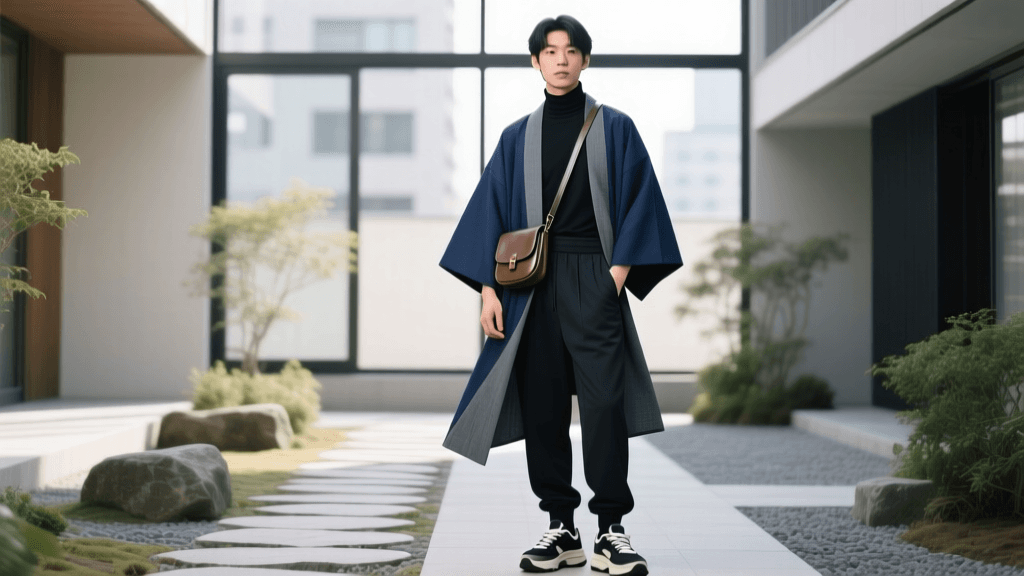
The modern office dress code in 2026 has fully embraced 'soft tailoring' and heritage layering. Swap your standard wool blazer for a solid-colored, crepe silk haori in deep navy, charcoal, or muted olive. Pair this with wide-leg pleated trousers and a fine-gauge merino wool turtleneck. The open front of the haori creates a long, vertical line that elongates the torso, while the wide sleeves add a touch of architectural drama to an otherwise minimalist outfit. Finish with chunky leather loafers or sleek derby shoes to ground the silhouette.
Look 2: Elevated Streetwear and Raw Denim
For weekend wear, the haori acts as the ultimate statement jacket. Source a vintage haori featuring bold, hand-painted motifs or intricate kasuri (ikat) weaving. Because the jacket itself is visually loud, keep the base layers strictly utilitarian. A heavyweight, boxy cotton t-shirt in stark white or washed black provides the perfect canvas. Pair this with rigid, straight-leg raw denim and retro-runner sneakers. The contrast between the delicate, historical silk of the haori and the rugged, tactile nature of raw denim creates a visually arresting tension that is highly prized in modern streetwear circles.
Look 3: Summer Festival Casual
While silk is the traditional standard, 2026 has seen a massive surge in the availability of asa (linen) and cotton-blend haori designed specifically for warmer months. A lightweight, unlined linen haori in a natural beige or indigo dye is perfect for summer evenings. Layer it over a minimalist ribbed tank top and tailored Bermuda shorts. The breathable linen mimics the functionality of modern resort wear while maintaining a distinct cultural identity. Complete the look with woven leather sandals and a structured canvas tote.
Haori Styling Comparison Chart
Use the table below as a quick reference guide to match your haori fabric and styling choices to specific occasions in your modern wardrobe.
| Occasion | Haori Fabric | Base Layer | Bottoms | Footwear |
|---|---|---|---|---|
| Office / Smart Casual | Crepe Silk (Solid) | Fine-gauge Turtleneck | Wide-leg Pleated Trousers | Chunky Loafers |
| Streetwear / Weekend | Vintage Patterned Silk | Heavyweight Boxy Tee | Straight-leg Raw Denim | Retro Runner Sneakers |
| Summer / Resort | Linen (Asa) or Cotton | Ribbed Tank Top | Tailored Bermuda Shorts | Woven Leather Sandals |
| Evening / Formal Event | Yuki-tsumugi Silk | Silk Button-down Shirt | Tapered Tuxedo Trousers | Velvet Slip-ons |
Sourcing Authentic Haori: Vintage vs. Contemporary
As the demand for sustainable, circular fashion peaks in 2026, sourcing authentic Asian garments has become both easier and more nuanced. Buyers generally have two routes: the vintage market and contemporary artisan studios.
The Vintage Market
Vintage haori are abundant and often surprisingly affordable due to the Japanese custom of passing down or recycling garments. Online platforms like Etsy, specialized Instagram curators, and Japanese proxy services offer access to thousands of mid-century pieces. Expect to pay between $120 and $300 for a standard vintage silk haori in good condition. When buying vintage, always check the condition of the silk lining and look for signs of sun fading on the shoulders, which is common in garments stored improperly.
Contemporary Artisan Studios
For those seeking brand-new, ethically produced pieces, contemporary brands in Kyoto and Tokyo are reimagining the haori using modern, washable textiles and sustainable dyes. Prices for new, artisan-crafted haori typically range from $400 to $800. For the ultimate investment piece, collectors seek out haori woven from Yuki-tsumugi silk. Recognized by UNESCO Intangible Cultural Heritage, this highly labor-intensive silk production technique yields a fabric that is incredibly lightweight, warm, and durable, often commanding prices upwards of $1,500.
Care and Maintenance for Heritage Garments
Treating traditional garments with respect ensures their longevity and preserves their structural integrity. The Kyoto Costume Institute emphasizes that proper storage and cleaning are paramount for historical textiles. Never hang a silk haori on a wire or thin wooden hanger, as the weight of the garment will distort the straight shoulder seams over time.
Storage Best Practices
- Fold, Do Not Hang: Traditional Japanese garments are designed to be folded. Store your haori flat in a drawer or on a wide shelf.
- Use Tatoushi: Wrap the folded garment in tatoushi (traditional acid-free paper wrappers) or clean, unbleached cotton cloth to protect it from dust and moisture.
- Avoid Cedar Directly: While cedar chests are popular in the West, the natural oils in cedar can stain delicate silk. Line any wooden storage boxes with acid-free tissue paper.
Cleaning Protocols
Never machine wash or dry clean a vintage silk haori unless absolutely necessary, as modern chemical solvents can strip the fabric of its natural luster and cause the dyes to bleed. For minor odors, air the garment outside in a shaded, well-ventilated area for a few hours. For visible stains, consult a professional textile conservator who specializes in Asian heritage garments rather than a standard local dry cleaner.
Conclusion
The integration of the Japanese haori into modern streetwear and tailored wardrobes is more than just a stylistic choice; it is an embrace of slow fashion, cultural storytelling, and architectural design. By understanding its proportions, sourcing responsibly, and styling it with intention, you can elevate your 2026 wardrobe into a curated collection that bridges the gap between ancient craftsmanship and contemporary life.