Shichi-Go-San to Seijin-shiki: Japanese Coming-of-Age Kimono Guide
The Sartorial Journey of Growing Up in Japan
In Japanese culture, the transition from childhood to adulthood is not merely a biological process but a deeply spiritual and communal journey, intricately woven into the fabric of traditional garments. Unlike many Western cultures where coming-of-age is marked by a single event, Japan celebrates multiple milestones through specific, highly symbolic clothing. From the tender ages of three, five, and seven during the Shichi-Go-San festival to the cusp of legal adulthood at the Seijin-shiki ceremony, traditional Japanese clothing serves as a visual marker of growth, societal role, and familial blessing.
For parents navigating these traditions, or for young adults preparing for their own milestone ceremonies, understanding the nuances of children's kimono and adult formal wear is essential. This guide explores the historical significance, garment specifications, and practical considerations for Japan's most important coming-of-age traditions.
Shichi-Go-San: The First Milestone (Ages 3, 5, and 7)
Held annually on November 15th, Shichi-Go-San (literally "Seven-Five-Three") is a rite of passage for children aged three, five, and seven. Historically, these ages were considered critical thresholds in a child's survival during eras of high infant mortality. Today, families visit Shinto shrines to pray for the continued health and longevity of their children, with the children's attire reflecting their specific age and gender milestones.
Garments and Accessories for Children
The clothing worn during Shichi-Go-San is distinct from adult kimono, prioritizing comfort while introducing children to the aesthetics of traditional Japanese dress.
- Three-Year-Old Girls (and occasionally boys): At age three, girls typically wear a standard children's kimono paired with a hifu—a padded, sleeveless silk vest. The hifu eliminates the need for a complex, tightly tied obi (sash), which would be uncomfortable for a toddler. The outfit is completed with zori sandals and a small hakoseko (decorative pouch).
- Five-Year-Old Boys: This age marks a boy's first time wearing hakama (pleated trousers). The ensemble consists of a kimono, a formal haori (jacket) bearing the family crest (kamon), and striped or solid-colored hakama. A traditional fan (sensu) is often tucked into the front of the hakama.
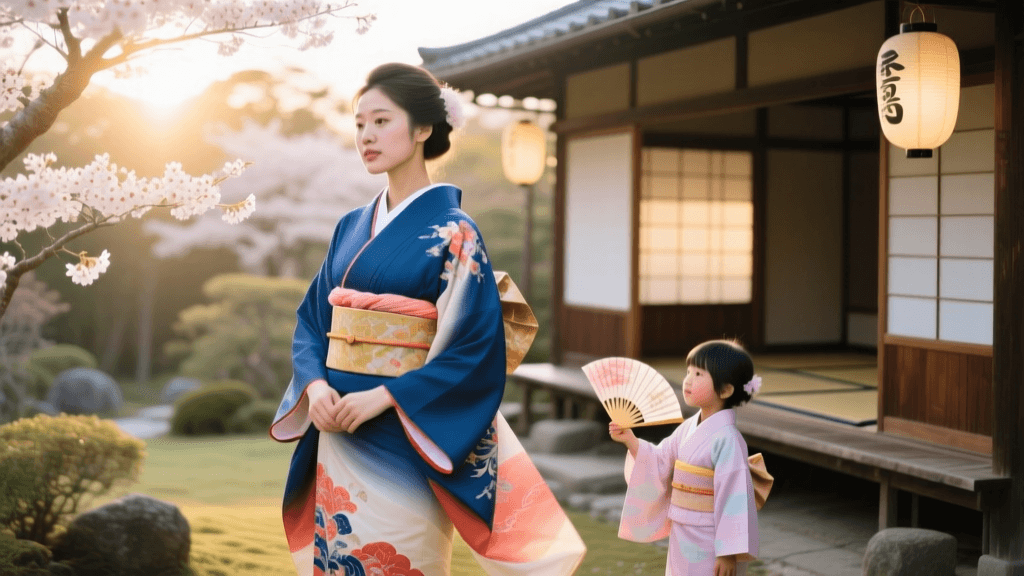
- Seven-Year-Old Girls: This is a major milestone where girls transition from the child-like hifu to wearing a real obi. However, because a full adult obi is too large, they wear a special children's obi tied in a decorative knot, secured with a shigoki (a decorative silk sash tied around the waist) and an obi-jime (braided cord). The sleeves are long, mimicking the furisode style of unmarried adult women, symbolizing youth and warding off evil spirits.
During these shrine visits, children are often given chitose-ame ("thousand-year candy"), long red and white sticks of candy symbolizing longevity, carried in specially designed paper bags featuring cranes and turtles.
Seijin-shiki: The Transition to Adulthood (Age 18-20)
Seijin no Hi (Coming of Age Day) is celebrated on the second Monday of January. It honors those who have reached the age of maturity. While Japan's civil code was amended in April 2022 to lower the legal age of adulthood from 20 to 18, most municipalities and cultural institutions continue to hold the traditional Seijin-shiki ceremonies for 20-year-olds. This is largely because 18-year-olds are typically in the midst of rigorous university entrance examinations, making the age of 20 a more practical and culturally entrenched time for celebration.
The Furisode: A Masterpiece of Youth
For young women, the centerpiece of Seijin-shiki is the furisode, the most formal kimono worn by unmarried women. The defining feature of the furisode is its dramatically long sleeves, which historically served to ward off evil spirits and signal availability for marriage. According to the Tokyo National Museum, the evolution of sleeve lengths in Japanese textiles reflects shifting social norms and aesthetic preferences during the Edo period.
Furisode sleeves are categorized by length:
- Kofurisode (Short Sleeves): Approximately 75-85 cm. Often worn for slightly less formal events or by those preferring a lighter garment.
- Chuburisode (Medium Sleeves): Approximately 90-105 cm. The most common and versatile choice for Coming of Age Day.
- Ohfurisode (Long Sleeves): Approximately 110-125 cm. The most formal and dramatic style, often trailing close to the ground, reserved for the most prestigious ceremonies and brides.
Men’s Coming-of-Age Attire
While Western business suits have become increasingly popular among young men for Seijin-shiki due to convenience and cost, many still opt for traditional formal wear. The traditional male ensemble consists of a monochrome or subtly patterned kimono, a black crested haori jacket bearing the family's kamon, and formal sendaihira (stiff, striped silk) hakama. White tabi socks and woven zori sandals complete the look, projecting an image of mature responsibility and samurai-era dignity.
Comparison Chart: Shichi-Go-San vs. Seijin-shiki
Understanding the differences in scale, cost, and preparation between these two milestones is crucial for families planning their budgets and timelines.
| Feature | Shichi-Go-San (Girls, Age 7) | Seijin-shiki (Women, Age 20) |
|---|---|---|
| Primary Garment | Children's Kimono with Shigoki | Furisode (Long-sleeved Kimono) |
| Sleeve Length | Standard Children's Length | Chuburisode or Ohfurisode (90-125 cm) |
| Obi Style | Soft, pre-tied or simplified Obi | Formal Maru or Fukuro Obi (complex knots) |
| Average Rental Cost | ¥15,000 - ¥30,000 ($100 - $200 USD) | ¥80,000 - ¥250,000+ ($550 - $1,700+ USD) |
| Booking Lead Time | 3 to 6 months in advance | 12 to 18 months in advance |
| Dressing Time | 30 - 45 minutes | 90 - 120 minutes |
Practical Guide: Rentals, Undergarments, and Preparation
Navigating the logistics of traditional Japanese clothing can be daunting. As noted by cultural experts at Japan Guide's Coming of Age Day resource, the modern kimono industry relies heavily on comprehensive rental packages, especially for Seijin-shiki, due to the exorbitant costs of purchasing silk garments and the specialized knowledge required for maintenance.
The Hidden Complexity of Undergarments
A kimono is not simply slipped on; it is constructed on the body using a precise system of undergarments and tying cords. For a proper furisode fitting, the following layers are mandatory:
- Hadajuban: A thin, cotton or silk under-robe worn directly against the skin to absorb sweat and protect the expensive outer silk.
- Nagajuban: The main kimono slip, usually made of silk or synthetic washable silk. Only the collar (han-eri) and the bottom hem of the nagajuban are visible beneath the furisode.
- Koshi-himo: Long, narrow cotton sashes used to tie the kimono and nagajuban securely at the waist and hips. A full dressing requires 4 to 6 koshi-himo.
- Date-jime: A wider, elasticized or silk sash wrapped over the koshi-himo to smooth out bumps and create a cylindrical torso shape, which is essential for the kimono to drape correctly.
- Obi-makura and Obi-ita: Padding used to give the obi knot volume and a rigid board inserted into the obi to keep the front perfectly flat and wrinkle-free.
Actionable Advice for Booking and Budgeting
If you are planning for a child's Shichi-Go-San or a young adult's Seijin-shiki, follow these industry-standard timelines and tips:
- Timing is Everything: For Seijin-shiki, popular patterns and colors (like classic reds, deep purples, and modern pastels) are reserved up to a year and a half in advance. Book your rental package by the spring of the preceding year.
- Understand the Package: Most Japanese kimono rental shops offer "full-set" packages. Ensure your quote includes the garment rental, dressing service (kitsuke), hair styling, makeup, and professional photography. Standalone dressing services typically cost between ¥5,000 and ¥10,000 if you already own the garment.
- Footwear Considerations: Rental zori sandals are often provided, but they are notoriously stiff. For children participating in Shichi-Go-San, buy a half-size larger pair of traditional sandals and have them wear thick tabi socks to prevent blisters during shrine walks. For Seijin-shiki, bring bandages and toe protectors, as the formal footwear can be unforgiving on winter streets.
- Weather Contingencies: Both November (Shichi-Go-San) and January (Seijin-shiki) are cold in Japan. Invest in specialized kimono under-layers like the haramaki (belly warmer) and thermal tabi socks. For outerwear, young women often rent a plush shawl or a formal haori coat, while children use the aforementioned hifu or a woolen cape.
Preserving the Heritage
Whether it is a toddler clutching a bag of thousand-year candy or a university student adjusting her long furisode sleeves in the winter chill, these garments are more than mere clothing. They are living artifacts that connect modern Japanese youth to centuries of ancestral tradition. As highlighted in the cultural overviews provided by Japan Guide's Shichi-Go-San documentation, the continued participation in these rituals ensures that the intricate arts of silk weaving, dyeing, and kimono dressing survive in the contemporary era. By understanding the profound symbolism and practical requirements of these garments, families can fully embrace the beauty of Japan's sartorial coming-of-age journey.