Sustainable Japanese Natural Dye Plants & Eco Methods 2026
The Renaissance of Japanese Botanical Dyeing in 2026
As the global textile industry faces mounting pressure to reduce its environmental footprint, the ancient art of Japanese natural dyeing has emerged as a cornerstone of sustainable fashion in 2026. Moving far beyond a mere nostalgic trend, contemporary artisans and eco-conscious studios are leveraging traditional Japanese botanicals to create vibrant, colorfast textiles without the toxic runoff associated with synthetic petrochemical dyes. This resurgence is deeply tied to regenerative agriculture, zero-waste studio practices, and a profound respect for the natural life cycle of garments.
Unlike the fast-fashion model that dominated the early 21st century, the 2026 approach to textile coloration prioritizes soil health, water conservation, and biodegradable inputs. Japanese dye plants, cultivated for centuries in regions like Tokushima and Kyoto, offer a masterclass in ecological harmony. By utilizing the entire plant and relying on organic reducing agents and upcycled mordants, modern dyers are proving that luxury and sustainability can coexist beautifully on the global runway and in everyday wardrobes.
Top Sustainable Japanese Dye Plants for Eco-Conscious Studios
The foundation of any natural dye practice lies in the selection of botanicals. In Japan, specific plants have been cultivated not just for their color yield, but for their antimicrobial properties, insect-repelling qualities, and ability to strengthen natural fibers. Below are the premier sustainable dye plants dominating the eco-textile space this year.
Ai (Japanese Indigo) and the Organic Fructose Vat
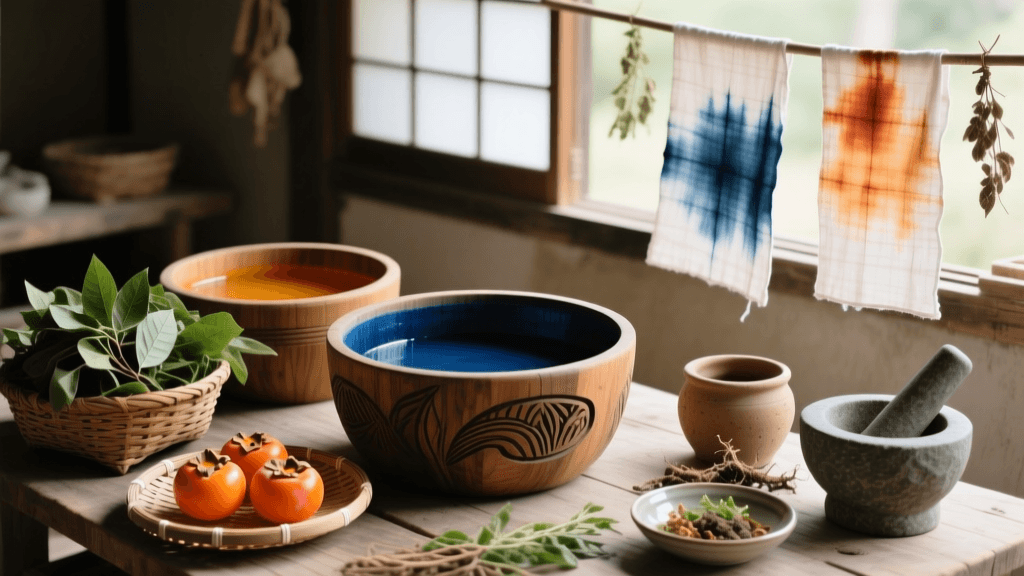
Polygonum tinctorium, known as ai in Japan, remains the undisputed king of botanical dyes. Unlike tropical indigo (Indigofera tinctoria), Japanese indigo thrives in temperate climates and can be grown in small-scale regenerative plots. The leaves are harvested, composted, and fermented into sukumo (dried indigo leaves). In 2026, the most significant eco-friendly advancement in ai dyeing is the widespread adoption of the organic fructose vat. By replacing toxic sodium hydrosulfite (a heavy chemical reducing agent) with organic fruit sugars and wood ash lye, studios can maintain a biologically active, non-toxic vat that safely nourishes the soil when eventually retired.
Kakishibu (Persimmon Tannin) for Zero-Waste Finishing
Extracted from the unripe, astringent fruit of the Diospyros kaki tree, kakishibu is a powerhouse of sustainable textile finishing. It requires absolutely no mordant to bind to cellulose fibers like cotton, hemp, and linen. When applied to fabric and exposed to ultraviolet sunlight, kakishibu polymerizes, creating a water-resistant, antibacterial, and incredibly durable finish known as shibu-zome. In 2026, outdoor apparel brands and travel gear designers are increasingly utilizing kakishibu as a natural alternative to PFAS (forever chemicals) for water-repellent coatings.
Kihada (Amur Cork Tree) and Upcycled Mordants
The inner bark of the Phellodendron amurense tree yields a brilliant, fluorescent yellow due to its high berberine content. Historically used to dye sacred Buddhist sutras because of its insect-repelling properties, kihada is now a staple for sustainable yellow hues. To ensure the preservation of wild Amur Cork Trees, ethical studios in 2026 source kihada exclusively from managed forestry thinning operations or upcycled timber industry byproducts, ensuring no trees are felled solely for dye extraction.
Eco-Friendly Methods: Ditching Heavy Metal Mordants
Historically, natural dyeing relied heavily on heavy metal mordants like chrome, copper, and tin to fix colors to fibers. However, these metals pose severe risks to aquatic ecosystems and human health. Aligning with the US EPA's Principles of Green Chemistry, the 2026 standard for Japanese botanical dyeing strictly prohibits toxic metals in favor of bio-based and upcycled alternatives.
- Soy Milk (Protein Binder): Cellulose fibers (cotton, linen) are pre-treated with diluted, unflavored soy milk. The plant proteins act as a bridge, allowing tannins and indigo to bond permanently to the fiber without metallic salts.
- Wood Ash Lye (Alkaline Modifier): Hardwood ash soaked in rainwater creates a natural, potassium-rich alkaline solution. This is essential for extracting color from certain barks and for maintaining the pH of an organic indigo vat.
- Dorozome (Iron-Rich Mud): Sourced from specific iron-rich rice paddies, this mud is used to shift yellows and reds into deep, complex olives, greys, and blacks. The iron acts as a natural mordant, and the mud is safely returned to the earth after use.
- Umezu (Plum Vinegar): A byproduct of pickling umeboshi plums, this acidic liquid is used to lower pH and shift anthocyanin-based colors (like red shiso or purple sweet potato) toward vibrant pinks and crimsons.
Step-by-Step: Building a Sustainable Ai (Indigo) Vat at Home
Creating a small-scale, eco-friendly indigo vat is entirely achievable for home dyers and boutique studios. This 2026 fructose recipe ensures a non-toxic, odor-friendly process that yields the iconic deep blues of traditional Japanese workwear.
Ingredients & Equipment:
- 100g sukumo (fermented Japanese indigo leaves)
- 30g calcium hydroxide (pickling lime) or traditional wood ash lye
- 40g organic fructose powder or mellow honey (reducing agent)
- 5 liters of distilled or clean rainwater
- A stainless steel or enamel pot with a tight-fitting lid
- A digital thermometer and pH strips
The Process:
- Preparation: Heat the water to exactly 50°C (122°F). Temperature control is critical; too hot, and you will kill the indigo-reducing bacteria; too cold, and the reduction will not occur.
- Alkalinity: Stir in the calcium hydroxide. Test the water; the pH should be between 9.5 and 11. This alkaline environment is necessary for the indigo to dissolve.
- Reduction: Add the fructose and stir gently to avoid introducing oxygen. Finally, add the sukumo.
- Incubation: Cover the pot tightly to exclude oxygen. Wrap it in thick towels to maintain the 50°C temperature. Let it rest for 24 to 48 hours.
- The Reveal: Pull back the surface crust (the ai no hana or 'indigo flower'). The liquid beneath should be a deep, amber-yellow. When a drop is exposed to air, it should instantly turn blue.
- Dyeing: Submerge your pre-scoured, soy-milk-treated fabric. Massage it gently under the surface for 10 minutes. Remove, squeeze gently, and watch the magic of oxidation as the fabric turns from yellow to green, and finally to a rich, deep blue.
"The beauty of the organic fructose vat is that it is a living ecosystem. With proper feeding and temperature management, a single 5-liter vat can remain active and productive for over a year, dyeing hundreds of garments without a single drop of toxic chemical runoff." — Master Dyer, Tokushima Prefecture.
Comparative Analysis: Synthetic vs. Botanical Dyes in 2026
To understand the true impact of shifting to Japanese natural dye plants, it is essential to compare them against conventional synthetic alternatives across key environmental and economic metrics relevant to the current market.
| Metric | Synthetic Indigo (Petrochemical) | Japanese Ai (Organic Fructose Vat) | Kakishibu (Persimmon Tannin) |
|---|---|---|---|
| Primary Input | Aniline (derived from petroleum) | Fermented Polygonum tinctorium leaves | Unripe Diospyros kaki fruit juice |
| Reducing Agent | Sodium hydrosulfite (toxic, corrosive) | Organic fructose / honey | None required (oxidative curing) |
| Water Footprint (L/kg) | 11,000+ (including cotton growing & dyeing) | 2,500 (rainwater reliant, vat recycled) | 1,800 (low-water extraction process) |
| Effluent Toxicity | High (heavy metals, formaldehyde) | Zero (compostable, soil-enriching) | Zero (biodegradable, antimicrobial) |
| 2026 Studio Cost (USD/100g) | $0.50 (cheap but high remediation cost) | $12.00 (supports regenerative farming) | $8.50 (upcycled agricultural byproduct) |
| Fiber Degradation | Accelerates cellulose breakdown | Neutral to protective | Significantly strengthens and preserves |
Sourcing Authentic Seeds and Extracts in 2026
As demand for heritage textiles grows, the supply chain for authentic Japanese dye plants has become more robust and transparent. The Slow Food Foundation for Biodiversity has been instrumental in 2026 in cataloging and protecting heritage seed varieties of Polygonum tinctorium, ensuring that small-scale farmers in Japan can continue to cultivate indigenous strains without resorting to genetically modified or pesticide-heavy alternatives.
For international studios and hobbyists, sourcing has shifted away from opaque online marketplaces toward direct-to-farmer cooperatives. Organizations adhering to the Food and Agriculture Organization's Non-Wood Forest Products guidelines have established certified supply chains for wild-harvested botanicals like kihada and kurume (walnut). When purchasing extracts or raw materials in 2026, always look for certifications indicating regenerative farming practices, fair labor compensation, and the absence of synthetic pesticides. Authentic sukumo should carry the distinct, earthy aroma of a forest floor after rain, while pure kakishibu should smell sharply of fermented fruit and wood smoke.
Conclusion: The Future is Rooted in the Past
The integration of Japanese natural dye plants into modern, sustainable fashion is not merely an aesthetic choice; it is a vital ecological intervention. By embracing the organic fructose indigo vat, utilizing zero-waste mordants like soy milk and iron mud, and leveraging the protective qualities of kakishibu, the textile community in 2026 is redefining what it means to create beautiful, lasting garments. As we continue to confront the environmental realities of global consumption, the ancient wisdom of Japanese botanical dyeing offers a clear, vibrant, and deeply sustainable path forward. Whether you are a boutique designer seeking to differentiate your brand or a home crafter looking to align your hobbies with your environmental values, the plants and methods detailed above provide a comprehensive roadmap to eco-friendly coloration.