Heian to Edo Kimono: Historical Layers & Modern Styling
The Evolution of Japanese Garments: From Courtly Layers to Merchant Elegance
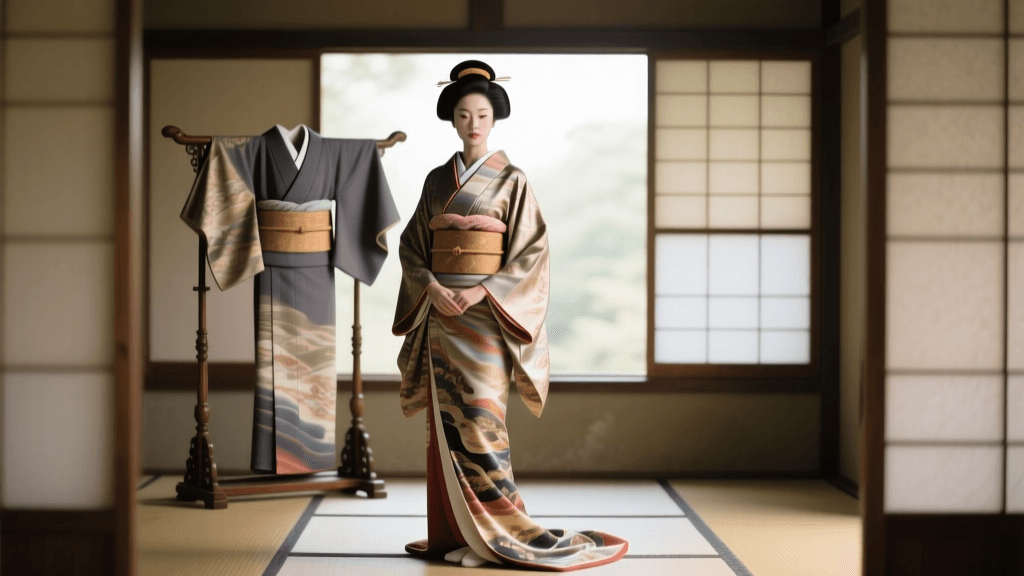
The traditional Japanese kimono is often perceived by the modern observer as a static, unchanging garment. However, the reality of Japanese sartorial history is one of profound transformation, driven by shifting political powers, evolving social hierarchies, and changing aesthetic philosophies. To truly understand the kimono, one must examine its dramatic evolution from the opulent, multi-layered ensembles of the Heian period to the streamlined, highly decorated kosode of the Edo period. For contemporary enthusiasts and collectors, understanding these historical periods is not merely an academic exercise; it provides a foundational blueprint for sourcing, styling, and wearing traditional garments today with historical accuracy and modern elegance.
Heian Period (794–1185): The Art of Layering and the Jūnihitoe
The Heian period represents the zenith of Japanese courtly culture, an era where aesthetics and literary pursuits were the primary markers of social standing. The defining garment of this era for aristocratic women was the jūnihitoe, or 'twelve-layer robe.' According to the Kyoto National Museum, this ensemble was not strictly limited to twelve layers, but rather consisted of a complex, highly regulated system of unlined and lined silk robes worn over a basic kosode (undergarment) and hakama (pleated trousers).
The true genius of Heian fashion lay in the concept of kasane no irome—the art of layered color combinations. Because the robes were cut in identical, wide-angled shapes, the visual interest was entirely dependent on the precise arrangement of collars, sleeve edges, and hemlines. A sophisticated Heian courtier would spend hours arranging her layers to reflect the exact micro-season, utilizing specific color pairings such as 'under-snow plum' (white over crimson) for late winter, or 'autumn leaves' (various shades of amber and red) for November.
The Weight and Structure of Courtly Dress
The sheer volume of the jūnihitoe was staggering. A full formal ensemble could weigh up to 20 kilograms (44 pounds), severely restricting the wearer's movement and reinforcing the sedentary, contemplative lifestyle expected of high-ranking court women. The garments were constructed using straight-line cutting, utilizing entire bolts of silk (tanmono) without wasting fabric, a principle that remains central to kimono construction today.
Edo Period (1603–1867): The Rise of the Kosode and the Obi
Fast forward several centuries to the Edo period, a time of prolonged peace under the Tokugawa shogunate. The center of cultural gravity shifted from the insulated imperial court in Kyoto to the bustling, merchant-driven cities of Edo (modern Tokyo) and Osaka. The kosode, which had been a mere undergarment in the Heian period, emerged as the primary outer garment for both men and women of all classes. As noted by The Metropolitan Museum of Art, it was during the Edo period that the kosode evolved into what we now globally recognize as the modern kimono.
The Edo period also saw the dramatic transformation of the obi. In earlier centuries, the obi was a narrow, functional cord used simply to keep the robes closed. By the mid-Edo period, as the outer kosode became more heavily decorated with the advent of yuzen resist-dyeing techniques, the obi widened significantly to avoid covering the intricate artwork. It transitioned from a hidden functional tie to a massive, highly visible decorative sash, eventually giving rise to complex tying methods like the taiko musubi (drum knot) and bunko musubi (library knot).
Sumptuary Laws and the Aesthetic of Iki
The Tokugawa shogunate frequently enacted ken'yakurei (sumptuary laws) to prevent the wealthy merchant class (chonin) from dressing above their social station. These laws banned flashy colors, expensive silks, and overt displays of wealth. In response, the merchants developed the aesthetic of iki—subdued, hidden elegance. They wore kimonos in muted, earthy tones (known as the 'four browns and greys') but lined them with outrageously expensive, vibrantly dyed silks that were only visible when walking or sitting. This historical rebellion birthed the modern appreciation for subtle, high-quality textiles and exquisite inner linings (hakkake).
Comparison Chart: Heian vs. Edo Garment Structures
| Feature | Heian Period (Jūnihitoe) | Edo Period (Kosode / Kimono) |
|---|---|---|
| Primary Outer Garment | Multiple layered uchigi and kariginu | Single-layer or lightly lined kosode |
| Sleeve Style | Extremely wide, open, and unattached at the side | Tubular sleeves with a small opening (kosode means 'small sleeve') |
| The Obi (Sash) | Narrow, functional, tied in the front, mostly hidden | Wide, highly decorative, tied in elaborate knots at the back |
| Visual Focus | Layered collar and hem color combinations | Surface decoration (dyeing, embroidery, gold leaf) |
| Average Weight | 10 to 20+ kilograms | 1.5 to 3 kilograms (depending on lining and accessories) |
Actionable Guide: Recreating Historical Layering Today
For modern practitioners of kitsuke (the art of kimono dressing), integrating historical elements into contemporary wear is a highly rewarding pursuit. According to the Victoria and Albert Museum, the kimono is a living garment that continually adapts to modern contexts while retaining its historical DNA. Here is how you can practically apply Heian and Edo styling techniques today.
1. Heian-Inspired Collar Layering (Kasane-Eri)
You do not need to wear 20 kilograms of silk to achieve the Heian aesthetic. You can replicate the kasane no irome using a modern accessory called a kasane-eri (layered collar). Action Steps:
- Product: Purchase a modern kasane-eri set, which consists of two or three thin, stiffened silk or synthetic collars sewn together.
- Application: Baste or pin this layered collar onto your nagajuban (under-robe) before putting on your outer kimono. Ensure exactly 2-3 millimeters of each underlying color peeks out at the nape of the neck and the front collar.
- Cost: A high-quality synthetic or vintage silk kasane-eri costs between $25 and $45 USD.
2. Edo-Inspired Subdued Elegance (Iki Styling)
To capture the rebellious elegance of the Edo merchant class, focus on the contrast between a subdued exterior and a vibrant interior. Action Steps:
- Product Selection: Source a vintage tsumugi (pongee silk) or komon (micro-patterned) kimono in muted greys, browns, or navy blues. These can be found at Japanese vintage auctions or specialized online retailers for $150 to $400 USD.
- The Reveal: Pair this with a hakkake (lower lining) or a haori (jacket) that features a brilliantly dyed yuzen interior. The flash of color should only be visible when you sit, walk, or remove the haori.
- Obi Choice: Use a fukuro obi with a subtle woven metallic pattern rather than a loud, painted design.
3. Essential Measurements and Timing
When sourcing historical or vintage garments, modern sizing rarely applies. You must understand traditional measurements to ensure a proper fit.
- Yuki (Sleeve Length): Measured from the center back of the neck, across the shoulder, and down to the wrist. Standard modern yuki is 63-68cm. Vintage Edo/Meiji garments often have shorter yuki (58-62cm), which will require you to wear the kimono with a deeper ohashori (waist fold) or accept a slightly retro, cropped sleeve look.
- Mitake (Back Length): Measured from the nape of the neck to the ankle. Modern standard is 150-160cm. If your vintage kimono is shorter (140cm), it is best worn as an indoor robe or styled with modern trousers, as creating a waist fold will make the hem too short.
- Timing: Allocate 45 minutes for a full Heian-inspired layered look (including collar basting and precise adjustments). For a standard Edo-style bunko obi knot over a single kimono, allocate 20 minutes once you are practiced.
Sourcing and Cost Guide for Historical Garments
| Garment / Accessory | Historical Era Inspiration | Estimated Cost (USD) | Sourcing Advice |
|---|---|---|---|
| Kasane-Eri (Layered Collar) | Heian Period | $25 - $45 | Search online kimono retailers; look for seasonal color sets. |
| Vintage Tsumugi Kimono | Edo / Meiji Period | $150 - $400 | Check specialized Japanese vintage exporters; verify for silk rot. |
| Silk Datejime (Tying Belt) | Edo Period | $30 - $60 | Essential for securing the waist before tying the wide obi. |
| Maru Obi (Fully Patterned) | Late Edo / Taisho | $300 - $800+ | Heavy and formal; best for collectors or very formal stage wear. |
Conclusion
The journey from the Heian jūnihitoe to the Edo kosode is a testament to the adaptability and enduring appeal of Japanese textile arts. While the heavy, restrictive layers of the imperial court gave way to the expressive, surface-decorated garments of the merchant class, the underlying principles of seasonal awareness, structural geometry, and hidden elegance remain intact. By understanding these historical periods, modern wearers can move beyond simply 'putting on a kimono' to actively participating in a centuries-old sartorial dialogue, blending historical reverence with contemporary personal style.