Best Hanfu Styles For Qigong Meditation In 2026 Reviewed
The Intersection of Sartorial Tradition and Mindful Movement
In 2026, the global wellness movement has fully embraced the integration of mindful movement, traditional medicine, and intentional living. As practitioners seek deeper connections to ancient holistic practices, the clothing worn during these sessions has become just as important as the movements themselves. Enter Hanfu—the traditional clothing of the Han Chinese people. Far from being mere historical costumes or photogenic garments for social media, specific Hanfu silhouettes are experiencing a massive resurgence as functional wellness wear. For practitioners of Qigong, Tai Chi, and deep meditation, the structural design of traditional Chinese robes offers biomechanical and energetic advantages that modern, compressive activewear simply cannot match.
According to the National Qigong Association, the practice relies on the cultivation and unimpeded flow of life energy (Qi) through the body's meridian system. This requires both intense mental focus and absolute physical ease. When clothing restricts the lymphatic system, compresses the abdomen, or limits the range of motion in the shoulders, the flow of Qi is physically hindered. Hanfu, with its emphasis on natural drape, wide sleeves, and unrestrictive waistlines, provides the perfect sartorial environment for energy cultivation.
Why Modern Activewear Falls Short for Qigong
Modern athletic wear is engineered for high-impact, sweat-heavy activities. Materials like spandex, nylon, and polyester blends are designed to compress muscles and wick moisture rapidly. However, Qigong and meditation are low-impact, internally focused practices. Compression garments can restrict the subtle fascial gliding required for deep Tai Chi stances and limit the diaphragmatic breathing essential for meditation. Furthermore, synthetic fabrics trap heat and disrupt the body's natural thermoregulation, which contradicts the traditional Chinese medicine principle of maintaining a balanced, breathable microclimate against the skin. In 2026, wellness studios across Asia and the West are increasingly recommending natural, loose-fitting traditional garments to optimize the meditative experience.
Top Hanfu Silhouettes for Meditation and Qigong in 2026
Not all Hanfu styles are suited for movement. Highly structured ceremonial garments or heavily layered court dresses are impractical. However, several historically grounded silhouettes are perfect for wellness practices.
1. The Daopao (Daoist Robe)
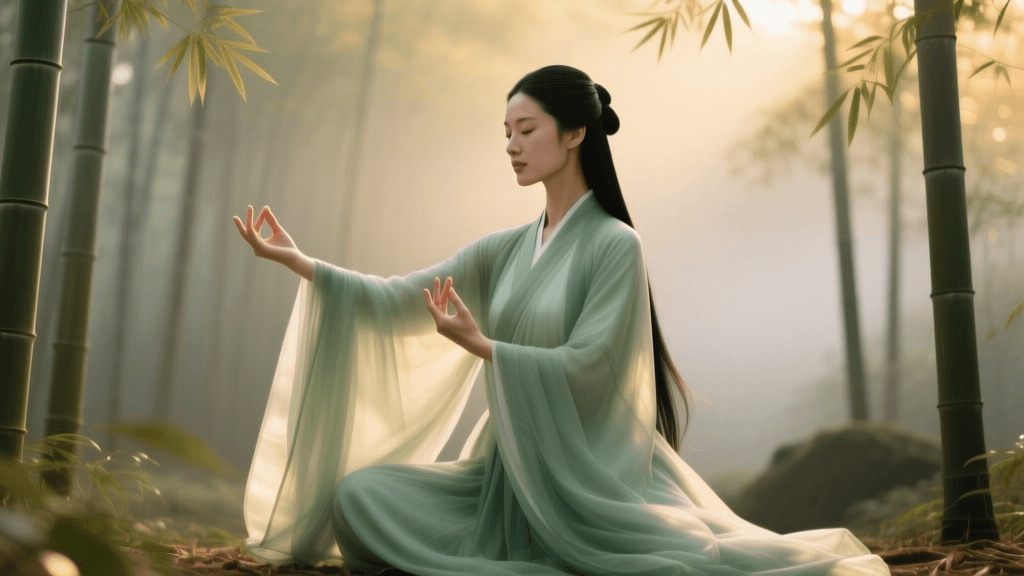
The Daopao is a traditional one-piece robe with wide sleeves and side slits that allow for deep stances and unrestricted leg movement. Historically worn by Daoist monks and scholars, its design inherently promotes a sense of grounding and tranquility. The wide sleeves (Guangxiu) allow the arms to float effortlessly during Qigong forms like 'Cloud Hands,' while the cross-collar (Jiaoling) gently hugs the neck without choking, protecting the vital Fengchi acupoints from drafts during outdoor morning meditation.
2. Jiaoling Ruqun (Cross-Collar Top and Skirt)
For more active Qigong routines or Tai Chi sword forms, the Jiaoling Ruqun offers excellent modularity. The top is typically tucked into a high-waisted, wide-swinging skirt. This separates the garment into two pieces, allowing for greater hip mobility while maintaining the traditional aesthetic. In 2026, many wellness brands offer modernized Ruqun sets with hidden elasticated waistbands and lightweight, breathable linens specifically tailored for morning park routines.
3. Shenyi (Deep Robe)
The Shenyi is a full-body robe that connects the top and bottom into a single garment, symbolizing the unity of heaven and humanity. Its generous cut and flowing hem make it an excellent choice for seated meditation and slow, standing Zhan Zhuang (post-standing) practices. The continuous drape of the fabric helps practitioners feel a physical boundary that contains and focuses their internal energy.
Fabric Selection: The 2026 Wellness Textile Guide
The material of your Hanfu is just as critical as the cut. In 2026, the market has seen a surge in eco-friendly, naturally dyed textiles that align with the holistic wellness ethos. Synthetic fabrics must be avoided to allow the skin to breathe and the body's electromagnetic field to remain ungrounded by petrochemicals.
| Fabric Type | Breathability | Drape & Weight | Best Practice | 2026 Avg. Cost (USD) |
|---|---|---|---|---|
| 100% Ramie Linen | Exceptional | Crisp, lightweight, structured | Summer Qigong, active Tai Chi | $65 - $110 |
| Mulberry Peace Silk | High | Fluid, heavy, luxurious | Seated meditation, indoor retreats | $140 - $250 |
| Bamboo-Cotton Blend | Very High | Soft, stretchy, forgiving | Daily morning routines, beginners | $45 - $85 |
| Organic Hemp | Moderate | Textured, durable, heavy | Outdoor grounding, Zhan Zhuang | $80 - $130 |
Bamboo-cotton blends have become the standout favorite in 2026 due to their natural antibacterial properties, incredible softness, and sustainable harvesting methods. For those practicing in humid climates, Ramie linen remains the undisputed champion of thermoregulation.
Proper Fit and Measurements for Unrestricted Qi
When ordering or tailoring Hanfu for wellness, standard fashion measurements do not apply. You must prioritize the 'ease' of the garment. Here are the critical 2026 fitting guidelines for Qigong practitioners:
- Sleeve Width: Ensure the sleeve opening (or the widest part of the Guangxiu) is at least 45 cm in circumference. This prevents the fabric from binding the elbows during the 'Parting the Wild Horse's Mane' posture.
- Skirt Hemline: For standing practices, the skirt or robe hem should rest exactly 2 to 3 cm above the ankle bone. This prevents tripping during stepping forms while allowing the ankles to remain flexible and grounded.
- Shoulder Seam: Traditional Hanfu features a dropped shoulder seam. Ensure the seam falls at least 5 cm past your natural shoulder joint to allow the rotator cuff to move freely without fabric tension.
- Collar Tension: The inner collar must lay flat against the collarbone without pulling. A tight collar restricts the Ren Mai (Conception Vessel) meridian, which runs up the center of the chest and throat.
A 15-Minute Morning Hanfu Qigong Routine
To fully experience the synergy between traditional garments and mindful movement, try this foundational 15-minute routine in your Daopao or Ruqun.
Phase 1: Grounding and Centering (5 Minutes)
Stand with feet shoulder-width apart. Allow the wide sleeves of your Hanfu to drape naturally over your hands. Close your eyes and focus on diaphragmatic breathing. Feel the weight of the natural fabric pulling gently downward, aiding your physical grounding into the earth. Visualize your Qi sinking to your Dantian (lower abdomen), unhindered by tight waistbands.
Phase 2: Opening the Meridians (5 Minutes)
Perform the 'Two Hands Hold up the Heavens' movement. As you raise your arms, the wide sleeves will slide down your forearms, exposing the wrists and allowing fresh air to stimulate the Pericardium meridian points. The lack of elastic cuffs ensures that blood and lymphatic flow are never restricted at the extremities.
Phase 3: Gathering the Energy (5 Minutes)
Transition into 'Gathering Qi to the Dantian.' As you sweep your arms in wide, circular motions, the generous yardage of the Hanfu fabric moves with you, creating a physical sensation of 'sweeping' or 'pulling' the ambient air. This tactile feedback enhances the mind-body connection, making the visualization of energy gathering much more vivid. Research highlighted by Harvard Medical School confirms that mindful movement practices like Tai Chi and Qigong improve balance, reduce stress, and enhance cardiovascular health, benefits that are maximized when the practitioner is physically unhindered and mentally engaged.
Sourcing Ethical Wellness Hanfu in 2026
The 2026 market for wellness-focused Hanfu is robust, with many artisans specializing in natural dyes (such as indigo, tea, and pomegranate rind) and zero-waste pattern cutting. When sourcing your garment, look for sellers who explicitly advertise 'Zen wear,' 'Tea ceremony robes,' or 'Qigong apparel.' These vendors understand the specific tailoring requirements for movement.
Expect to invest between $80 and $180 for a high-quality, naturally dyed linen or bamboo set. Avoid cheap, mass-produced polyester costumes sold for photographic purposes; these will trap heat and cause skin irritation during extended meditation sessions. Integrating these intentional movements with meditation creates a powerful mind-body synergy, a concept heavily supported by Mayo Clinic guidelines on stress reduction and holistic wellness.
Conclusion
As we navigate the wellness landscape of 2026, the wisdom of ancient cultures offers profound solutions to modern stressors. Hanfu is not merely a relic of the past; it is a highly functional, biomechanically sound garment that perfectly supports the internal arts of Qigong and meditation. By choosing the right silhouette, prioritizing natural fibers, and ensuring a proper, unrestrictive fit, practitioners can elevate their daily routines, allowing their clothing to become an extension of their healing practice rather than a barrier to it.