Hanfu On Global Runways 2026: Top Designer Collections
The Renaissance of Hanfu in High Fashion
The integration of traditional Chinese garments into Western-dominated high fashion has reached an unprecedented zenith in 2026. No longer confined to niche historical revivals or localized cultural festivals, Hanfu has firmly established itself as a structural and textile cornerstone on the global runways of Paris, Milan, London, and New York. This year’s fashion weeks have showcased a sophisticated departure from mere orientalist pastiche, moving instead toward a deep, technical appreciation of traditional Chinese pattern-making, draping, and natural dyeing methodologies. Top-tier luxury houses and avant-garde independent designers alike are dissecting the historical anatomy of Hanfu, recontextualizing its voluminous silhouettes and intricate fastenings for the modern, global consumer.
The Spring/Summer and Autumn/Winter 2026 collections have been defined by a fascinating juxtaposition: the rigid, architectural pleating of the Ming Dynasty paired with fluid, weightless silk innovations. As the global fashion industry pivots heavily toward sustainable luxury and zero-waste pattern cutting, the traditional Hanfu approach to garment construction—which historically utilized geometric, uncut fabric panels to minimize waste—has become a profound source of inspiration for contemporary design houses. This article explores the specific silhouette adaptations, textile innovations, and styling methodologies that are defining Hanfu’s presence on the 2026 international runway circuit.
Deconstructing the 2026 Runway Silhouettes
The Mamianqun (Horse-Face Skirt) Reimagined
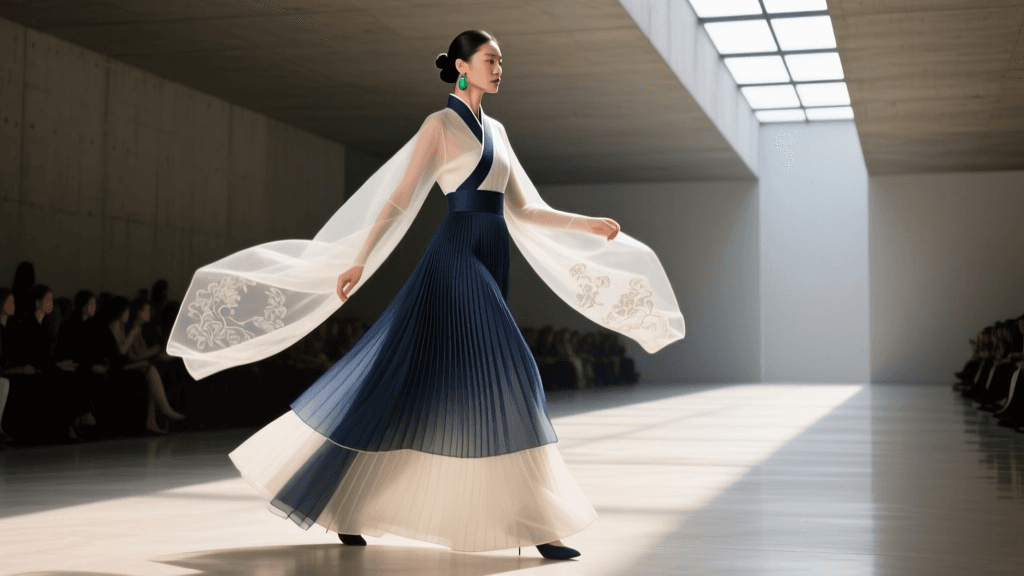
The Mamianqun, or horse-face skirt, has arguably been the most exported and adapted Hanfu element in 2026. Characterized by its flat front and back panels with heavily pleated sides, the traditional skirt was designed to facilitate horseback riding while maintaining a dignified, structured drape. On the runways of Milan this year, designers have manipulated the Mamianqun’s geometry to create striking, kinetic movement. Rather than relying solely on heavy traditional silks, which can weigh down the pleats and obscure the garment's architectural intent, 2026 collections have introduced heat-set memory fabrics and copper-infused silk blends. These materials allow the pleats to maintain their razor-sharp edges even during the dynamic movement of a runway walk, while offering a lighter, more breathable wearability for global climates.
Furthermore, the traditional symmetrical hemline has been frequently disrupted. Asymmetric cuts, where the front panel cascades into a dramatic train while the side pleats remain cropped at the calf, have become a signature of the 2026 Parisian shows. This adaptation preserves the visual language of the Mamianqun while aligning it with contemporary avant-garde proportions, proving that historical fidelity and modern edge are not mutually exclusive.
Cross-Collar (Jiaoling) and Structural Layering
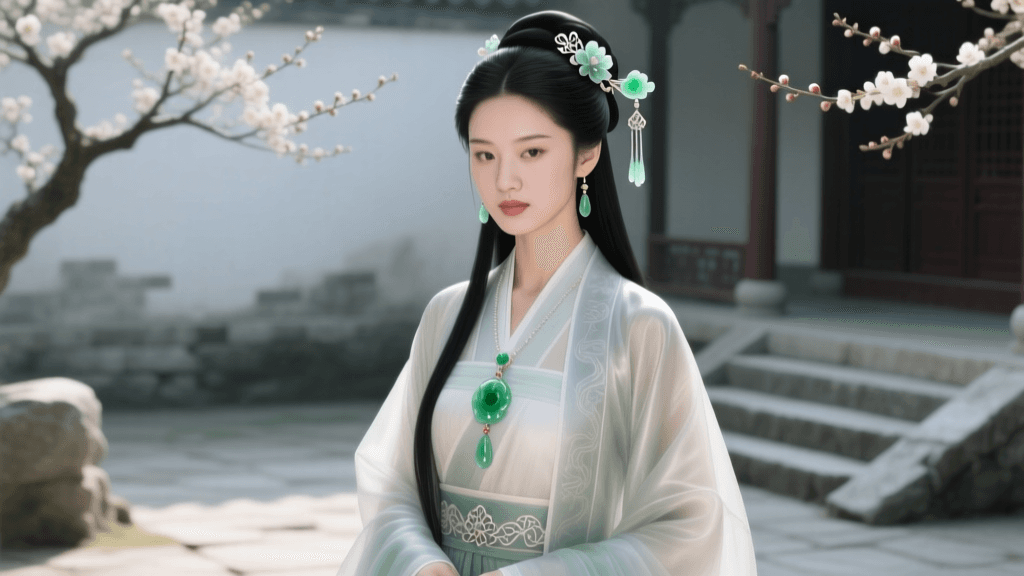
The Jiaoling, or cross-collar, is the quintessential hallmark of Hanfu, governed by the strict historical mandate of youren (the left side of the collar crossing over the right). In 2026, international designers have embraced the Jiaoling not just as a neckline, but as a foundational wrapping mechanism for entire garments. Runway outerwear this season features exaggerated, oversized Jiaoling lapels that extend past the waist, secured not by traditional fabric ties, but by concealed magnetic closures and sculptural metallic hardware.
Layering has also been elevated. The traditional Ruqun (a cropped top paired with a high-waisted skirt) has been translated into high-fashion two-piece suiting. Designers are utilizing stiffened organza and raw silk taffeta to create cropped, cross-collar jackets that sit sharply on the shoulders, providing a structured counterpoint to the flowing, voluminous skirts below. This interplay of rigid tailoring and fluid draping is a defining aesthetic of the 2026 fashion calendar.
Material Innovation: Xiangyunsha and Song Brocade
The global runway's obsession with eco-conscious luxury has brought traditional Chinese dyeing and weaving techniques into the spotlight. Xiangyunsha, often referred to as 'mud silk' or Gambiered Canton Gauze, has been a standout textile in the 2026 collections. This labor-intensive fabric involves dyeing silk with the juice of the Dioscorea cirrhosa plant and subsequently coating it with iron-rich river mud, resulting in a unique, crackled surface that is water-resistant, naturally cooling, and entirely biodegradable. The complex, eco-friendly nature of this process aligns perfectly with the sustainability mandates of modern luxury conglomerates. The cultural significance and ecological brilliance of such silk techniques are widely recognized and preserved, as documented by UNESCO's Intangible Cultural Heritage list, which highlights the profound historical depth of Chinese sericulture and silk craftsmanship.
Alongside Xiangyunsha, Song Brocade (Songjin) has been reimagined for evening wear. Historically characterized by its subdued, elegant patterns and soft luster, 2026 iterations of Song Brocade have been woven with recycled metallic threads and bioluminescent yarns. This creates a subtle, shifting luminescence on the runway under varying lighting conditions, merging ancient weaving mathematics with futuristic material science.
2026 Runway Adaptation Matrix
To understand how historical garments are being translated for the modern luxury market, it is essential to compare traditional specifications with their 2026 runway counterparts. The following table outlines the key adaptations seen across major fashion weeks this year.
| Traditional Element | Historical Function & Form | 2026 Runway Adaptation | Key Designer Approach |
|---|---|---|---|
| Mamianqun Pleats | Knife pleats in heavy silk for modesty and riding | Heat-set memory fabrics, asymmetric hemlines, micro-pleating | Kinetic movement focus, architectural asymmetry |
| Jiaoling Collar | Right-over-left wrap, secured with fabric ties | Exaggerated lapels, magnetic closures, integrated into outerwear | Structural tailoring, modern hardware integration |
| Xiangyunsha (Mud Silk) | Everyday summer wear, natural cooling and water resistance | High-gloss finishing, laser-cut edges, evening wear applications | Sustainable luxury, textural contrast in evening gowns |
| Pibo (Shawl) | Lightweight silk drape over arms for ceremonial grace | Weighted metallic threads, architectural draping, detachable trains | Sculptural volume, modular garment design |
Styling and Wearability for the Global Consumer
While runway pieces are often exaggerated for theatrical impact, the trickle-down effect of these 2026 Hanfu adaptations offers highly actionable styling opportunities for the global consumer. The modern wardrobe is increasingly embracing the 'Neo-Hanfu' aesthetic, which prioritizes the integration of traditional elements into daily, cosmopolitan life. For instance, a traditional Mamianqun is no longer restricted to being paired with a historical Ao (jacket). In 2026, fashion stylists are pairing heavily pleated, midi-length Mamianqun skirts with sharply tailored, oversized Western blazers and minimalist turtlenecks. This grounds the historical volume of the skirt with contemporary, utilitarian top-half styling.
Proportions are critical when adapting these silhouettes. The traditional Hanfu silhouette often obscures the natural waistline, favoring a columnar or A-line drape that flows from the shoulders or the high chest. To adapt this for modern wearability without losing the garment's essence, consumers are utilizing wide, structured leather belts over cross-collar tops to define the waist, creating an hourglass silhouette that bridges Eastern draping with Western tailoring preferences. Footwear has also evolved; while traditional cloud-toe shoes remain vital for purists, the 2026 street-style scene heavily features Mamianqun skirts paired with chunky, architectural loafers and sleek, pointed-toe ankle boots, providing the necessary height to support the skirt's dramatic drape.
Cultural Preservation vs. Commercialization
The surge of Hanfu on global runways inevitably sparks conversations regarding cultural preservation, intellectual property, and the ethics of commercialization. As international fashion houses mine Chinese history for inspiration, the line between homage and appropriation requires careful navigation. The most successful 2026 collections have been those developed in direct collaboration with Chinese textile artisans, historical societies, and master weavers. By investing in the supply chains of heritage textiles like Xiangyunsha and Song Brocade, luxury brands are actively funding the survival of these endangered crafts.
Institutions play a vital role in this ecosystem, providing the historical guardrails necessary for respectful adaptation. The extensive archives and scholarly research found within the Victoria and Albert Museum's Asian collections serve as a critical resource for designers seeking to understand the socio-historical context of the garments they are reinterpreting. When designers understand the profound philosophical and societal meanings embedded in the right-over-left collar or the specific color hierarchies of traditional dyeing, their runway translations become acts of cultural diplomacy rather than mere aesthetic extraction.
"The true triumph of Hanfu on the 2026 runways is not merely its visual beauty, but its proof that ancient, zero-waste pattern-making and natural dyeing techniques hold the key to the future of sustainable luxury fashion."
Conclusion
The presence of Hanfu on the global runways of 2026 marks a definitive shift in the international fashion landscape. It is a testament to the enduring versatility and profound sophistication of traditional Chinese garment engineering. From the architectural pleats of the Mamianqun to the sustainable brilliance of mud-dyed Xiangyunsha, these ancient silhouettes are not relics of a bygone era; they are active, evolving participants in the contemporary dialogue on luxury, sustainability, and global style. As designers continue to push the boundaries of textile innovation and silhouette manipulation, Hanfu stands as a powerful bridge between the meticulous craftsmanship of the past and the limitless possibilities of the future.