Hanfu on Global Runways 2026: High Fashion's New Muse
The 2026 Runway Renaissance: Hanfu Takes Center Stage
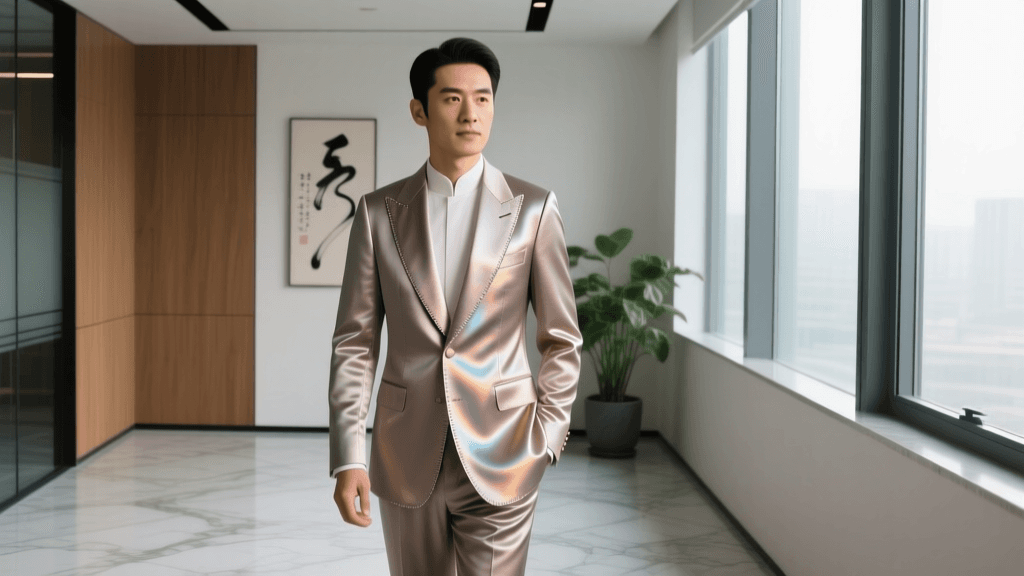
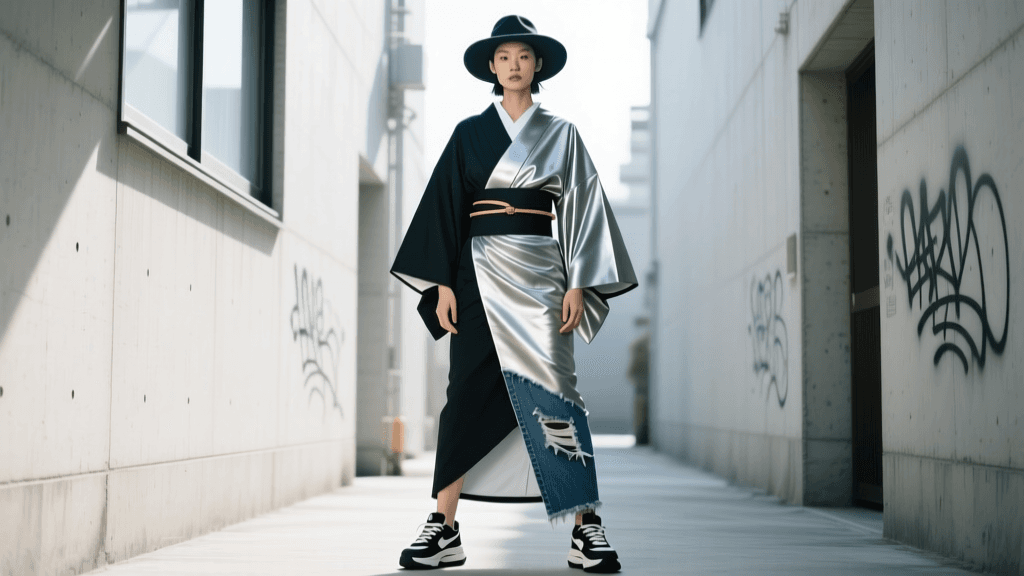
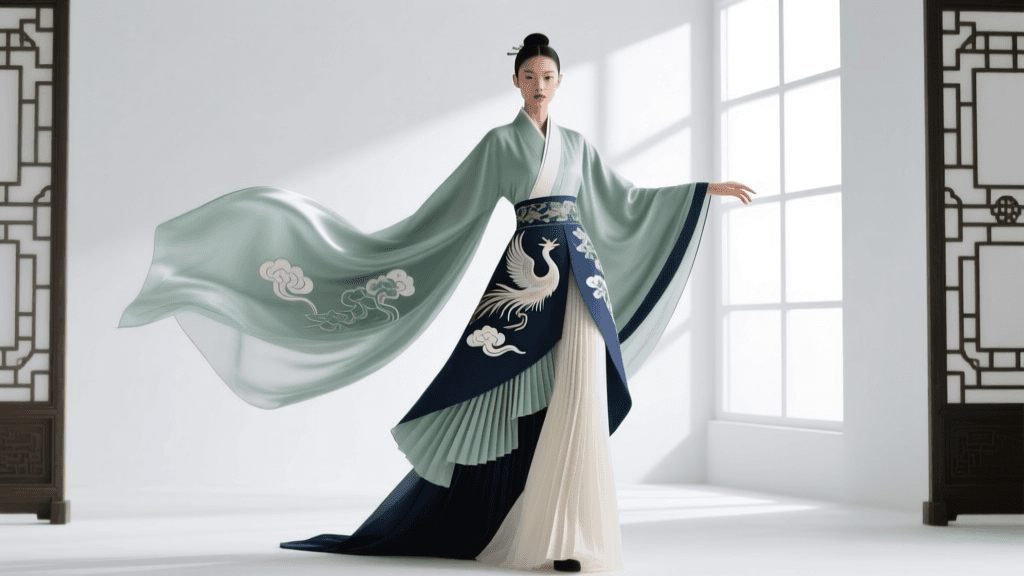
The 2026 global fashion circuit has witnessed an undeniable paradigm shift, with traditional Chinese garments moving from niche cultural revivals to the very epicenter of haute couture. Hanfu, the historical dress of the Han Chinese, is no longer just a staple of street style in Chengdu or Shanghai; it has become a defining muse for global fashion houses in Paris, Milan, and New York. This year, the integration of Hanfu silhouettes, textiles, and structural philosophies into high fashion represents a sophisticated dialogue between ancient craftsmanship and modern tailoring.
According to ongoing market and trend analyses tracked by The Business of Fashion, the 'New Chinese Style' (Xin Zhongshi) sector has evolved from a regional trend into a dominant global luxury category entering 2026. International designers are no longer merely appropriating surface-level motifs like dragons or lotus flowers; instead, they are deeply studying the architectural geometry of Hanfu, collaborating with heritage textile artisans, and reimagining historical silhouettes for the modern luxury consumer.
Key Hanfu Elements Dominating 2026 Runways
The Mamianqun (Horse-Face Skirt) Reinvented
Arguably the most exported Hanfu silhouette of the decade, the Mamianqun has reached new heights of structural innovation on the 2026 runways. Originally designed with flat front and back panels and deep side pleats to allow for ease of movement while horseback riding, the modern runway adaptation plays with volume and material contrast. Designers this season are utilizing stiffened vegan leathers, metallic Song brocades, and even sheer organza to create dramatic, sculptural pleating that defies gravity. The traditional waistband has been reimagined with corsetry elements and asymmetrical closures, merging Ming Dynasty modesty with avant-garde European tailoring.
Jiaoling Youren (Crossed Collars) and Asymmetry
The Jiaoling Youren, characterized by its left-over-right crossed collar, has long been a symbol of cosmic duality and cultural identity in Hanfu. In 2026, high-fashion critics at Vogue have noted that this specific neckline is being used to introduce striking asymmetry into modern outerwear and evening gowns. Designers are exaggerating the angle of the cross-collar, extending it down to the waist or shoulder to create deep, architectural V-necklines that frame the body in entirely new ways, often layered over structured turtlenecks or sheer mesh base layers.
Pipa Sleeves and Dramatic Volume
Named for their resemblance to the traditional Chinese lute, Pipa sleeves are narrow at the shoulder, swell dramatically at the elbow, and taper back at the wrist. This year, luxury houses are utilizing heavy silk jacquards and raw wools to give Pipa sleeves a rigid, bell-like structure. The tapered wrist is often embellished with modern interpretations of traditional cuff embroidery, utilizing recycled metallic threads and 3D-printed embellishments to catch the light on the runway.
Traditional Silhouettes vs. 2026 Runway Adaptations
To understand the depth of this trend, it is essential to compare the historical foundations of these garments with their 2026 haute couture interpretations.
| Traditional Hanfu Element | Historical Function & Era | 2026 Runway Adaptation | Key Materials in 2026 |
|---|---|---|---|
| Mamianqun | Modesty, ease of movement (Ming Dynasty) | Asymmetrical pleated midi/maxi skirts with corset waists | Metallic jacquard, stiffened organza, vegan leather |
| Jiaoling Youren | Inner/outer layering, cultural duality | Deep-V architectural bodices and asymmetrical wrap coats | Raw silk, structured merino wool, neoprene blends |
| Yunjian (Cloud Shoulders) | Ceremonial shoulder embellishment | Detachable 3D embroidered capes and structured epaulettes | Tulle, laser-cut silk, recycled metallic threads |
| Beizi (Long Cloak) | Outerwear for scholars and women (Song Dynasty) | Open-front duster coats with side slits and mandarin collars | Xiangyunsha (mud silk), lightweight cashmere |
Cultural Appreciation vs. Appropriation in 2026
A critical conversation surrounding the global explosion of Hanfu is the line between cultural appreciation and appropriation. In the early 2020s, several Western brands faced severe backlash for mislabeling Hanfu as generic 'Oriental' costumes or mixing it inappropriately with Qing Dynasty or Japanese garments. The industry has learned hard lessons, and the 2026 landscape is defined by rigorous collaboration.
Today, global fashion houses are employing Hanfu historians, textile archaeologists, and master weavers as official consultants. Cultural commentators at the South China Morning Post frequently highlight how this new era of collaboration ensures that sacred motifs are respected, and that traditional weaving techniques—such as the complex Zhuanghua silk tapestry—are credited and financially supported. Brands are now explicitly detailing the historical lineage of their garments in show notes, treating Hanfu with the same academic reverence historically reserved for European corsetry or Victorian tailoring.
Building Your 2026 Hanfu-Inspired Wardrobe
You do not need a haute couture budget to participate in this global movement. The 'New Chinese Style' has trickled down into accessible luxury and high-end independent labels, making it easier than ever to integrate Hanfu elements into a modern, cosmopolitan wardrobe. Here is your actionable guide to shopping and styling Hanfu in 2026.
1. Invest in a High-Quality Mamianqun
The horse-face skirt is the most versatile entry point into Hanfu. For 2026, look for skirts made from Xiangyunsha (mud silk), a sustainable, naturally dyed fabric that offers a rich, dark luster and excellent durability.
- Where to Buy: Premium independent brands like Minghuatang or Shizhewu offer museum-quality replicas and modern adaptations. Expect to pay between $250 and $600 for authentic silk jacquard pieces.
- Styling Tip: Contrast the historical volume of the skirt with a sleek, modern top. A fitted cashmere turtleneck or a structured, minimalist blazer creates a striking silhouette perfect for the office or evening events.
2. Embrace the Song Dynasty Beizi as Outerwear
The Beizi is a long, open-front cloak with side slits that functions beautifully as a modern duster coat. It provides an elegant, flowing layer that elevates even the simplest of outfits.
- Where to Buy: Look for contemporary 'Xin Zhongshi' labels on curated platforms like Farfetch or specialized Taobao global sellers. Prices for high-quality linen or raw silk Beizi typically range from $120 to $350.
- Styling Tip: Layer a sheer or lightweight silk Beizi over a monochrome trousers-and-camisole set. The side slits will reveal the base layers as you walk, mimicking the runway's focus on kinetic movement.
3. Accessorize with Subtle Heritage Motifs
If full garments feel too bold for your daily life, 2026 offers a wealth of accessories that nod to Hanfu traditions. Hairpins forged using traditional filigree techniques, or silk scarves featuring authentic Song Dynasty floral patterns, can subtly anchor your outfit in Asian heritage. Avoid mass-produced, generic 'cherry blossom' prints; instead, seek out specific, historically accurate motifs like the 'Baoxiang' flower or intertwining lotus vines.
The Future of Asian Traditions in Global Fashion
The presence of Hanfu on the 2026 global runways is not a fleeting trend; it is a permanent recalibration of the fashion axis. As Asian traditions continue to command respect and fascination on the world stage, the garments serve as wearable archives of history, philosophy, and artistry. By understanding the roots of these silhouettes and supporting authentic, collaborative design, fashion enthusiasts can celebrate the profound beauty of Hanfu while pushing the boundaries of modern style.