Celebrity Kimono Trends: How Stars Style Traditional Japanese Wear
The Global Renaissance of the Kimono
The kimono, a T-shaped, straight-lined robe with attached collars and wide, long sleeves, has transcended its origins as a traditional Japanese garment to become a global fashion phenomenon. Once reserved strictly for formal ceremonies, tea houses, and seasonal festivals in Japan, the kimono and its lighter counterpart, the yukata, are now dominating international runways, music videos, and streetwear blogs. This shift is largely driven by celebrities and high-profile influencers who are reimagining traditional Japanese silhouettes through a contemporary, avant-garde lens.
As highlighted by the Victoria and Albert Museum's groundbreaking exhibition, Kimono: Kyoto to Catwalk, the garment has never been a static relic. It has always been a dynamic canvas for artistic expression, trade, and cultural exchange. Today, modern pop culture icons are continuing this legacy, blending centuries-old craftsmanship with modern streetwear, high-fashion corsetry, and sustainable vintage styling.
Iconic Celebrity Kimono Moments
Celebrity stylists have increasingly turned to Japanese archives and vintage dealers to source unique, one-of-a-kind pieces that guarantee red-carpet individuality. Several iconic moments have cemented the kimono's place in modern Western and global fashion:
- Rihanna's Maternity Streetwear: Rihanna famously layered a heavily embroidered, vintage silk kimono jacket over casual streetwear and luxury sneakers during her maternity photoshoots. This look popularized the idea of using traditional outerwear as a statement layering piece rather than a full formal ensemble.
- Harry Styles and the Haori: Styles has frequently been photographed wearing the haori (a traditional hip- or thigh-length kimono jacket) open over plain white t-shirts and tailored trousers. His styling bridges the gap between gender-fluid fashion and traditional Japanese menswear.
- Zendaya's Obi Corsetry: On various red carpets, Zendaya and her stylist Law Roach have utilized the obi (the wide sash used to tie a kimono) as a structural corset belt over sleek, Western evening gowns, creating a striking hourglass silhouette that honors the textile art of the obi while subverting its traditional function.
Influencer Streetwear: The Haori Revolution
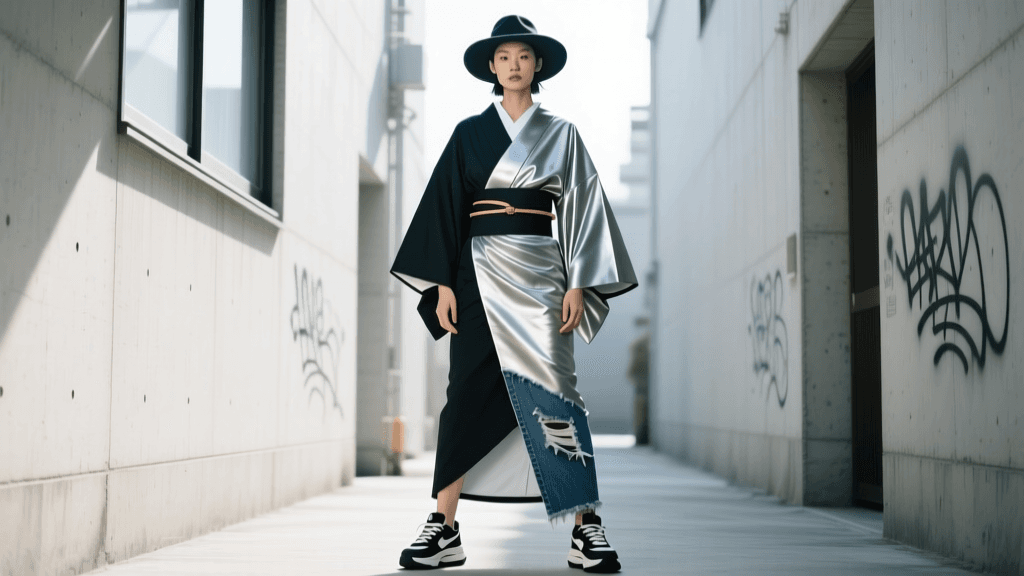
While haute couture embraces the full kimono silhouette, streetwear influencers have championed the haori and the yukata (a casual summer cotton kimono). The haori is particularly favored because it requires no complex tying or specialized undergarments. It simply slips on like a duster coat. Influencers often pair vintage silk haori, featuring intricate yuzen dyeing or gold-leaf kinkaku embroidery, with distressed denim, oversized graphic tees, and chunky sneakers. This juxtaposition of hyper-traditional craftsmanship with gritty urban wear creates a visually arresting aesthetic that dominates platforms like Instagram and TikTok.
Practical Guide: Recreating the Looks
Recreating these celebrity-endorsed looks requires an understanding of garment types, proportions, and respectful styling. Here are three actionable ways to integrate traditional Japanese garments into a modern wardrobe.
Look 1: The Vintage Haori Streetwear Blend
This is the most accessible entry point into kimono fashion. The haori is designed to be worn open, meaning you do not need to worry about the complex ohashori (waist fold) required for full kimonos.
- The Garment: A vintage silk haori. Look for a back length (mitake) of about 80cm to 90cm for a modern, oversized duster fit.
- The Base: A heavyweight, oversized white cotton t-shirt, straight-leg vintage Levi's, and a pair of Balenciaga Track or Nike Air Max sneakers.
- Styling Rule: Keep the haori open to showcase the haori himo (the decorative front ties) and the vibrant, often hidden, hakkake (inner lining).
- Estimated Cost: $45 - $150 for a vintage silk haori via online kimono archives or Etsy.
Look 2: The High-Fashion Obi Corset
For formal events or editorial photoshoots, repurposing the obi is a brilliant way to utilize Japanese textiles without wearing a full kimono.
- The Garment: A vintage Fukuro Obi or Maru Obi. These are heavily brocaded, stiff, and visually striking. Width is typically around 30cm, and length is over 400cm.
- The Base: A minimalist, floor-length silk slip dress or a sharply tailored oversized blazer.
- Styling Rule: Wrap the obi tightly around the natural waist and secure it at the back using hidden safety pins or a discreet elastic band. Do not cut or alter the vintage textile; use folding and pinning techniques to preserve its integrity.
- Estimated Cost: $30 - $120 for a vintage brocade obi.
Look 3: The Modern Yukata Festival Fit
The yukata is a casual, unlined cotton kimono perfect for summer festivals, Coachella, or beach vacations.
- The Garment: A modern or vintage cotton yukata. Unlike silk, cotton is breathable, washable, and less fragile.
- The Base: Worn directly over modern undergarments or a simple camisole and bike shorts for modesty and comfort.
- Styling Rule: Pair with a modern wide-brim straw hat, minimalist gold hoop earrings, and leather gladiator sandals or modern geta (wooden clogs) with cushioned straps. Always ensure the left panel of the yukata crosses over the right panel—crossing right over left is strictly reserved for dressing the deceased in Japanese culture.
- Estimated Cost: $40 - $90 for a new or vintage cotton yukata.
Sizing and Measurements: Getting the Fit Right
Unlike Western clothing, kimonos do not come in standard S, M, L sizes. They are measured by specific dimensions. According to guidelines from the The Metropolitan Museum of Art's Asian Art archives, understanding these measurements is crucial for online vintage shopping:
- Yuki (Sleeve Length): Measured from the center back of the neck, across the shoulder, and down to the wrist. For a modern, relaxed influencer look, a slightly shorter yuki (around 60-64cm) prevents the sleeves from dragging in streetwear contexts.
- Mitake (Back Length): Measured from the base of the collar down to the hem. For haori jackets, 80cm is standard. For full kimonos worn without the traditional waist fold, you can size down slightly for a cropped, avant-garde silhouette.
- Sode (Sleeve Depth): The vertical drop of the sleeve. Deeper sleeves (furisode) are highly dramatic and often used in high-fashion editorial shoots.
Comparison Chart: Celebrity Kimono Styling Breakdown
| Style Archetype | Key Garment | Modern Pairing | Est. Cost | Best Occasion |
|---|---|---|---|---|
| Streetwear Duster | Vintage Silk Haori | Graphic Tee, Sneakers | $45 - $150 | Casual outings, Concerts |
| Red Carpet Corset | Brocade Fukuro Obi | Silk Slip Dress, Heels | $30 - $120 | Galas, Premieres, Parties |
| Summer Festival | Cotton Yukata | Straw Hat, Leather Sandals | $40 - $90 | Music Festivals, Beach |
| Avant-Garde Layer | Uchikake (Outer Robe) | Tailored Suit, Combat Boots | $200 - $500 | Editorial Shoots, Met Gala |
Sourcing Authentic Pieces and Sustainable Care
The modern kimono trend aligns perfectly with the sustainable fashion movement. By purchasing vintage kimonos and haori, consumers are participating in the circular economy, upcycling garments that might otherwise languish in storage. When sourcing pieces, look for specialized online dealers who import directly from Japanese estate sales and Kyoto vintage markets.
Caring for these garments requires specific attention. Vintage silk should never be machine washed or hung on wire hangers, which can distort the shoulder seams and cause water spots. Instead, store your silk haori and kimonos flat, folded along their original seams, and wrapped in acid-free tatoushi paper. If cleaning is necessary, seek out a dry cleaner who specializes in delicate textiles and understands traditional Japanese resist-dyeing techniques.
Cultural Appreciation in Modern Fashion
As the kimono becomes a global fashion staple, the conversation around cultural appreciation versus appropriation remains vital. The Japan National Tourism Organization (JNTO) and various cultural ambassadors generally welcome the global sharing of Japanese aesthetics, provided it is done with respect and understanding. To wear the kimono respectfully in a modern context:
- Always wrap the left side over the right side.
- Avoid wearing garments specifically designated for funerals (such as plain black kimonos with specific family crests) as casual streetwear.
- Understand the motifs you are wearing; for example, cherry blossoms (sakura) represent spring and the ephemeral nature of life, while cranes (tsuru) symbolize longevity and good fortune.
- Support authentic Japanese artisans, vintage dealers, and brands rather than fast-fashion retailers that mass-produce culturally insensitive, poorly constructed 'kimono cardigans'.
Conclusion
The integration of the kimono and haori into celebrity streetwear and high fashion is a testament to the garment's enduring versatility. By understanding the architecture of the silhouette, respecting the cultural significance of the textiles, and mastering the art of modern juxtaposition, fashion enthusiasts can participate in this global renaissance. Whether you are tying a brocade obi over a tailored blazer or throwing a vintage silk haori over your favorite denim, you are wearing a piece of living history, reimagined for the modern world.