Hanfu on Global Runways: 2026 Haute Couture Trends
The Renaissance of Hanfu in 2026 Haute Couture
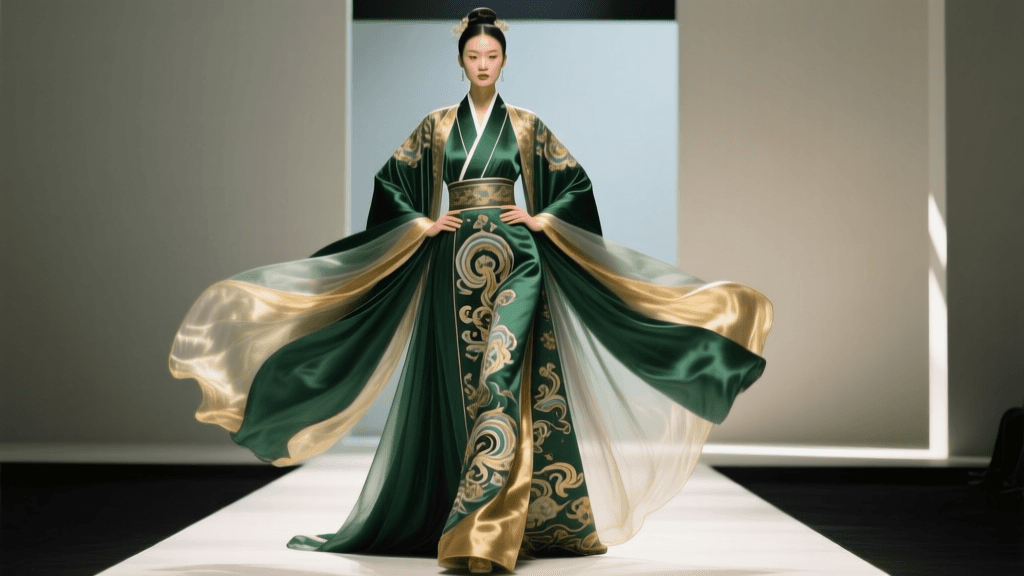
As the global fashion calendar unfolds for the Spring/Summer and Autumn/Winter 2026 seasons, one distinct cultural narrative has captivated the runways of Paris, Milan, and Shanghai: the elevation of traditional Chinese Hanfu into high fashion. No longer confined to historical reenactments or niche subcultures, Hanfu has been thoroughly embraced by avant-garde designers and luxury heritage houses alike. This 2026 runway phenomenon represents a sophisticated synthesis of ancient structural tailoring and cutting-edge sustainable textiles, proving that Asian traditions are not merely historical artifacts, but living, breathing components of modern global luxury.
The integration of Hanfu into international fashion weeks is not a sudden trend, but the culmination of a decade-long cultural renaissance. However, the 2026 collections mark a pivotal shift. Designers are moving beyond superficial motif appropriation—such as simply printing dragons or florals onto Western silhouettes—and are instead deconstructing the fundamental architecture of traditional Chinese garments. By studying the historical continuity of these garments, as preserved and documented by institutions like the Metropolitan Museum of Art's Asian Art Department, contemporary couturiers are finding profound inspiration in the zero-waste cutting techniques and fluid drapery that defined ancient Chinese dress.
Key Hanfu Elements Dominating the 2026 Runways
The Mamianqun (Horse-Face Skirt) Reimagined
The Mamianqun, historically characterized by its flat front and back panels with intricate knife pleats on the sides, has become the undisputed centerpiece of the 2026 runway season. In Paris, luxury houses have reinterpreted the Mamianqun using memory-fabric blends and laser-cut vegan leathers, allowing the pleats to maintain their razor-sharp structure even in motion. The traditional waistband, often a stark white cotton in historical garments meant to be hidden by a top, has been transformed into exposed, structural corsetry. Designers are playing with the duality of the skirt: the flat panels serve as canvases for 3D-woven jacquard motifs, while the pleated sides reveal flashes of metallic organza when the model walks.
Cross-Collar (Jiaoling) and Structural Layering
The Jiaoling Youren, or cross-collar right-over-left closure, is a foundational element of Hanfu that carries deep cultural significance. In 2026, avant-garde designers are challenging the boundaries of this silhouette through extreme asymmetry and modular layering. Runway looks in Milan have featured oversized, floor-sweeping Jiaoling robes crafted from translucent bio-silk, layered over structured, utilitarian base layers. The right-over-left rule is strictly respected in the outermost layers as a nod to sartorial heritage, but the internal layering plays with opacity and volume, creating a sculptural, architectural effect that feels entirely futuristic while remaining rooted in antiquity.
Xiangyun Sha and Intangible Heritage Textiles
Textile innovation is at the heart of the 2026 Hanfu movement, with Xiangyun Sha (Gambiered Guangdong Gauze) taking center stage. This intangible cultural heritage fabric, dyed using plant juices and river mud, possesses a unique, leather-like patina and a distinctive crackling sound when worn. While historically used for modest, everyday wear in southern China, 2026 haute couture has elevated Xiangyun Sha into evening wear. The Victoria and Albert Museum's Asian Collections highlights the profound historical importance of such regional Chinese textiles, noting how their unique environmental dependencies make them irreplaceable. This season, designers have paired the matte, earthy finish of Xiangyun Sha with high-gloss hardware and Swarovski crystal embroidery, creating a striking juxtaposition of the organic and the synthetic.
2026 Runway Adaptations vs. Traditional Hanfu
To understand the evolution of these garments, it is essential to compare the strict historical parameters of Hanfu with the creative liberties taken on the 2026 runways. The following table outlines how designers are translating ancient concepts for the modern luxury consumer.
| Garment Feature | Traditional Hanfu Parameters | 2026 Runway Adaptation |
|---|---|---|
| Mamianqun Pleats | Hand-pressed knife pleats in heavy mulberry silk | Laser-cut vegan leather, heat-set memory-fabric blends |
| Cross-Collar Closure | Strict right-over-left, tied with internal and external sashes | Magnetic hidden closures, asymmetrical deconstructed necklines |
| Sleeve Silhouettes | Pipa (lute) sleeves or wide, floor-length ceremonial sleeves | Detachable modular cuffs, adjustable drawstring gathers |
| Textiles & Dyes | Song Brocade, Xiangyun Sha, natural plant dyes | Bio-engineered spider silk, 3D-woven jacquard, lab-grown pigments |
| Waistband Construction | Wide, contrasting cotton bands meant to be concealed | Exposed corsetry, hardware-buckled utility belts |
How to Incorporate Runway Hanfu into Modern Wardrobes
While the avant-garde pieces seen in Paris and Milan may seem intimidating for daily wear, the 2026 Hanfu movement has heavily influenced premium ready-to-wear collections, making these silhouettes highly accessible. For the modern consumer looking to integrate these Asian traditions into a contemporary wardrobe, the key is proportional balancing and textile mixing.
Styling the Modern Mamianqun: In 2026, the most wearable iteration of the horse-face skirt features a shortened hemline, typically dropping to 85cm or 95cm (mid-calf) rather than the traditional floor-sweeping 115cm. Pair a pleated, metallic-threaded Mamianqun with a structured, oversized wool blazer and a simple silk camisole. This grounds the historical volume of the skirt with sharp, modern tailoring. For footwear, abandon the traditional embroidered flats; instead, opt for chunky leather loafers or minimalist ankle boots to emphasize the architectural pleats.
Layering the Jiaoling Top: The cross-collar top (Shan or Ao) is incredibly versatile. Look for 2026 ready-to-wear versions crafted from matte crepe or washed linen. Wear a white, cross-collar top beneath a deep V-neck slip dress or unbuttoned over a high-necked ribbed turtleneck. The right-over-left closure creates a natural V-neckline that elongates the neck, making it an excellent alternative to standard button-down shirts in a professional or smart-casual setting.
Sourcing, Pricing, and Authenticity in 2026
As demand for authentic, high-quality Hanfu surges globally, the market in 2026 has stratified into distinct tiers. Understanding these tiers is crucial for buyers seeking genuine craftsmanship over mass-produced fast fashion.
- Haute Couture & Runway Pieces ($4,000 - $15,000+): These are bespoke, made-to-measure garments featuring hand-woven Song brocade, genuine Xiangyun Sha dyed in Guangdong, and hand-embroidered goldwork. They are sourced directly from luxury ateliers in Shanghai and Paris.
- Premium Designer Ready-to-Wear ($800 - $2,500): Produced by established contemporary Chinese designers, these pieces utilize high-grade mulberry silk, precise laser-cut pleating, and historically accurate patterning adapted for modern mobility. They are widely available through global luxury e-commerce platforms.
- Artisanal Independent Brands ($150 - $500): The backbone of the modern Hanfu movement. These brands focus on historical accuracy in cutting and fabric, often utilizing specialized jacquard weaves. While they may lack the avant-garde deconstruction of runway pieces, they offer the most authentic traditional experience for daily wear.
When sourcing authentic textiles, buyers must be wary of synthetic imitations, particularly concerning Xiangyun Sha. Genuine Gambiered Gauze has a distinct, slightly stiff hand-feel and a dark, mottled brown-to-black gradient that cannot be perfectly replicated by digital printing. Always request certification of intangible heritage craftsmanship when investing in premium heritage textiles.
The Future of Asian Traditions in Global Fashion
The presence of Hanfu on the 2026 global runways signifies a maturation of cross-cultural fashion exchange. It is no longer about exoticism; it is about recognizing the profound engineering, sustainability, and aesthetic brilliance inherent in traditional Chinese garment-making. The zero-waste cutting methods of ancient Hanfu, which utilized the full width of the silk loom without discarding scraps, are now being studied by sustainable fashion institutes worldwide as a blueprint for eco-friendly design.
As we move through the 2026 fashion season, the dialogue between ancient Asian traditions and modern haute couture continues to deepen. Designers are not just borrowing silhouettes; they are adopting the philosophies of harmony, fluidity, and respect for materials that have defined Chinese dress for millennia. For the global consumer, this means access to a wardrobe that is not only visually breathtaking but deeply rooted in a rich, enduring cultural legacy.