The Ultimate Hanfu Fabric Guide: Linen, Brocade, Gauze & Organza
The Foundation of Hanfu: Why Fabric Matters
The resurgence of Hanfu (traditional Han Chinese clothing) is not merely a revival of historical silhouettes; it is a renaissance of ancient textile engineering. When assembling a traditional wardrobe, the cut and seam construction are only half the equation. The fabric dictates the garment's drape, structural integrity, seasonal appropriateness, and historical accuracy. Whether you are commissioning a bespoke piece or buying off-the-rack, understanding the behavioral properties of different textiles is crucial.
This comprehensive guide breaks down four foundational Hanfu fabrics—linen, brocade, gauze, and organza—providing actionable advice on yardage, cost, and care to help you make informed sartorial decisions.
Linen (麻 - Má): The Breathable Ancient Staple
Before the widespread dominance of silk, Ma (which historically encompasses hemp, ramie, and linen) was the primary textile for the masses and the preferred summer fabric for the elite. Linen and ramie are celebrated for their exceptional breathability, moisture-wicking properties, and natural antibacterial qualities.
Characteristics and Drape
Linen possesses a crisp, structured drape that softens beautifully with repeated washing. It is highly textured, offering a rustic, organic aesthetic that perfectly suits Ming dynasty-style Beizi (open-front jackets) or Song dynasty Ruqun (blouse and skirt ensembles). Because it lacks elasticity, linen holds pleats reasonably well but is best suited for flowing, A-line skirts rather than heavily structured garments.
Actionable Advice
- Cost: $8 to $18 per meter for high-quality, garment-grade linen or ramie blends.
- Best For: Summer everyday wear, inner layers (Zhongyi), and scholar-style garments.
- Care: Machine wash on a gentle cycle with cold water. Linen shrinks up to 5% on the first wash, so always pre-wash your fabric before cutting. Tumble dry low or line dry, and iron while slightly damp for a crisp finish.
Brocade (锦 - Jǐn): The Luxurious Weave of Emperors
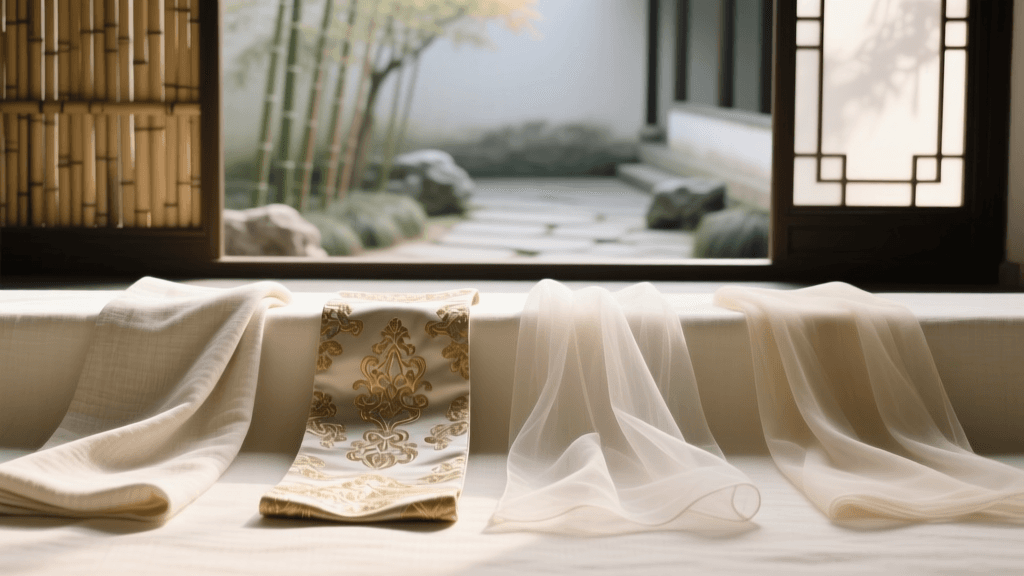
Brocade represents the pinnacle of traditional Chinese weaving. Characterized by its intricate, raised jacquard patterns woven with supplementary weft threads—often incorporating metallic gold or silver yarns—brocade is a heavy, opulent fabric. According to Encyclopædia Britannica, the technique of weaving brocade involves a complex loom setup that creates a rich, embossed surface, historically reserved for imperial courts and high-ranking officials.
The Three Great Brocades
When shopping for authentic Hanfu, you will encounter three primary types of traditional brocade:
- Shu Brocade (Sichuan): Known for vibrant colors and durable, tight weaves.
- Song Brocade (Suzhou): Softer, with elegant, muted patterns, often used for mounting scroll paintings and high-end garments.
- Yun Brocade (Nanjing): The most luxurious, heavily featuring gold and silver threads, historically used for dragon robes.
Actionable Advice
- Cost: $35 to $120+ per meter, depending on the silk content and metallic thread integration.
- Best For: Winter wear, formal ceremonies, wedding attire, and structured outer jackets (Ao).
- Care: Dry clean only. The metallic threads and complex weave structure will warp and tarnish in water. Store flat or rolled to prevent permanent creasing.
Gauze (罗/纱 - Luó/Shā): The Ethereal Art of Layering
Gauze is the secret to the ethereal, floating aesthetic seen in Tang and Song dynasty paintings. Woven using a leno or open-weave technique, gauze creates a sheer, lightweight, and highly breathable textile. The craftsmanship of traditional silk gauze and sericulture is so vital to Chinese history that it is recognized by the UNESCO Intangible Cultural Heritage list.
Characteristics and Drape
Gauze is exceptionally fluid and sheer. It is rarely used as a standalone fabric for modesty reasons; instead, it is the ultimate layering textile. A sheer Shā Beizi worn over a solid-colored Ruqun creates depth, movement, and a romantic silhouette. The open weave allows air to circulate, making it indispensable for humid southern Chinese summers.
Actionable Advice
- Cost: $15 to $40 per meter for pure silk gauze; synthetic alternatives (polyester chiffon/gauze) cost $4 to $10.
- Best For: Summer layering, outer robes (Pibo), and sheer sleeves.
- Care: Hand wash gently in cool water with a pH-neutral silk detergent. Never wring; roll in a towel to absorb moisture and lay flat to dry away from direct sunlight.
Organza (欧根纱 - Ōugēnshā): The Modern Structural Marvel
While not historically ancient in its current synthetic form, organza has become a cornerstone of the modern Hanfu revival. Organza is a thin, plain weave, sheer fabric with a distinct stiffness. This stiffness is its superpower: it provides architectural volume that softer silks cannot achieve without heavy, uncomfortable linings.
Characteristics and Drape
Organza holds its shape aggressively. It is the premier fabric for modern Mamianqun (horse-face skirts), as the stiffness ensures the knife pleats remain razor-sharp and the skirt flares out dramatically when the wearer moves or sits. As noted in Britannica's guide to Silk, while traditional silk organza exists, modern Hanfu manufacturers frequently utilize polyester organza to keep costs down while maximizing structural integrity.
Actionable Advice
- Cost: $5 to $15 per meter.
- Best For: Mamianqun, structured collars, and garments requiring voluminous silhouettes without heavy weight.
- Care: Hand wash or machine wash on delicate. Organza is prone to fraying, so ensure all raw edges are serged or bound. Iron on a low synthetic setting.
Hanfu Fabric Comparison Chart
To help you select the right textile for your next project or purchase, refer to this structured comparison matrix:
| Fabric Type | Historical Era / Usage | Drape & Structure | Avg. Cost (USD/m) | Seasonality | Washing Instructions |
|---|---|---|---|---|---|
| Linen / Ramie | Pre-Qin to Ming (Everyday/Summer) | Crisp, softens over time | $8 - $18 | Summer / Spring | Machine cold, line dry |
| Brocade | Tang to Qing (Formal/Winter) | Heavy, stiff, opulent | $35 - $120+ | Winter / Formal | Dry clean only |
| Silk Gauze | Han to Song (Layering/Elite) | Fluid, sheer, weightless | $15 - $40 | Summer | Hand wash, lay flat |
| Organza | Modern Revival (Structural) | Stiff, voluminous, sheer | $5 - $15 | All-Season (Lining) | Hand wash, low iron |
Actionable Buying, Sizing, and Yardage Guide
When purchasing fabric for a custom Hanfu, calculating the correct yardage is critical. Traditional Chinese garments utilize flat-pattern cutting, meaning the fabric is cut in straight lines and folded, requiring wider fabric bolts (usually 140cm to 150cm wide) and specific lengths.
Pro Tip: Always purchase 10% to 15% more fabric than the calculated yardage to account for pre-wash shrinkage, pattern matching (especially crucial for brocade), and cutting errors.
Standard Yardage Requirements (Based on 140cm Wide Fabric)
- Jiaoling Ruqun (Cross-collar top and pleated skirt):
- Top (Shangyi): 1.5 to 2 meters.
- Skirt (Qun): 3 to 4 meters (depending on desired fullness and pleat depth).
- Total: 4.5 to 6 meters.
- Mamianqun (Horse-face skirt):
- Requires two overlapping panels with deep knife pleats.
- Total: 4.5 to 6 meters of medium-weight fabric (like cotton-linen blends or polyester organza). If using pure silk, a stiff organza underlining is required, doubling your fabric needs.
- Round Collar Robe (Yuanlingpao):
- Requires wide sleeves and a full-length cut.
- Total: 5 to 7 meters, depending on the wearer's height and sleeve length.
Caring for Your Traditional Garments
Preserving the integrity of Hanfu fabrics requires a departure from modern fast-fashion laundry habits. Implement these protocols to extend the life of your garments:
- Avoid Wire Hangers: The weight of wet brocade or the delicate weave of gauze will stretch and distort on wire hangers. Always use wide, padded wooden hangers for structured jackets, and fold skirts along their natural pleat lines.
- Pleat Maintenance: For Mamianqun, after washing and drying, lay the skirt flat on an ironing board. Use binder clips to secure the pleats in place, then press with a steam iron on the appropriate heat setting. Store the skirt rolled or folded with tissue paper between the pleats to maintain the sharp creases.
- Sunlight Protection: Natural dyes used in high-end linen and silk brocade are highly susceptible to UV fading. Never dry your Hanfu in direct sunlight, and store your collection in breathable cotton garment bags away from windows.
Conclusion
Mastering the nuances of Hanfu fabrics transforms the experience of wearing traditional Chinese clothing from a simple costume exercise into a profound engagement with material culture. Linen grounds you in ancient, breathable practicality; brocade connects you to imperial luxury; gauze offers the poetic elegance of historical layering; and organza provides the structural genius required for modern pleating. By selecting the right textile for your climate, occasion, and silhouette, you ensure that your Hanfu is not only historically resonant but also a joy to wear.