2026 Hanfu Fabric Drape & Comfort Analysis: A Textile Guide
The Evolution of Hanfu Textiles in 2026
As we navigate the fashion landscape of 2026, the Xin Zhongshi (New Chinese Style) movement has firmly transitioned Hanfu from ceremonial wear and festival cosplay into a staple of daily luxury and contemporary streetwear. This mainstream integration has sparked a rigorous demand for textiles that not only honor historical aesthetics but also meet the practical comfort requirements of modern urban life. The focal point of this evolution lies in fabric drape and tactile comfort. Enthusiasts and designers alike are no longer satisfied with mere visual accuracy; they are analyzing the physics of how a garment moves, breathes, and rests against the skin.
In 2026, advanced textile mills in Hangzhou and Suzhou have perfected the balance between traditional weaving techniques and modern fiber engineering. Whether you are selecting a structured Ming dynasty Mamianqun or a flowing Song dynasty Beizi, understanding the interplay of fiber content, weave structure, and fabric weight is essential for achieving the perfect silhouette and all-day comfort.
Understanding Fabric Drape: The Physics of Flow
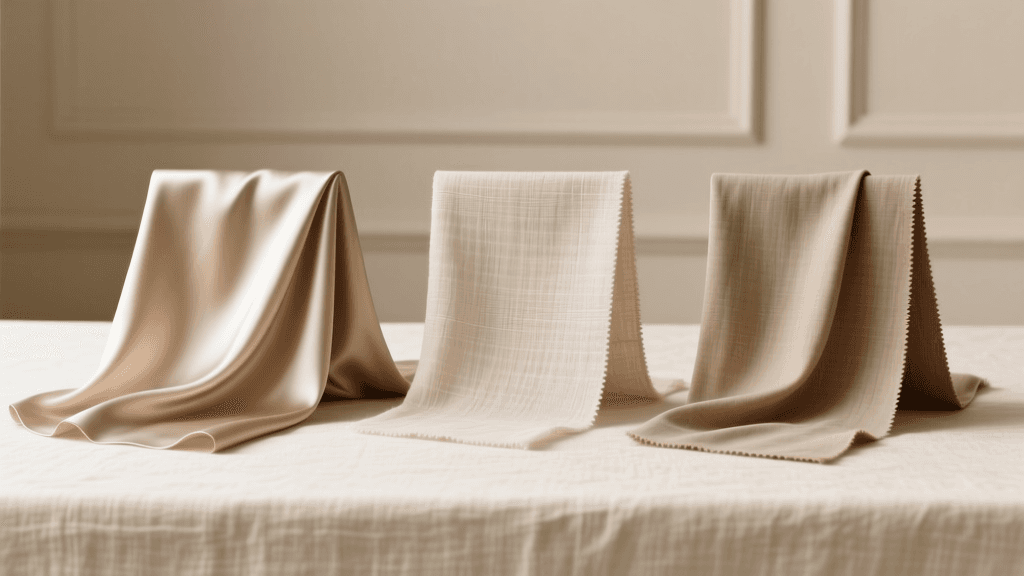
In textile engineering, "drape" refers to the way a fabric hangs and folds under its own weight. It is quantified using the drape coefficient and bending length. A fabric with a low drape coefficient and short bending length is highly fluid, clinging to the body's contours and creating soft, cascading folds. Conversely, a high drape coefficient indicates a stiffer fabric that holds its shape, creating architectural volume and crisp pleats.
For Hanfu, drape is not a one-size-fits-all metric. The historical authenticity of a garment relies heavily on matching the correct drape to the specific dynasty's silhouette. Furthermore, comfort is intrinsically linked to drape; a fabric that is too stiff can cause friction and restrict movement, while a fabric that is overly fluid may lack the structural integrity needed to support heavy embroidery or complex pleating.
Core Hanfu Fabrics: Texture, Weight, and Comfort
Mulberry Silk (The Traditional Standard)
Silk remains the undisputed queen of Hanfu textiles. Historically, the mastery of silk weaving allowed for garments that possessed a unique combination of tensile strength and fluid movement, as documented by The Metropolitan Museum of Art. The molecular structure of silk fibroin provides a natural prism that refracts light, giving it an unparalleled luster and a remarkably soft hand-feel, according to Encyclopædia Britannica.
In 2026, the market favors Silk Crepe de Chine (typically 19 to 22 momme) for daily wear. Unlike the high-gloss silk charmeuse, crepe de chine features a subtle matte finish and a pebbled texture achieved through highly twisted yarns. This gives the fabric a superior "bias drape," allowing it to flow like water while resisting wrinkles. For outerwear like the Daxiushan (large-sleeved衫), lightweight 12 to 16 momme silk chiffon or organza provides the necessary ethereal volume without trapping body heat.
Ramie and Linen (The Summer Breathables)
When the humid heat of summer arrives, cellulose fibers take precedence. Ramie and linen are celebrated for their high hygroscopicity—the ability to rapidly absorb and release moisture. Ramie, in particular, has deep roots in Chinese textile history, favored for its natural stiffness and resistance to bacterial growth.
Modern 2026 summer Hanfu collections utilize enzyme-washed linen and cotton-ramie blends (usually between 150 and 180 GSM). These fabrics possess a high bending length, making them ideal for garments that require structural crispness, such as the short-sleeved Banbi or structured Song dynasty collars. While they lack the fluid drape of silk, their textured, organic hand-feel provides a refreshing, cooling sensation against the skin that synthetic blends simply cannot replicate.
Tencel and Cupro Blends (The 2026 Innovations)
The most significant textile breakthrough in the 2026 Xin Zhongshi market is the widespread adoption of regenerated cellulose fibers, specifically Tencel (Lyocell) and Cupro. Derived from sustainably sourced wood pulp and cotton linter respectively, these fibers are engineered to mimic the fluid drape and luxurious sheen of mulberry silk while offering superior moisture-wicking capabilities and vegan-friendly ethics.
Tencel-silk blends (often a 70/30 ratio) have become the gold standard for daily Mamianqun. The Tencel provides heavy, liquid-like drape and exceptional breathability, while the silk adds structural memory to the pleats. Cupro, often used as a lining or in lightweight summer Ruqun, feels incredibly cool to the touch and drapes with a heavy, elegant swing that resists static cling.
2026 Hanfu Fabric Comparison Chart
To help you make informed purchasing decisions, we have compiled a comprehensive analysis of the most popular Hanfu fabrics available in 2026, measuring their physical properties against traditional garment requirements.
| Fabric Type | Weight Metric | Drape Coefficient | Breathability | Ideal 2026 Garment |
|---|---|---|---|---|
| Silk Crepe de Chine | 19-22 Momme | Low (Fluid) | High | Song Beizi, Ruqun |
| Heavy Mulberry Silk | 30+ Momme | Medium | Medium | Ming Aoqun, Winter Jackets |
| Enzyme-Washed Ramie | 150-180 GSM | High (Stiff) | Very High | Summer Banbi, Structured Collars |
| Tencel-Cupro Blend | 160-180 GSM | Very Low (Fluid) | Very High | Daily Mamianqun, Modern Xin Zhongshi |
| Silk Organza | 8-12 Momme | Very High (Crisp) | High | Daxiushan, Pibo (Shawls) |
Matching Fabric to Garment Structure
Mamianqun (Horse-Face Skirt)
The Mamianqun is a marvel of structural engineering, relying on overlapping panels and deep, knife-pressed pleats. If the fabric is too light or fluid, the pleats will blow open in the wind, destroying the silhouette. If it is too heavy, the skirt becomes cumbersome and uncomfortable for all-day wear. In 2026, the optimal choice is a mid-weight Tencel-silk blend or a 25 momme silk twill. These fabrics possess enough "memory" to hold the pleat lines sharply while maintaining a heavy, swinging drape at the hem that moves gracefully with the wearer's stride.
Beizi and Daxiushan (Outerwear)
Outerwear in the Hanfu wardrobe is designed to create an elongated, elegant vertical line. The Song dynasty Beizi (long, open-front jacket) requires a fabric with a low bending length so that it falls straight down from the shoulders, elongating the figure. Silk crepe de chine or lightweight Cupro are perfect here. Conversely, the Tang dynasty Daxiushan requires volume and transparency. Stiff silk organza or lightweight synthetic chiffon is necessary to hold the wide sleeves away from the body, creating the iconic "flying" aesthetic without adding thermal insulation.
Care and Maintenance for Optimal Drape Retention
The drape and comfort of your Hanfu are heavily dependent on how well you maintain the fiber structure. Protein fibers like silk are highly sensitive to alkaline environments and heat. Washing silk in standard detergents will strip its natural sericin coating, leading to a loss of luster and a stiff, brittle drape. Always use a pH-neutral silk wash and cold water (below 30°C).
For cellulose fibers like linen and Tencel, the primary enemy of drape is improper drying. Tumble drying Tencel will cause micro-fibrillation, resulting in a fuzzy texture that ruins the fabric's smooth, liquid drape. Linen should be removed from the washing machine while still slightly damp and steam-ironed on a medium-high setting to realign the fibers and restore its crisp, structured hand-feel. Proper storage on wide, padded hangers is also crucial in 2026 to prevent shoulder dimples that can permanently alter the drape line of delicate silk Ruqun tops.
Conclusion
The 2026 Hanfu landscape is a beautiful intersection of ancient heritage and modern textile science. By understanding the physics of fabric drape, the tactile nuances of silk, ramie, and Tencel, and the specific structural needs of different historical garments, you can curate a wardrobe that is not only visually breathtaking but profoundly comfortable. Whether you are embracing the crisp elegance of summer linen or the liquid flow of a Tencel-blend Mamianqun, the right fabric choice ensures that your traditional garments move seamlessly with your modern life.