Hanfu Etiquette: Greeting Rituals and Dress Code Rules
The Philosophy of Li: Beyond the Fabric
The modern Hanfu movement has successfully brought traditional Chinese clothing back into the global spotlight. However, wearing the garments is only half of the cultural equation. In traditional Chinese philosophy, clothing is inextricably linked to Li (ritual, etiquette, and propriety). To truly honor the heritage of the Han people, one must understand the foundational dress codes and the intricate greeting rituals that accompany these garments. As noted by The Metropolitan Museum of Art's Heilbrunn Timeline of Art History, historical Chinese dress was never merely about aesthetics; it was a visual language that communicated social order, respect, and cosmic harmony. This guide provides actionable, detailed instructions on Hanfu dress codes and greeting protocols for modern enthusiasts.
The Golden Rule of Hanfu Dress Code: Jiaoling Youren
If you remember only one rule of Hanfu, let it be Jiaoling Youren (交领右衽), which translates to 'intersecting collar, right lapel.' When wearing a cross-collared garment, the left side of the collar must always cross over the right side, resting on the wearer's right shoulder or hip.
Why is this so critical?
- Cosmological Balance: In traditional Chinese cosmology, the left represents the Yang energy (life, the sun, the living), while the right represents the Yin energy (the moon, the deceased). Covering the right with the left symbolizes the triumph of life and order.
- Funerary Exceptions: Reversing this rule (right over left, or Zuoren) is strictly reserved for dressing the deceased for burial. Wearing your Hanfu right-over-left in public is considered highly inauspicious and deeply offensive to traditional sensibilities.
- Historical Continuity: This rule has remained remarkably consistent from the Shang Dynasty through the Ming Dynasty, serving as a defining marker of Han cultural identity.
Structural Layering and Modesty
Proper Hanfu etiquette demands correct layering. A complete outfit is rarely just a single outer robe. According to historical textile archives documented by The Victoria and Albert Museum's Asian Collections, traditional garments relied on structural layering to maintain modesty and silhouette.
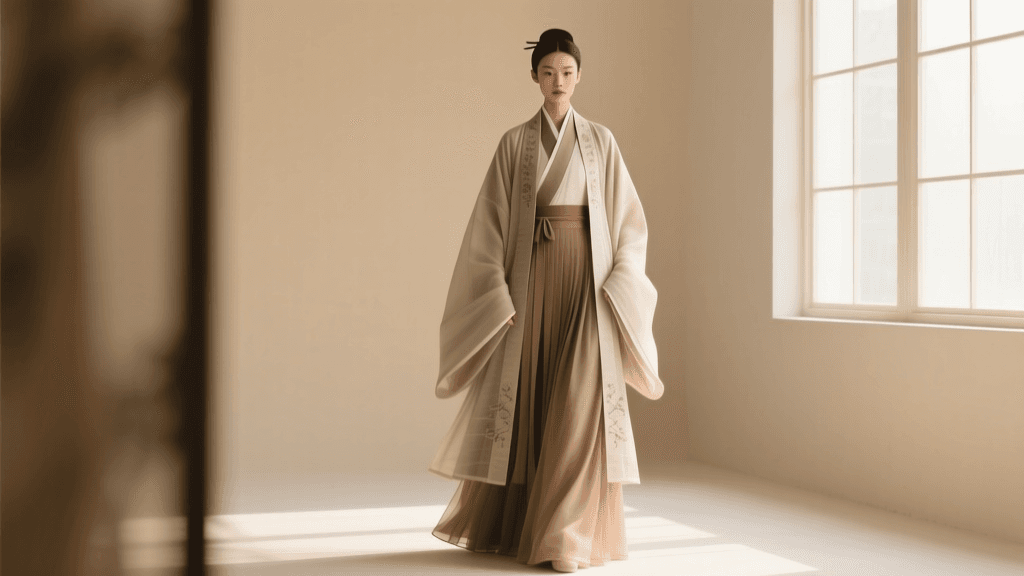
- Zhongyi (Inner Garments): Never wear an outer robe directly against the skin in formal settings. A white or neutral-colored Zhongyi (inner shirt/skirt) must be worn underneath. The collar of the Zhongyi should peek out slightly (about 1-2 centimeters) above the outer collar to add depth and adhere to modesty standards.
- Skirt and Trousers: For styles like the Mamianqun (horse-face skirt), ensure the flat panels are centered at the front and back. The pleats must fall naturally without flaring outward awkwardly.
- Footwear: Modern sneakers break the historical illusion and violate formal etiquette. Pair your Hanfu with traditional cloth boots, embroidered flats, or Yuntoulu (cloud-head shoes).
Decoding Traditional Hanfu Greeting Rituals
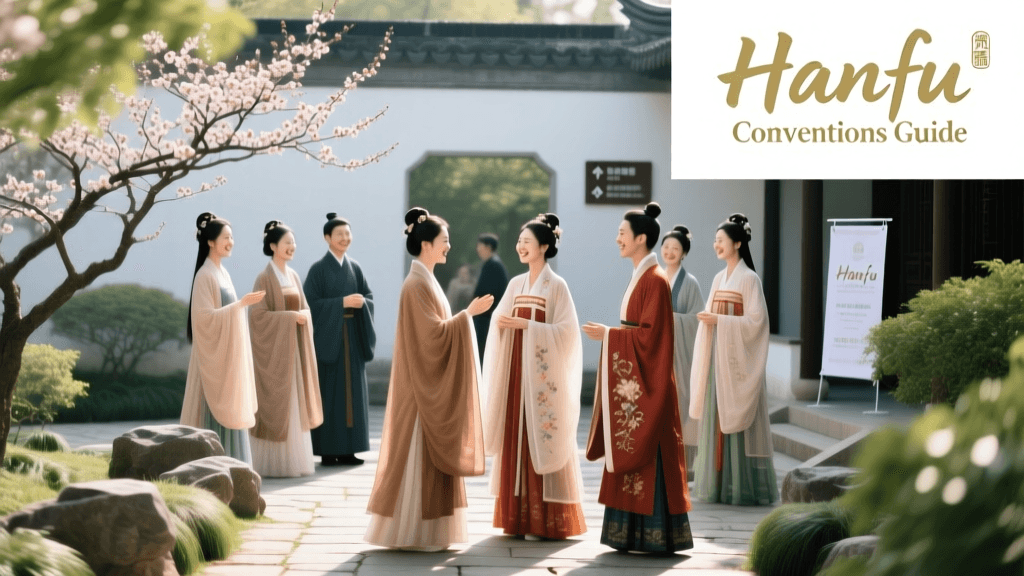
Greeting rituals, or Li Yi, vary significantly based on gender, the formality of the occasion, and the historical era being emulated. Here are the primary gestures you must know.
1. Gongshou (Cupped Hands) - The Everyday Greeting
The Gongshou is a standard, semi-casual greeting used among peers. It involves clasping the hands in front of the chest or abdomen.
- Male Execution: Form a fist with your right hand, and wrap your left palm over the right fist. The thumbs should be tucked or resting naturally. (Left over right aligns with the Jiaoling Youren life-affirming principle).
- Female Execution: Historically, women did not use the fist-and-palm method. Instead, women clasp their hands together (right hand over left) and rest them at the right side of their waist or hip, accompanied by a slight nod of the head.
- When to use: Meeting friends at a Hanfu festival, greeting shopkeepers, or casual street photography.
2. Zuoyi (Deep Bow) - Formal Respect
The Zuoyi is a formal bow used to show deep respect to elders, teachers, or during ceremonial rites (like the coming-of-age Guan Li or Ji Li).
- Hand Placement: Similar to the male Gongshou, but the arms are extended forward and slightly downward, hidden within the long sleeves (Gongxiu).
- The Angle of the Bow: The depth of the bow dictates the level of respect. A 15-degree nod is for casual acquaintances; a 30-to-45-degree bend at the waist is for elders and teachers; a 90-degree bow is strictly reserved for deities, ancestors, or profound apologies.
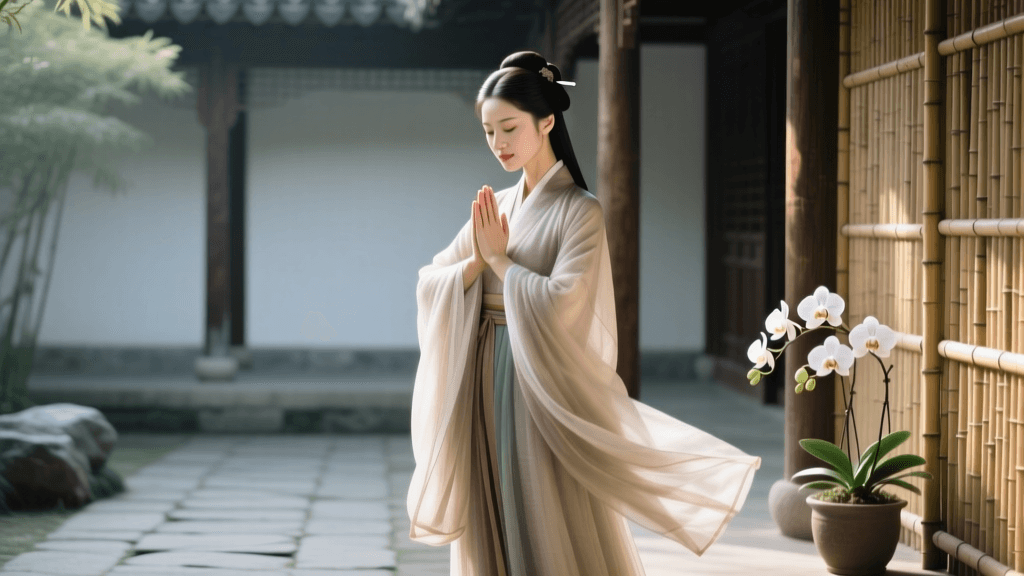
- Sleeve Etiquette: When bowing, the long sleeves should drape elegantly over the hands. Ensure your hands remain completely concealed within the fabric, as exposing the hands during a formal bow is considered brash.
3. Wanfu (Ten Thousand Blessings) - Feminine Grace
Popularized during the Tang, Song, and Ming dynasties, the Wanfu is the quintessential formal greeting for women wearing Hanfu.
- Execution: The woman clasps her hands (right over left) and places them slightly to the right of her waist. She then performs a slight curtsy, bending her knees while keeping her back straight and bowing her head gently.
- Timing: The greeting is accompanied by the verbal well-wishing of 'Wanfu' (meaning ten thousand blessings or endless good fortune).
- When to use: Formal festivals, wedding ceremonies, or when greeting senior family members while dressed in Ming-era or Song-era Hanfu.
Quick Reference Chart: Hanfu Greetings and Postures
| Greeting Name | Primary Gender | Hand Placement Rule | Body Posture | Appropriate Occasion |
|---|---|---|---|---|
| Gongshou (拱手) | Male | Left palm wrapping right fist | Standing straight, slight head nod | Casual meetings, peers, festivals |
| Zuoyi (作揖) | Male | Hands concealed in long sleeves | Waist bow (30° for peers, 45° for elders) | Formal events, ceremonies, apologies |
| Wanfu (万福) | Female | Hands clasped (right over left) at right hip | Slight knee bend (curtsy), head bowed | Formal greetings, weddings, elders |
| Qianzou (敛衽) | Female | Hands folded neatly in front of the abdomen | Deep curtsy, adjusting the skirt hem | High formality, Ming dynasty reenactments |
Actionable Advice for Modern Hanfu Wearers
Navigating a modern environment in traditional garments requires practical awareness. As highlighted in contemporary cultural reports by China Daily's Culture Section, the Hanfu revival is heavily focused on community events, where proper etiquette elevates the experience for everyone involved.
Managing Your Sleeves
Long sleeves (Daxiushan) are beautiful but impractical for dining or handling objects. When sitting down for tea or a meal, use the 'sleeve-folding' technique: gracefully hook the excess fabric of your sleeves over your wrists or tuck them into your belt temporarily. Never let your sleeves drag through food or water.
Posture and Sitting
When wearing a Mamianqun or a long Ruqun, sitting requires care. Before sitting, use your hands to smooth the back of your skirt and the front panels to prevent harsh creasing. Sit with your knees together and angled slightly to the side to maintain modesty and protect the pleats of the skirt.
Festival Color Codes
Color choice is a vital part of Hanfu dress code. For joyous occasions like the Spring Festival or the Mid-Autumn Festival, wear vibrant reds, golds, pinks, or jade greens. Avoid wearing all-white or all-black ensembles to celebratory events, as monochromatic white is traditionally associated with mourning and funerary rites in Han culture.
'Respectfulness, without the rules of propriety, becomes laborious bustle; carefulness, without the rules of propriety, becomes timidity; boldness, without the rules of propriety, becomes insubordination.' — Confucius, The Analects.
Conclusion
Wearing Hanfu is a profound way to connect with thousands of years of Asian tradition, artistry, and philosophy. By adhering to the Jiaoling Youren dress code, mastering the structural layers, and performing the appropriate Gongshou or Wanfu greetings, you transform from a mere wearer of costumes into a respectful ambassador of living history. Whether you are attending a formal tea ceremony or a lively lantern festival, let the principles of Li guide your movements, ensuring your participation is both authentic and deeply respectful.